- Premium Content It takes our newsroom weeks - if not months - to investigate and produce stories for our premium content. You can’t find them anywhere else.
 Elyssa Lopez · · 6 min read
The rising Thai beauty firm that’s betting on malls, not TikTok
In May, a Thailand-based beauty ecommerce platform gained attention after raising a US$22 million series B funding round, which was the second largest of seven deals in the country for the year so far, based on data from Tracxn.
Backed by investors like Insignia Ventures and Cool Japan Fund, Konvy is growing fast. In 2025, revenue of the firm’s Thailand business jumped 15% year on year to 2.6 billion baht (US$79.4 million), and the firm made a net profit of 57.6 million baht (US$1.7 million).
As a whole, the firm was not profitable last year. However, this year, it is looking to grow its overall group revenue 30% year on year, Konvy CEO QingGui Huang tells Tech in Asia.
Founded in 2013, Konvy markets itself as a more curated alternative to ecommerce platforms like Lazada and Shopee.
Compared to the average drugstore in Bangkok, Konvy sells a wider range of luxury and Western-branded items. On stock: Chanel pressed foundations and Estee Lauder serums alongside regional brands like Srichand of Thailand to Innisfree of South Korea.
In total, some 1,200 brands are available via Konvy’s online platform and offline stores in Thailand, where it has 10 physical shops across malls in Bangkok. Late last year, it also opened its first location in Manila.
Konvy CEO QingGui Huang believes that in a few years, Southeast Asia’s shoppers will spend an equal amount purchasing lipsticks and lotions both from online and offline stores.
That’s an opportunity for Konvy to enter markets where beauty-focused stores remain few and far between. But in a region where social commerce is fast becoming a preferred way to shop, and where stores like Watsons and Guardian dominate offline beauty outlets, can it break in?
Going up against ecommerce giants
Aside from running its own websites, Konvy also operates official stores on ecommerce marketplaces like Lazada, Shopee, and TikTok, claiming to sell only authentic products.
Before these platforms introduced official brand stores, such a claim was a big enough differentiator on both marketplaces, where counterfeit products were rife.
At present, the majority of the firm’s growth comes from its own online store and third-party marketplaces. Since the pandemic, however, Huang has noticed consumers seeking offline experiences more, and many shoppers visit shops to verify if products are what they’re marketed to be.
In 2023, Konvy began opening retail stores.
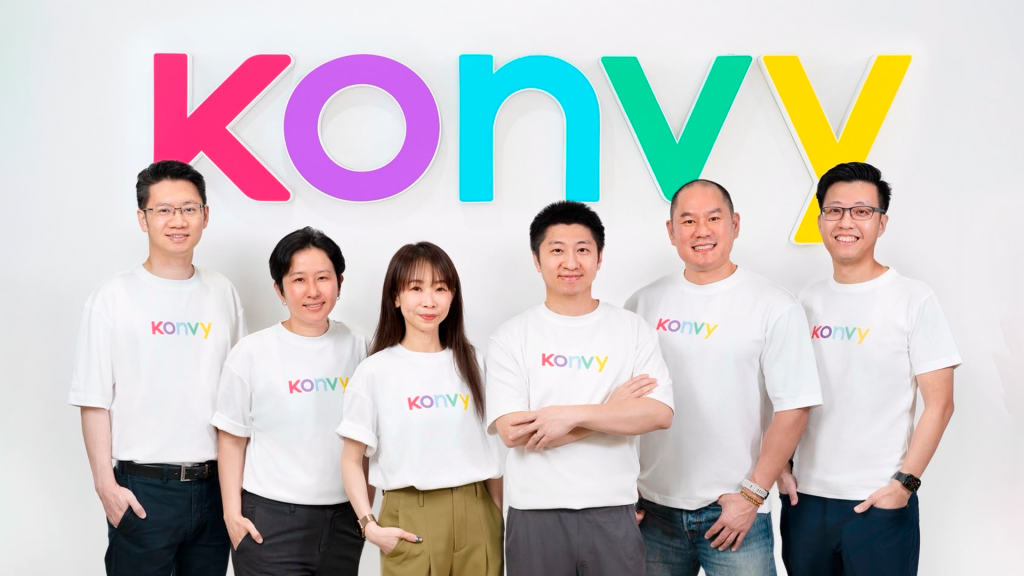
Konvy CEO and co-founder QingGui Huang (center) with the Konvy management team. Huang founded Konvy in 2012. / Photo credit: Konvy
In products like perfumes and beauty tools, there’s a chance for Konvy to become the go-to in these categories, he adds.
Two-pronged expansion
The lure of niche platforms
Building for IPO
Stay ahead in Asia’s tech landscape
This is premium content. Subscribe to read the full story.
After a decade as an ecommerce player, Konvy is setting its sights on opening offline stores, and it’s eyeing a 30% revenue growth by year-end.
We know this is not ideal. ⌛ Sign up in 20 seconds. Cancel anytime.
Our subscriber community includes professionals from these companies:





Stay updated on the go with our mobile app.
Get latest insights with smoother, more personalized experience through TIA mobile app.