- Premium Content It takes our newsroom weeks - if not months - to investigate and produce stories for our premium content. You can’t find them anywhere else.
 Elyssa Lopez · · 6 min read
Killing ‘zombie’ projects: PH bets big on offshore wind
When the Philippine government finalized its first green energy auction program (GEAP) in 2022, officials called it a success for its climate policy.
The program called for public developers to bid the lowest price they could offer to build renewable energy (RE) projects such as solar and wind farms. In turn, the government ensured the projects would be utilized.
By the end of the first auction, 2 gigawatts (GW) were taken up – the entire capacity offered by the government. The projects were expected to be completed by 2025.
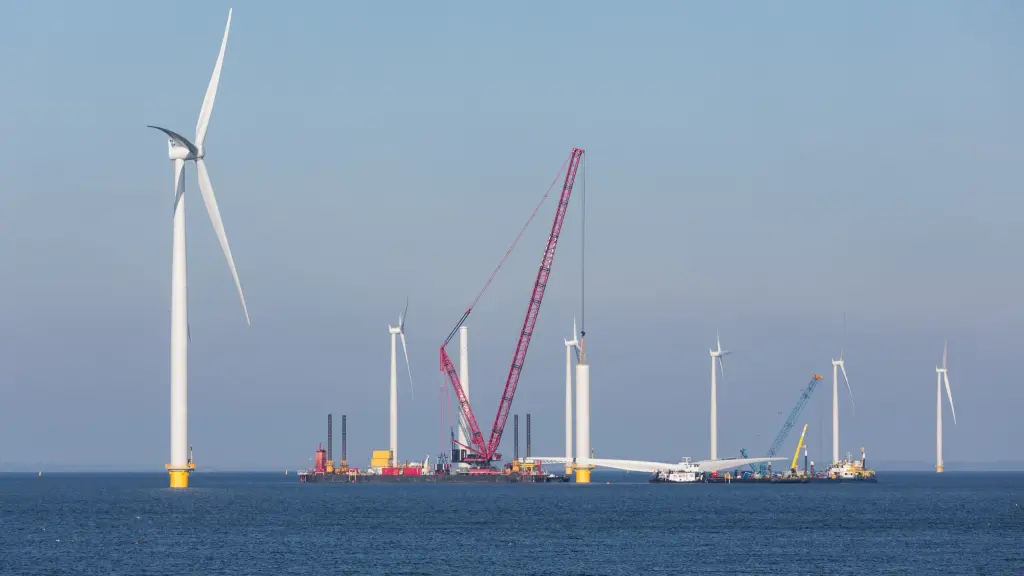
According to World Bank estimates, the Philippines has the potential to produce 178 GW from offshore wind projects. / Photo credit: Global Wind Energy Council
But four years after that auction, the full capacities were never realized.
In January 2025, the Philippines’ Department of Energy (DOE) fined Leandro Leviste, formerly the CEO of Solar Philippines and currently a member of the country’s House of Representatives, 24 billion pesos or US$400.8 million.
His firm failed to establish committed projects, under various government contracts, including the ones under the first auction. In 2022, Solar Philippines won 93% of the total awarded projects for solar energy developers in the first auction, which is about 1.2 GW.
Leviste blamed various government agencies for the delay of his firm’s projects, as he found securing permits too difficult. Other energy players lamented that Solar Philippines’ bids for the first auction were simply too low, and the projects became unsustainable to build.
Ultimately, Leviste sold the business in 2023.
Despite the fiasco, the GEAP continues: The DOE announced in February that it is holding five more auctions in the coming years, with installation of projects expected until 2035.
Like many of its peers in Southeast Asia, the Philippines still relies on fossil fuels as the main source of its energy. These auctions are part of the country’s efforts to source more energy from RE, going from the current level of 25% of its total supply to 35% by 2030.
“Especially with our current situation wherein we face rising fuel prices, renewable energy is our bet against it,” says Ruby de Guzman, assistant director at the DOE’s Renewable Energy Management Bureau, tells Tech in Asia. “It will help us secure our power supply.”
Experts and stakeholders believe that the auction process has improved from the initial rounds, with the DOE setting up various measures to prevent canceled projects and to attract investor interest.
Skin in the game
To be sure, Leviste wasn’t the sole RE developer whose projects had stalled. DOE Secretary Sharon Garin told local media that 163 service contracts were canceled due to non-performance, which she tagged as “zombie projects.” These would have amounted to 17.9 GW of energy capacity.
Is there investor interest?
Stay ahead in Asia’s tech landscape
This is premium content. Subscribe to read the full story.
After a series of energy auction flops, the Philippines recalibrates with offshore wind development. But can it fully realize these projects?
We know this is not ideal. ⌛ Sign up in 20 seconds. Cancel anytime.
Our subscriber community includes professionals from these companies:





Stay updated on the go with our mobile app.
Get latest insights with smoother, more personalized experience through TIA mobile app.