Grace Priscilla Teo · · 5 min read
Why physical AI could outgrow the digital AI boom
This article summarizes an episode of a16z’s video series featuring Qasar Younis and Peter Ludwig, the cofounders of Applied Intuition.
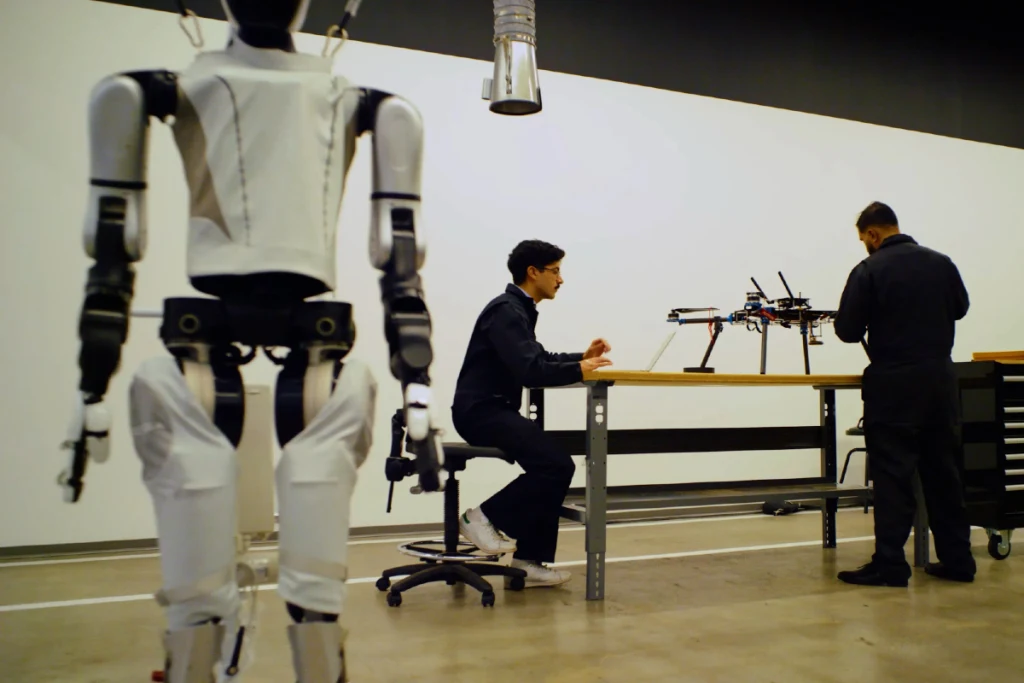
Photo credit: Applied Intuition
Qasar Younis and Peter Ludwig, the cofounders of Applied Intuition, argue that physical AI will create larger companies than digital AI.
While digital products can spread frictionlessly across the internet, Younis and Ludwig focus on the massive, capital-intensive sectors of the real-world economy.
Their core premise is highly practical: autonomous technology becomes exponentially more valuable when it systematically lowers the cost and risk of running vehicles, industrial equipment, and heavy machinery.
Physical AI targets a massive economic market
While the digital software boom has already produced trillion-dollar companies, the founders are focused on physical sectors where AI can make expensive work cheaper.
In heavy industries like transportation and mining, even marginal improvements in how smart machines operate can compound into fleet-wide savings and fewer accidents.
Self-driving cars are just the tip of the spear. Younis sees a much broader opportunity to make autonomy a foundational layer of industrial infrastructure. Because physical machines have long lifespans, the cumulative value of these efficiency gains is staggering.
“When we look back 25 years in this intelligence revolution, the companies that impact the physical world might actually be bigger than the companies that impact the digital world,” Younis explains.
If this prediction holds true, corporate boards will soon need to view autonomous technology as their primary tool for managing physical assets. However, building software for a 10-ton machine is inherently harder than launching a consumer app.
This difficulty leaves a massive opening for specialized companies to supply the AI layer across various machine categories without needing to manufacture the hardware themselves.
Labor shortages drive the demand for autonomy
Beyond cost savings, labor shortages are pushing heavy operations toward autonomous machines just to keep running when workers are scarce or hard to schedule.
This urgent need flips the typical sales dynamic. Long before average consumers are asking for AI, industrial leaders are demanding it.
“In our universe, it’s the other way around,” Younis notes. “I meet these operators, and they say, ‘We’ll give you everything if you can do this.’ Then it’s up to us to get there as aggressively [as possible].”
Private data and strict safety rules make physical AI unique
Established brands control customer trust
Dana turns AI development into a repeatable process





Stay updated on the go with our mobile app.
Get latest insights with smoother, more personalized experience through TIA mobile app.