 Grace Priscilla Teo · · 5 min read
Nvidia CEO urges rethink of corporate structure
This article summarizes an episode of Lex Fridman’s video series featuring Jensen Huang, CEO of Nvidia.
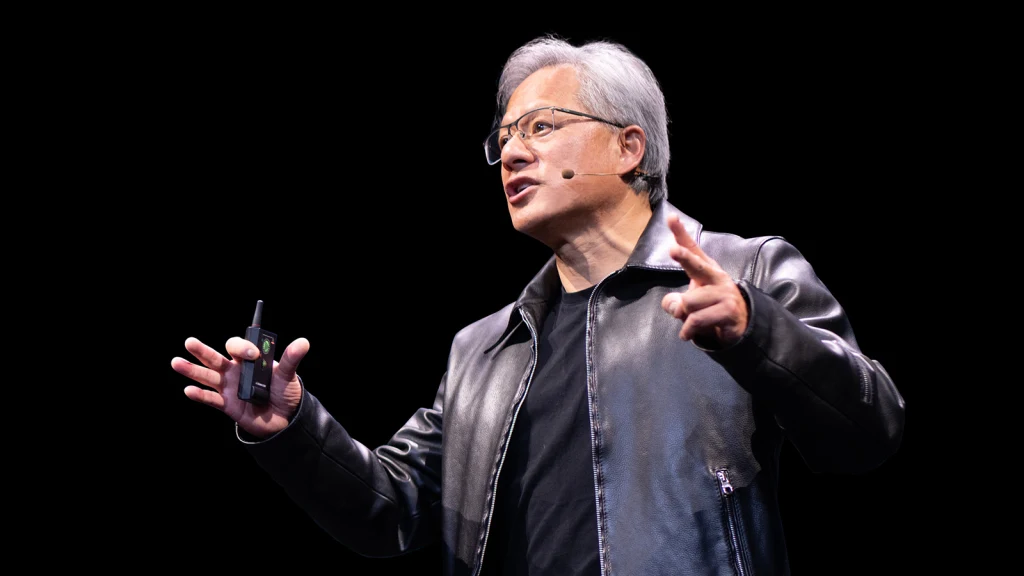
Nvidia CEO Jensen Huang/ Photo credit: Nvidia
Nvidia CEO Jensen Huang warns that traditional corporate structures can slow down building new technology. For example, management tiers and isolated teams cause engineering delays.
This means that leaders must organize their companies to mirror the products they build. Forcing teams to work closely together ensures everyone stays in sync while building interconnected computer systems.
Rethinking company structure
Building interconnected systems requires a completely different approach to engineering. Modern computing workloads no longer fit on a single machine, forcing thousands of computers to act as one. Huang explains that the organizational chart must reflect this hardware reality.
“When you’re designing a company, you should first think about what it is that you want the company to produce,” he notes. The entire organization must operate as a cohesive system.
Navigating mass collaboration requires transparency
Operating cohesively at scale exposes the flaws of standard meetings. Managing dozens of engineers through scheduled updates causes delays instead of transparency.
Huang eliminates these bottlenecks by maintaining 60 direct reports and refusing to schedule individual check-ins. “We present a problem and all of us attack it,” he says, relying on teams to work in constant sync.
This working style demands focus along with the freedom to disconnect. Huang notes, “Whoever wants to tune out, tune out,” trusting his staff to know exactly when a specific problem requires their attention.
Hardware design must adapt to the task
Just as management adapts to collaboration needs, physical hardware must adapt to specific workloads. Using a single hardware design for different computing jobs proves inefficient over time.
Huang explains how Nvidia shifted from Grace Blackwell racks designed for LLMs to Vera Rubin racks built for AI agents. Leaders executing this shift must follow a strict process:
- Assessment: Evaluate the computer product before setting up internal teams.
- Structure: Align the executive team to match both the market and the hardware’s physical limits.
- Alignment: Eliminate standard meetings to force engineers from different fields to collaborate constantly.
- Autonomy: Give engineers the power to skip irrelevant meetings to maintain efficiency.
Navigating strategy changes
Hardware shifts inevitably force broader organizational shifts. Mandating these changes from the top down confuses employees and generates pushback. This is why leaders must share information gradually over time to avoid giving employees whiplash.
Huang observes that most leaders stay quiet until an official announcement, creating avoidable friction. “I never do things that way,” he says. He prefers using every opportunity to share what he learns, shifting how his teams think long before an official change occurs.
Defining the new computer baseline
The cost of data infrastructure





Stay updated on the go with our mobile app.
Get latest insights with smoother, more personalized experience through TIA mobile app.










📅 Upcoming Events
22 October 2026
Payoneer x CSPN Summit 2026