Can Singapore drive the growth of Asia? Surely, you must be joking. However, John Nesheim, our guest contributor from Silicon Valley offers another perspective to how the youth in Singapore can overcome the Asian disease and start innovating without fear. He is also an author to the book, The Power of Unfair Advantage, an established angel investor in the valley and a jedi master to some of our resident contributors here.
Contributed by John Nesheim
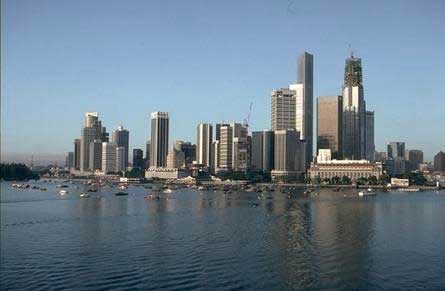
Singapore is a favorite of mine because to me it is a riddle: “How can you sin legally in Singapore?” I first came to the little city-state a quarter of a century ago when Raffles was a high rise and chewing gum jokes were famous world-wide. I arrived with National Semiconductor, the electronics revolution and the rest is history. Now high rise towers surround tiny Raffles and the jokes are about how casinos will come to Singapore: “Hey, did you hear Singapore has figured out how to have gambling places that fit the rules of the city-state fathers? They are going to out-source the management to nuns!”
Yes, we all laugh but we also have our respectful business eyes on Singapore. It is a marvel of transformation, Asian-style, from poverty to riches, a microcosm of a cosmopolitian city with hundreds of languages, places to worship and shop until you drop. And of course a restaurant on every corner.
We wonder what will come next because – as I see it – Singapore is the “rudder of Asia”, that little thing at the end of a great ship that steers the large vessel and precious contents safely to its destination. In other words, “as Singapore has gone, so will Asia.†From centrally led economics and political policies to attracting and exploiting the latest technology waves, Singapore has shown how prosper in the face of awesome challenges and has done it over and over, year after year. At least up to today.
I am optimistic about what could happen in Asia because of Singapore. My Singapore glass is half full. I have several reasons. For instance, my students from Singapore are heavy risk takers (unlike their parents who prefered to follow the directions of Singapore Inc. and thus became wealthy). These young people are innovative, understand what a world-class new enterprise is and are ambitious to start one. They have the same mantra as the rest of the youth of today’s world: “Have passport, have laptop, mobile phone, will travel!†They do travel, a lot, and find places to take real risks, learning and prospering. And they return to Singapore. In their daily blogs I note how much they enjoy returning home to eat that wonderful local food! All of this is scary to their parents, but we all know that for each new generation of kids that is how it is. There is no stopping it. It has a life and energy of its own.
Their world starts each day with communications over the Internet about “cool ideas†for new enterprises. In just a few minutes they share plans for fresh companies: to either join them (for a while) or to start one. Many start work in giant corporations, but are constantly on the lookout for a great idea. That was not so even a decade ago in Singapore. But that is what is blogged daily by young Singaporeans.
The other reason I am optimistic about the future for Singapore is because many of its youth understand what it takes to build an “unfair competitive advantage.†That is a collection of elements that make up a business plan so powerful that their competition complains “That is unfair!†I explain more about that concept in my recent book, “The Power of Unfair Advantage.†With that understanding, those young Singaporians require no local protection or favors from the government. They run away from such dreaded crutches. Instead, they are eager to compete at the world-class level, on the open competitive field, able to run with the best. They are confident they can and will do that.
And they are wise about avoiding the “The Asian Disease.†That is the dreaded claim to fame of most Asian want-to-be entrepreneurs: “I can make that cheaper, faster, better.†Thousands in China and India said that yesterday, will say it today and tomorrow. They have no innovation with lasting value to offer, just a lower cost knock-off. And six months later they are overtaken, leapfrogged, by an equally ambitious and naive new arrival. And so it goes, month after month. Making a good profit is hell. That is one reason Asia has so few global brands that stand for anything other than “We are a very large Asian corporation.†They do not have an unfair advantage able to compete on a global scale. They are trying to learn. Some will get it.
Instead of the catching the Asian Disease, the youth of Singapore wisely respect the need to innovate. They know they must do something important that has never been done before, solving big, difficult, important problems. That is central to creating an unfair advantage. It is what made Silicon Valley the envy of the world. This is remarkably explained in David Warsh’s new book, “Knowledge and the Wealth of Nations.†In it he explains why “knowledge is our most powerful engine of production . . . with people, idea and things†that matter, driving technological change and entrepreneurial creativity.
Some leaders of Singapore also understand that and have been courageous to encourage it. Recent entrepreneurial programs are impressive. But as I watch what is going on, at least as I see it, to build unfair advantages in Singapore requires one more step to take before the bird can leave the nest and fly: Father has to let go.
The kids have to be encouraged to take risks that parents are terrified of. They have to be let free to break the rules (even the remaining ones put into place to protect Singaporeans over decades by well-intended city fathers). You can’t run a race with crutches and expect to win. It’s a rough world out there and competition is intense. Young people don’t run to work in a boring country. The local culture has to be cool and hot at the same time. But the amazing thing to me is that the young men and women of Singapore are eager to compete. On their own. They believe in themselves and are confident they can use Singapore to help build world-class competitors that have powerful unfair advantages. They can build the great brands of Asia. They are already on their way. So either lead, follow, or get out of the way! The race is going to be exciting. I’m cheering for them. I hope you are also.
Related Links: The Entrepreneur’s Bookshelf: The Power of Unfair Advantage.





Stay updated on the go with our mobile app.
Get latest insights with smoother, more personalized experience through TIA mobile app.