
Image credit: GotCredit.
Many of the biggest tech companies today might’ve failed without venture capital. Apple, Google, Microsoft – all of them relied on venture capital when they were starting out.
While banks typically won’t loan money to startups because of their lack of solid financials and past history, venture capitalists look to the future. They invest in high-risk startups because of their potential to make massive returns.
For example, Accel Partners was set to make a 1,000x return from its investment in Facebook. The VC firm invested US$12.7 million in the company in 2005, and its stake was worth US$9 billion just prior to Facebook’s IPO (it sold off some of its shares before that).
Who do venture capitalists invest in?
Venture capital is a type of financial capital supplied to startups (read: what is a startup?). Venture capital (VC) firms invest a sum of money – typically in the millions – in these companies in exchange for equity.
Investors can exit, in other words, cash out after a startup gets acquired or lists on a stock market. They’ll often sell their shares before an acquisition or public listing in order to de-risk, or if they believe they’ve met their investment objectives.
Venture capital investments are risky because of the high failure rate of startups. However, these firms bank on finding outlier startups (like Facebook) which can generate returns on investment big enough to make up for losses from other investments.
Venture capital firms have a portfolio consisting of multiple startups at any one time. They may operate multiple funds focusing on different industries or geographical regions.
VC firms tend to fund startups that have been validated by the market and show potential for rapid growth. These startups would have secured a small but fast-increasing user base, and are in need of money for scaling infrastructure, adding product features, as well as investing in sales and marketing. Sometimes, venture capitalists will invest in companies with unreleased products, as Andreessen Horowitz did in Magic Leap.
How do they invest?
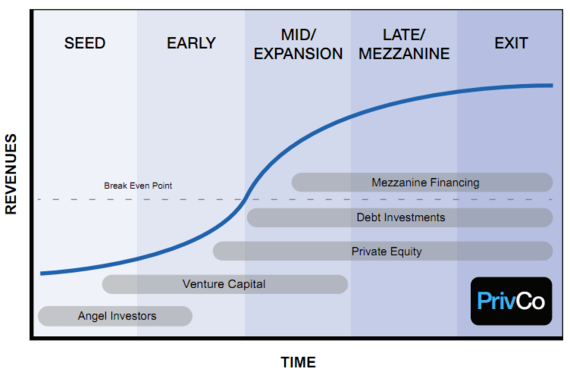
Image credit: PrivCo.
Startups seek out seed funding from angel investors first before looking at venture capital. The first round of VC funding is typically called a series A round, with subsequent rounds denoted as series B, series C, and so on (see: stages of a startup). Some venture capital firms, however, do invest in seed rounds.
VC firms often invest as a syndicate. In other words, multiple firms may invest in a startup in the same round, although one firm will be a lead investor.
Lead investors are the ones who have done most of the due diligence on the startup, and are probably also the ones responsible for putting together the syndicate and crafting the terms of the deal.
How are venture capital firms run?
Venture capital trends





Stay updated on the go with our mobile app.
Get latest insights with smoother, more personalized experience through TIA mobile app.









📅 Upcoming Events
22 October 2026
Payoneer x CSPN Summit 2026