- Premium Content It takes our newsroom weeks - if not months - to investigate and produce stories for our premium content. You can’t find them anywhere else.
 Scott Shuey · · 7 min read
Luna and UST are close to dying. What comes next?
Major algorithmic stablecoins were neither stable nor algorithmic this week, resulting in what some are calling the crypto equivalent of the Lehman Brothers’ bankruptcy in 2008, which lead to cataclysmic financial consequences.
The trading frenzy reached a peak on Wednesday when Do Kwon, founder of Terraform Labs and developer of TerraUSD (UST) – once the third-largest US dollar stablecoin on the market – hinted that stability may have to come at the price of the algorithm.
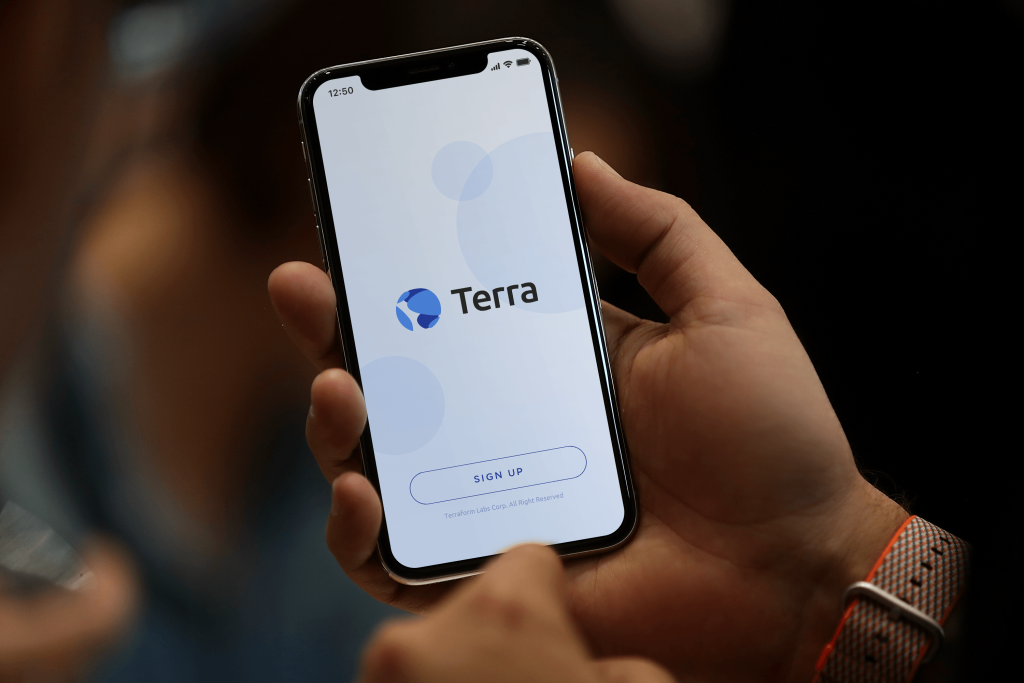
Photo credit: Terra
Depending on who you ask, this was either never supposed to happen or was completely inevitable.
Algorithmic stablecoins or algos were designed as cryptocurrencies that would be non-volatile and could hold their peg to a specific currency – most often the US dollar – without the massive cash reserves required for regular stablecoins.
This explains UST’s rapid rise in the charts, as algos can be minted quickly without being held back by a shortage of US dollar assets.
But “cryptics” – or critics of cryptocurrency – have often complained that algos are inherently fragile and vulnerable to massive sell-offs, like the one that hit the markets over the weekend.
As Ryan Clements, a law professor at the University of Calgary in Canada, wrote last year, an algorithmic stablecoin is “a contradiction of terms.” He added: “The market iterations of the algorithmic stablecoin to date have revealed a total lack of stability. It is an unregulated, uncollateralized digital asset that operates in a perpetually vulnerable state.”
UST’s fall and a plan to “reconstitute” the Terra network
Those weaknesses were fully exposed this week, starting with a US$285 million sell-off of UST within 24 hours. Many industry experts believe the sell-off was an attack, which exploited the lack of liquidity in crypto markets.
According to WuBlockChain, the sell-off resulted in cascading liquidation – the depeg and chain reaction of forced selling. The real-world identities of the individuals who started the sell-off are unknown, although the wallet addresses used are public.
Prior to last Friday, the most that UST had ever strayed from its US$1 peg was 4 cents (US$0.06). However, UST prices dropped to US$0.747 on Tuesday, and by Friday, the price fell to a new low of US$0.044, according to CoinGecko.
But Terra is only half the equation. Luna, another Terra-developed coin that keeps UST pegged to US$1 via arbitrage, also took a hit. It was trading at around US$80 until May 7 and then plunged to US$0.0006 on Friday.
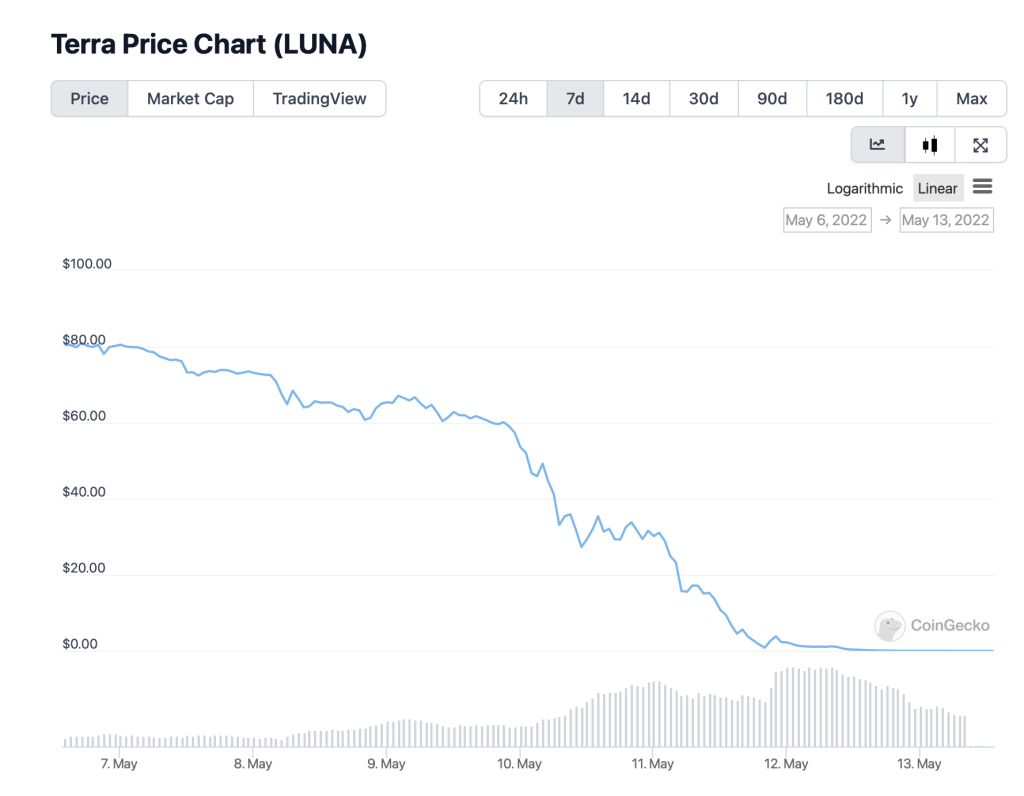
Image credit: CoinGecko
A move that came too late
The Great Burning
Pure algo no more
Centralized?
Stay ahead in Asia’s tech landscape
This is premium content. Subscribe to read the full story.
All the warnings against algorithmic stablecoins have come true as Terra’s UST and Luna crashed. We look at what happened and what’s next for the company.
We know this is not ideal. ⌛ Sign up in 20 seconds. Cancel anytime.
Our subscriber community includes professionals from these companies:





Stay updated on the go with our mobile app.
Get latest insights with smoother, more personalized experience through TIA mobile app.









📅 Upcoming Events
22 October 2026
Payoneer x CSPN Summit 2026