On the morning of October 24, Mr. Zhu stepped through the doors of his grandfather’s high-rise apartment in Neijiang, Sichuan, China and into a scene from his nightmares. His 93-year-old grandfather lay still in the bed, his face white as a sheet, his upper body covered in blood. A quick check confirmed the obvious: the elder Mr. Zhu was dead.
Who would kill a 93-year-old?
According to Sina Games, when Neijiang detectives first visited the scene on October 24, they were baffled. Why would someone kill a 93-year-old man? His family was equally baffled. Aside from occasional trips outside to sell knick-knacks, the nonagenarian didn’t get out much, and the family wasn’t aware of any enemies or grudges their grandfather might have had. The only hint at the crime’s motive apparent on the scene: a wicker basket belonging to the elderly victim had disappeared from his apartment. Police also found a single cigarette butt on the apartment’s terrace.

Neijiang, Sichuan, China
The initial inspection of the crime scene showed that the attack bore a striking resemblance to a string of robberies that had plagued Neijiang over the month of October. The victim lived on the top floor of his building and the suspect had apparently entered from the roof via the window at night, which matched the MO in the previous robberies. But when police captured the perpetrator of the earlier crimes, it became apparent that he couldn’t have committed the murder. The Neijiang forensics lab also determined that the DNA collected from the discarded cigarette at the murder scene did not match the DNA of the suspect in the other robbery cases.
So, police were back to square one. Detectives returned to the crime scene to conduct further investigation and found that in the terrace’s vegetable garden, a thin dirt outline revealed by the rain suggested an rectangular object – probably a brick – that was once there had been recently displaced. Given that the Neijiang medical examiner had ruled the elder Zhu’s death a homicide caused by blunt force trauma to the head with a rectangular object causing skull and brain damage, detectives suspected that the missing brick might be the murder weapon.
Unfortunately, they had no idea where the killer might have put it after the crime.
A stone-carved confession
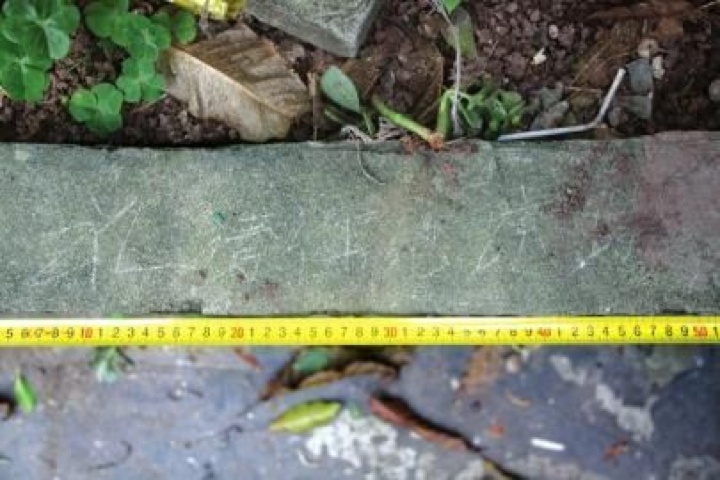
Three days after Zhu’s October 23 murder, detectives returned to the scene again, hoping to recover the brick or find some other clue that could point them in the right direction. They succeeded. In faint scratches on the stone of the apartment’s terrace, they found the following message. (Note: in the below image the difficult-to-see writing is highlighted in red):
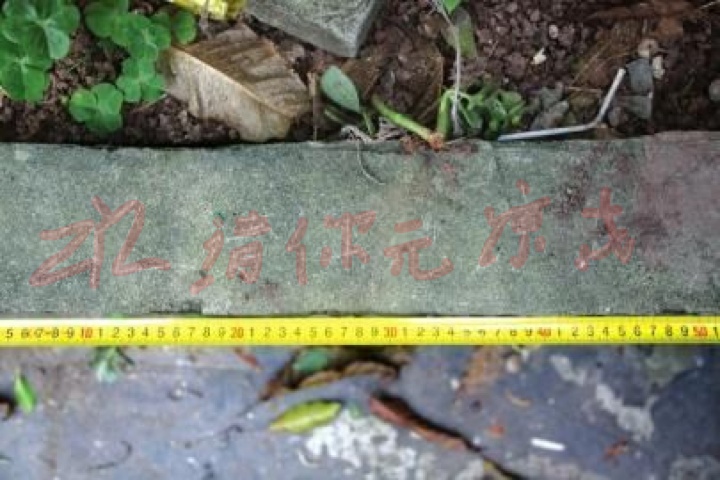
The message contains an apparent mistake (the author used an incorrect homophone character) and the final character is only partially visible, but the message is still easy to decipher: “ZYL, please forgive me.”





Stay updated on the go with our mobile app.
Get latest insights with smoother, more personalized experience through TIA mobile app.