 Jofie Yordan · · 4 min read
Mapping SEA’s food tech players: Startups seize opportunities beyond food delivery
Charts and visuals, only for subscribers
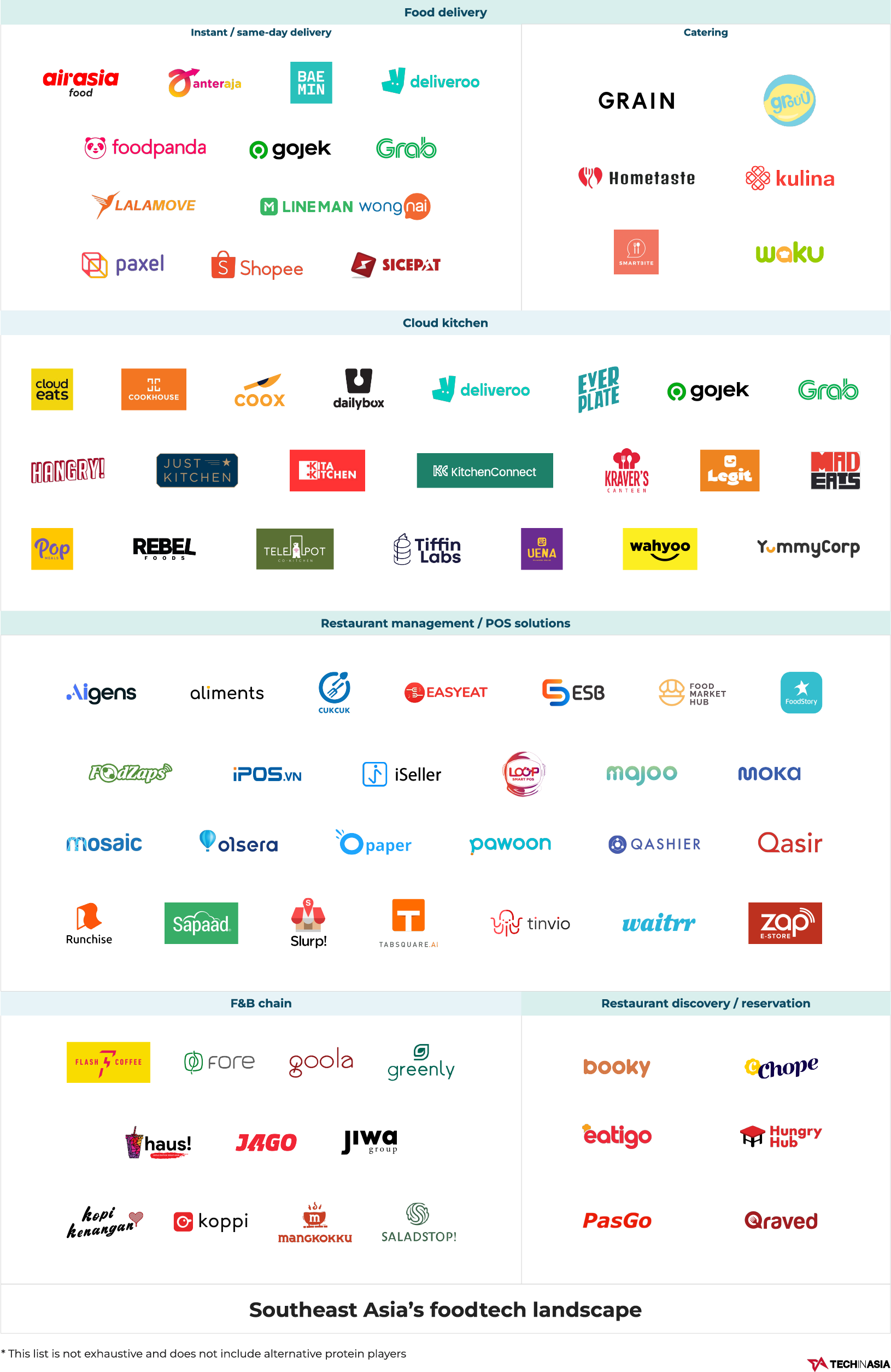
The last three years have been important for the foodtech industry. The pandemic has propelled the growth and penetration rate of the food delivery sector, including in Southeast Asia.
But there’s more to foodtech than food delivery. Recently, cloud kitchens and restaurant management/point-of-sale (POS) solutions have also received investor attention.
In 2020, the food delivery sector’s gross merchandise value (GMV) was up 200% from the previous year, according to a report by venture builder Momentum Works. The segment’s growth then slowed, with only a 5% increase from 2021 to 2022, as people adjusted to the new normal and began dining in at restaurants once more.
The slowdown was also compounded by the capital market’s demand for profitability, which has caused companies to reduce the incentives they previously relied on to encourage growth. Most leading players in the industry are now part of publicly listed groups, such as Deliveroo, Grab, GoTo, Foodpanda, and Shopee.
Now, as customers have grown used to ordering food online but have also returned to dine in at restaurants, F&B merchants have been driven to integrate their online and offline offerings. Some offer different promotions for online and offline customers, while F&B chains are resuming their store expansion efforts and continuing to cater to online deliveries at the same time.
Consumers are typically familiar with the different food delivery brands available, as riders decked out in bright outfits zip around Southeast Asia’s cities. On the other hand, consumers may walk past a nondescript building housing a cloud kitchen without knowing that the food they order is being prepared inside.
See also: As Grab leads SEA’s food delivery race, challengers vie for 2nd spot
A cloud kitchen, also known as a ghost kitchen or virtual kitchen, makes use of a commercial kitchen exclusively for preparing food for delivery or takeout. This sector is closely related to food delivery platforms, since most brands or merchants with cloud kitchen concepts sell their products through these apps.
Grab and Gojek even opened their own cloud kitchen businesses, although the former has closed its GrabKitchen operations in Indonesia. Other players like Indonesia-based DishServe have also recently shut their operations.
However, several cloud kitchen firms have continued to raise funding in the past year, proving that this industry is still attractive to investors.
In Indonesia, cloud kitchens such as Legit Group, Uena, Wahyoo, Dailybox, and Hangry have been raising funds over the past year. While in the Philippines, companies that have fundraised recently include CloudEats, Kraver’s Canteen, and MadEats.
Share, tag us, and land on our Wall of ❤️ !
Stay ahead in Asia’s tech landscape
This is premium content. Subscribe to read and use our charts, graphics, and other visuals legally
The last three years have been important for the foodtech scene. The pandemic – and the succeeding economic recovery – have changed the landscape.
We know this is not ideal. ⌛ Sign up in 20 seconds. Cancel anytime.
Our subscriber community includes professionals from these companies:





Stay updated on the go with our mobile app.
Get latest insights with smoother, more personalized experience through TIA mobile app.