- Insights This article was written by a TIA community member. Insights pieces undergo the same rigorous editorial process that newsroom-produced articles have.
 Manav Garg · · 5 min read
The world’s next SaaS operating system? India
There is no doubt that 2022 was a rollercoaster ride in more ways than one. The excesses of startup funding and valuations in 2021 gave way to a year where the dial was turned back to the other extreme, and it would be no surprise if 2023 turns out to be an even tougher year.
However, we believe that there are silver linings ahead, especially for the software-as-a-service companies of India, a country poised to be the world’s next SaaS operating system.
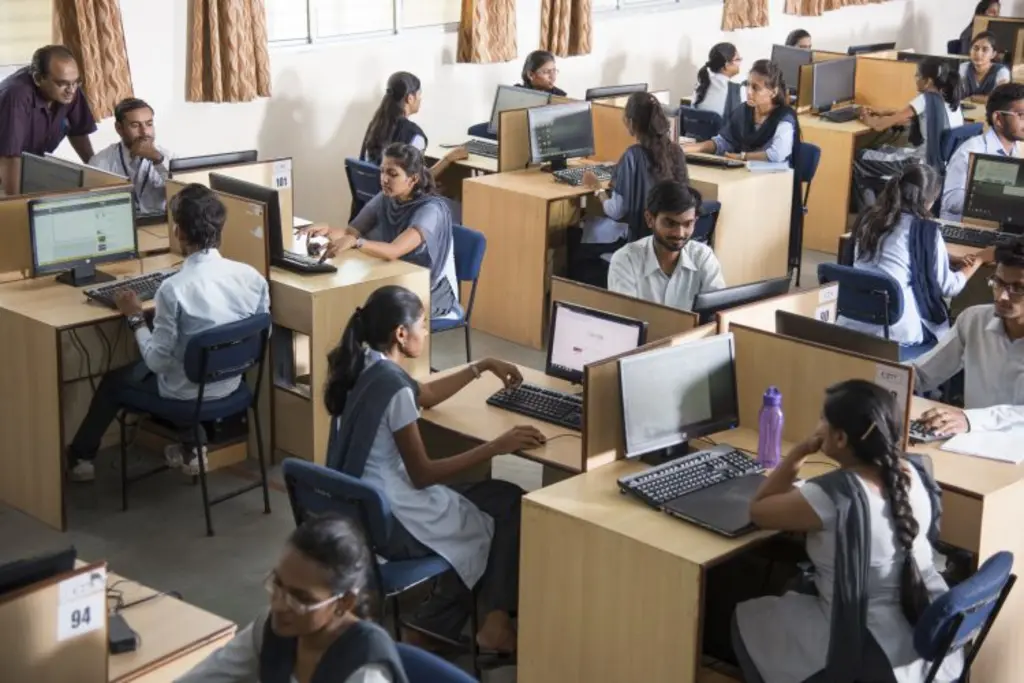
IT students in Nagpur, India / Photo credit: CRS Photo / Shutterstock
Surviving a funding winter
Even amid the rising interest rates and recession fears that led to sharp falls in valuations and investments, SaaS stood out as a beacon of hope in 2022.
The demand for SaaS had never been stronger. The pandemic accelerated the need for agility and efficiency in business strategies to take advantage of market opportunities around the globe. Large enterprises value the relatively low capital expenditure of adopting SaaS, while small businesses relish quick on-ramps and ease of use.
SaaS firms can scale their toplines efficiently without requiring outlandish investments, which is why they have been mostly unaffected by the funding drought. VC funding for SaaS startups in India stood at US$4.2 billion in 2021 and was set to exceed US$6.5 billion in 2022, according to one estimate.
Changing perceptions of growth
2021 saw startups feast on an unprecedented funding glut, leading them to relentlessly pursue growth, but 2022 was a year when the perceived value of growth plummeted.
In 2021, cash was so cheap that investors focused more on a company’s future growth than its current or past performance, and they were willing to pump huge amounts of capital into sales and marketing expansion. But now, the market sentiment has shifted from “growth at all costs” to “measured growth” – so much so that firms exhibiting high growth rates are trading at a discount.

Image credit: Together Fund
This balance between growth and profitability plays to the strengths of Indian SaaS companies.
They can acquire customers at a more cost-effective rate compared with their global peers and will be able to grow faster at a lower cost – giving Indian startups a strategic edge even as they mature. They can offer competitive pricing yet still achieve positive unit economics.
The availability of high-quality talent and the emergence of India as a domestic market for SaaS products lend further heft to those startups’ competitive advantage.
While this might make sense in theory, what are the specific domains and dimensions where India has the potential to emerge as the SaaS operating system of the world? And how can Indian SaaS firms capitalize on these opportunities?
Unique selling points





Stay updated on the go with our mobile app.
Get latest insights with smoother, more personalized experience through TIA mobile app.