Krish Raghav · · 4 min read
New Research Reveals China’s Potential for a Mobile Banking Revolution
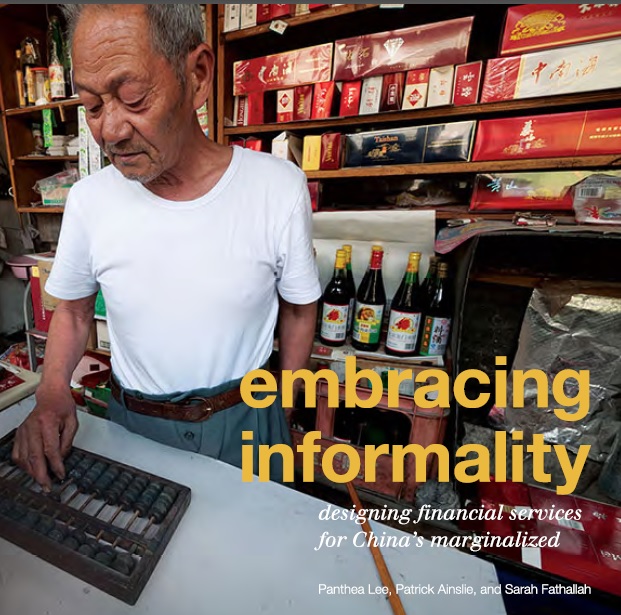
Researcher Patrick Ainslie calls it ‘handshakes over hetongs’ (the Mandarin word for ‘contract’). It’s an opportunity, an open challenge even, to reach 250 million people in China and potentially transform their lives.
Ainslie is part of a team of researchers at New York-based social enterprise Reboot, which recently published a study, based on extensive field interviews, on designing financial services for China’s marginalized groups. The project was commissioned by the Institute of Money, Technology and Financial Inclusion at the University of California in Irvine, and will soon be released as a book titled “Embracing Informality: Designing Financial Services for China’s Marginalized.”
64 percent of China’s rural and migrant population does not have access to formal banking services. Market pressures and risk aversion have driven the country’s “Big Four” banks to close more than 30,000 branches in just the last five years. The researchers at Reboot set out to explore the needs of marginalized groups (migrant workers, rural villagers and ethnic minorities), and to see how enterprises and entrepreneurs could deploy relevant financial services to this potentially gigantic customer base.
The most fascinating part of the report is the hypothetical mobile phone service Ainslie and his team describe – called M-Fu, its a remittance service that draws on the fieldwork to show how their recommendations can be put into practice.
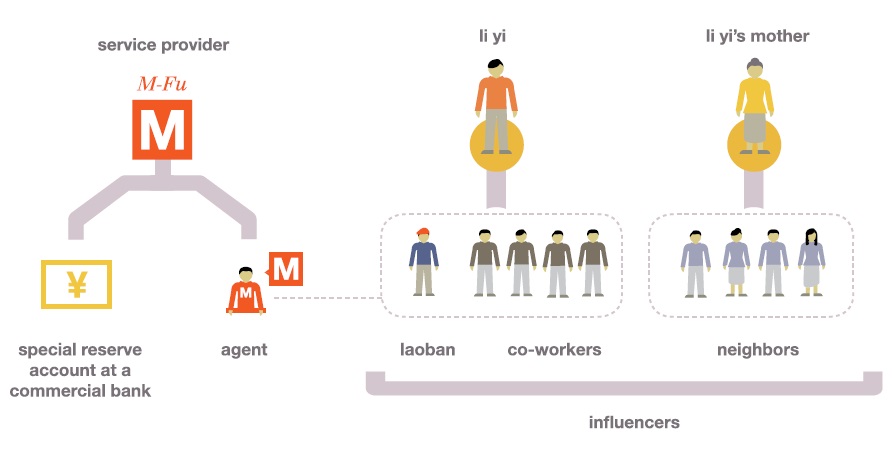
“With this research, we’re looking to curate a conversation among service providers , big donors, and startups,” Ainslie told me over a Skype interview. “Basically to say that if you’re going to build apps and services in China today, pay attention to these special cultural characteristics.” He adds:
“We want to put this out there as a current snapshot of what life is like for rural and disenfranchised – to try to humanize the system by talking about individual stories and the people we met.
Adapting international models
The obvious point of comparison for any form of mobile-based finance is M-PESA, first deployed successfully in Kenya and then imitated across the world with varying levels of success.
“You have to adapt systems to local contexts,” Ainslie says, “ specifically within China, there are current factors that we think make it prime for this market.”





Stay updated on the go with our mobile app.
Get latest insights with smoother, more personalized experience through TIA mobile app.