 Rebecca Liew · · 5 min read
This startup is elevating smart security through sound detection

At a mall on a quiet weekday, a shopper descends the escalator, only to lose his balance and take a tumble. Overhead, a pan-tilt-zoom CCTV fitted with eight microphones picks up on the sound of his fall – a baritone cry, accompanied by a dull thump – and sends a recorded clip of the incident to the security surveillance team for playback.
The entire process, from the actual fall to its verification, takes less than 10 seconds. But this surveillance involves more than just the modern CCTV: It’s the monitoring system known as Donut, a solution developed by SoundEye, a Singapore-based startup whose Internet of Things (IoT) solutions allow for emergency monitoring, home monitoring, and security surveillance.
“Our goal was not to replace the CCTV but to augment the surveillance camera,” explains SoundEye’s CEO and founder Tan Yeow Kee. “Cameras are limited by their field of view so if something happens behind or beneath them, you won’t be able to see much. But with sound surveillance, you’re capturing 360 degrees of motion.”
Elevating security through sound detection
Despite the prevalence of CCTVs today, visual surveillance has its drawbacks: It relies on humans to monitor footage, infringes on privacy in spaces such as washrooms, and is ultimately a costlier means of security monitoring. This leaves a wider margin for error and failure to quickly detect accidents or other emergencies.
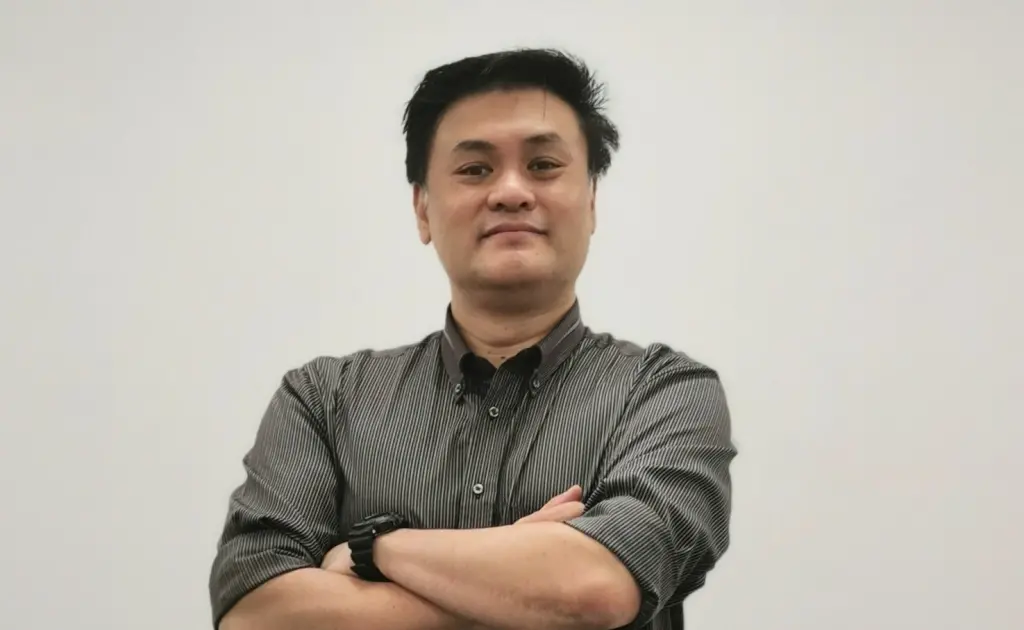
Tan Yeow Kee, CEO and founder of SoundEye. / Photo credit: SoundEye
To address that, SoundEye’s solution employs edge computing – meaning the system selectively records sound anomalies in an environment as they happen. This eliminates privacy issues as well as saves on costs, given that it requires a smaller network infrastructure than CCTVs, which employ cloud computing software to record hours of footage for playback purposes.
When Tan first developed the technology for the solution in 2013, however, his main motivation wasn’t to fill these gaps. At the time, the SoundEye CEO was a researcher at Singapore’s Agency for Science, Technology, and Research (ASTAR), and during his involvement in a robotics project, he learned of an elderly woman who had fallen in her bathroom and waited three days before receiving help.
Prompted by her story, Tan spent two years crafting a voice-activated emergency solution alongside a team of eight in a spin-off ASTAR project. Given the team’s focus on elderly care monitoring, SoundEye was initially registered as a social enterprise and so it secured grant money from the research agency as well as the Singapore Centre for Social Enterprise and Modern Aging Singapore – a business accelerator program by nonprofit organization Access Health International and NUS Enterprise, the entrepreneurial arm of the National University of Singapore. With these funds, the startup developed its earliest prototype: SoundEye Ark.
“Elderly monitoring conventionally involves the use of panic buttons, pull cords, or wearables,” Tan says. “With our solution, a person simply has to raise their voice.”
Building a better product
In fact, SoundEye Ark has its roots in sound event classification technology, which was originally developed in the United States to detect gunshots and loud explosions for homeland security purposes. According to Tan, the startup’s solution differs from the aforementioned technology through its focus on surveillance in nursing homes, washrooms, and – in recent years – malls and public spaces. Prior to this, however, SoundEye Ark was designed solely with the intent of monitoring the elderly.
“To test our technology and educate the wider public, we did demonstrations at trade shows and installed SoundEye units in orphanages and homes for the destitute, among others,” Tan shares. “We also tried to collect as much data as possible every few weeks, such as sound samples from the elderly whenever they screamed, sneezed, or coughed. This helped us evaluate the accuracy of the solution.”
Around the same time, the startup secured a series of paid pilot studies with welfare organizations, from orphanages and boys’ homes to homes for the destitute. Given that each demographic varies largely in terms of mannerisms, needs, and behavior, these pilot studies allowed SoundEye to collect a sufficient amount of data to refine the solution.
The future of smart security
A key challenge remains, however. At present, the sound detection solution can only discern cries of distress and falls with around 90% accuracy.
“The reality is, even big companies like Google and Amazon use face and sound recognition technology but can’t achieve 100% accuracy. Every technology has its pros and cons, and in this case, the sound detection technology and camera can help each other,” Tan says.
In 2019, SoundEye debuted Smali AI, a deep-learning sound recognition system, which, unlike SoundEye Ark, familiarizes itself with the acoustics in confined spaces, buildings, and public areas. According to Tan, it can help address emergencies in large spaces in just two minutes. Comparably, traditional surveillance tools take 10 minutes on average to verify emergencies.
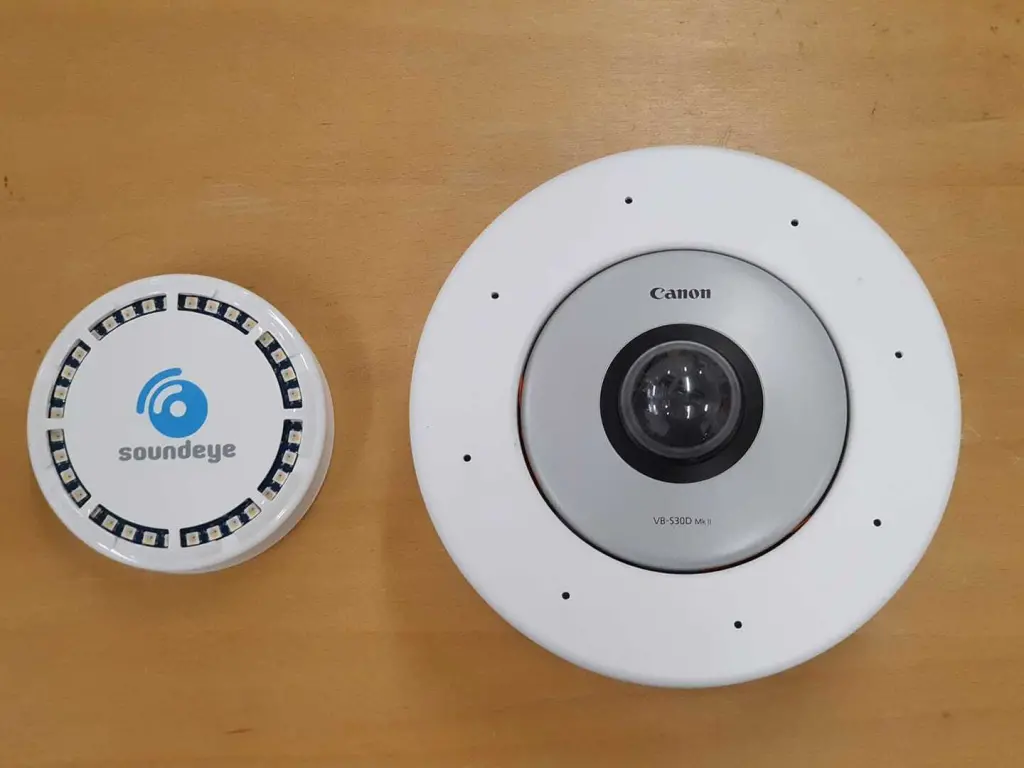
The SoundEye Donut (above right) features visual surveillance and deep-learning sound recognition capabilities. / Photo credit: SoundEye
The solution was a prelude to Donut, which builds on Smali AI through its visual surveillance and deep-learning sound recognition capabilities. Depending on where screams or target sounds are coming from, the camera pans to identify the source of the potential emergency, then records and sends these clips in real time to a caretaker or security personnel for verification.
Prior to the Covid-19 pandemic, SoundEye had intended to capture the elderly market in Thailand and Japan. But with those plans currently on hold, the startup is now focusing on developing commercial emergency monitoring products for washroom manufacturers and smart building owners in Singapore. Through these projects, Tan hopes the company will turn profitable, given SoundEye’s steady stream of clients that range from welfare organizations to smart building operators.
“Our objective is to refine our product to better adapt to different environments, as well as secure grants and funding for a separate fall-detection solution within the next 12 months,” Tan shares. “More companies are looking for innovations in technology to address surveillance and emergency monitoring issues, and that’s where solutions like ours come in.”
Converted from Singapore dollars. Rate: US$1 = S$1.33.
SoundEye is part of the Infocomm Media Development Authority’s SG:D Spark program. The Singapore-based startup uses sound recognition technology for emergency monitoring and smart building surveillance. Find out more by visiting the SoundEye website.
This content was produced by Tech in Asia Studios, which connects brands with Asia’s tech community. Learn more about partnering with Tech in Asia Studios.
Stay updated on the go with our mobile app.
Get latest insights with smoother, more personalized experience through TIA mobile app.
Recommended reads
 Singapore wants to be an AI superpower. Will it work?
 ‘Good morning, Dave’: The new world of physical AI in daily life
 Math provides the proof. OpenAI says AI makes original ideas.
 2 AI giants, 1 honesty problem
 Singapore to establish National AI Council, AI missions
 Building an AI copilot for robotics engineers
 From science to public safety: turning discoveries into solutions
 Southeast Asia’s data center boom has a water problem
 Fixing doctor burnout with AI is harder than it looks in SEA
 A middleman model makes free patient tracking possible





Editing by Nathaniel Fetalvero and September Grace Mahino
(And yes, we’re serious about ethics and transparency. More information here.)






📅 Upcoming Events
22 October 2026
Payoneer x CSPN Summit 2026