- Insights This article was written by a TIA community member. Insights pieces undergo the same rigorous editorial process that newsroom-produced articles have.
 Alan Clayton · · 4 min read
Pitching to investors? Always bring your co-founder

Photo credit: Pixabay
This article is part of Tech in Asia’s partnership with SOSV, where we publish articles that feature the firm’s valuable insights. For more articles in this series, go here.
Startup CEOs live or die by what happens at the first meeting with a prospective investor. Just like any first date, there are only two possible outcomes: another meeting (and the prospect of investment) or no more meeting.
But showing up alone, even as a smart imaginative founder who’s on such an important mission, reduces the chances of success by about 70 percent. How come?
The outcome of your investor meeting is mostly determined by the unconscious “dance” that involves so much more than words. It takes two to tango—a founder and an investor—but three to conclude a successful first waltz, which is what the first scheduled investor meeting really is. Emotionally bonding with your partner during the first waltz is arguably more important than getting the steps right.
Never waltz alone because…
There are two simultaneous outcomes to hop away with from the first meeting:
- An investment or other practical deliverable
- A relationship
Although you can survive a failed attempt at the first, it’s goodnight, Vienna if you fail at the second. Furthermore, no individual founder, among the 1,000+ I’ve met, can simultaneously and consciously deliver both. So, always pitch in pairs. Two heads are better than one, but four ears and two bodies are your unfair advantage.
Founder one plays the strategist, planner, and forecaster (who will remember what the time is), concentrating on the logical argument of the pitch. Founder two plays the visionary, storyteller, and friend (who will lose track of time), sparking a love affair with the whole project.
Nobody invests in or takes investment from someone they don’t love, or at least like. Remember that although investors technically get paid on the basis of their ability to make profitable investments, as humans their ultimate decisions are made on a loose combination of love and logic. And this love, I believe, represents the 70 percent.
The first waltz
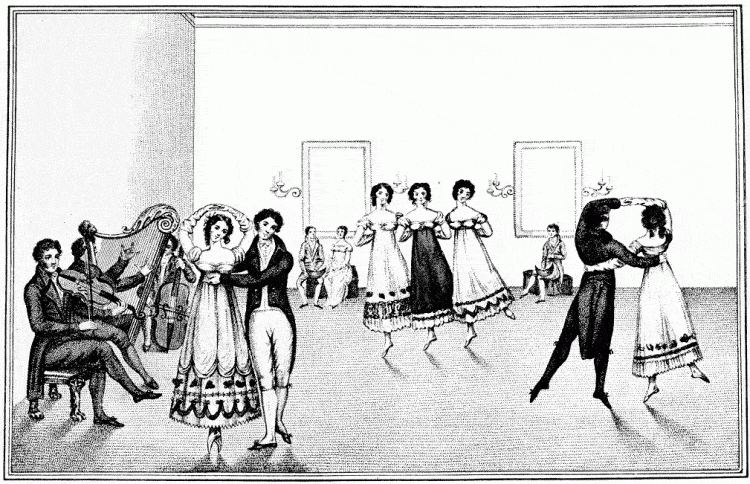
Photo credit: La Belle Assemblee / Wikimedia Commons
So, how do you do what I call “the first waltz?” It is a lavish performance in three acts.
Act I: The Chat-up





Stay updated on the go with our mobile app.
Get latest insights with smoother, more personalized experience through TIA mobile app.








📅 Upcoming Events
22 October 2026
Payoneer x CSPN Summit 2026