- Premium Content It takes our newsroom weeks - if not months - to investigate and produce stories for our premium content. You can’t find them anywhere else.
 Thu Huong Le · · 7 min read
The challenge and hidden potential of Vietnam’s agritech sector
With contributions from Dang Cong Sang in Ho Chi Minh City.
Farmers in the Mekong Delta of Vietnam are vulnerable to a lot of external factors. Mostly, they are subject to the fluctuations of weather patterns and produce prices.

A Vietnamese farmer in the Mekong Delta /Photo credit: Shutterstock
Smallholder farmers constitute the majority of Vietnam’s agriculture sector, which contributes more than 20% in gross domestic product annually.
Despite that, the space is still extremely fragmented and labor- and resource-intensive. Farmers also have to struggle with unsustainable farming practices.
While Indonesia also faces similar hurdles, the country has bred notable VC-backed companies like TaniHub, eFishery, and AgriAku. As of September, Indonesia’s agritech startups have seen an over 60% rise in funding amount in 2022 to reach US$216.9 million, according to Tech in Asia data.
In comparison, agritech funding in Vietnam is far behind, with only a handful of startups having raised external funding in the past decade.
So what are the challenges facing local agritech startups that want to disrupt this integral sector?
Tech adoption takes time
MimosaTEK, one of the country’s first agritech startups, is not one to “move fast and break things.”
The startup, which was founded in 2014, didn’t commercialize its products until 2018. It now offers a cloud computing platform linked with a system of sensors, enabling farmers to monitor the environment and the real-time conditions of their farms using smartphones. Farmers can also automate irrigation tasks or their fertilizer programs.
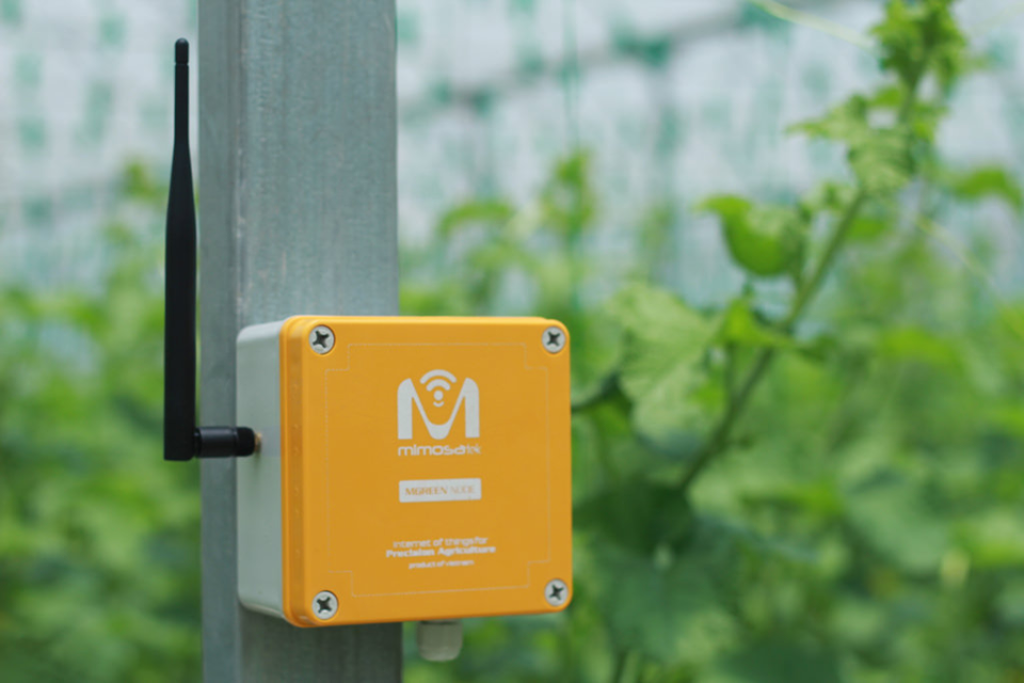
A sensor developed by MimosaTEK / Photo credit: MimosakTEK
The firm’s CEO and founder, Nguyen Khac Minh Tri, believes that internet-of-things technology can help Vietnamese farmers raise productivity and become less vulnerable to external shocks. He hopes such optimizations can cut down costs and the need for resources like water or electricity.
Supply chain issues come first
More funding to come?
Stay ahead in Asia’s tech landscape
This is premium content. Subscribe to read the full story.
Agritech firms in the country face an uphill task to digitalize a fragmented industry.
We know this is not ideal. ⌛ Sign up in 20 seconds. Cancel anytime.
Our subscriber community includes professionals from these companies:





Stay updated on the go with our mobile app.
Get latest insights with smoother, more personalized experience through TIA mobile app.










📅 Upcoming Events
22 October 2026
Payoneer x CSPN Summit 2026