- Premium Content It takes our newsroom weeks - if not months - to investigate and produce stories for our premium content. You can’t find them anywhere else.
 Putra Muskita · · 3 min read
Ovo is current e-wallet leader in Indonesia, according to central bank data
Ovo is Indonesia’s top digital payment system based on transaction values, Bank Indonesia data shows.
According to figures obtained by Tech in Asia, Ovo accounted for 37% of total digital payment transaction values in the first six months of 2019. Its main competitor, Gojek’s GoPay, took up 17%.
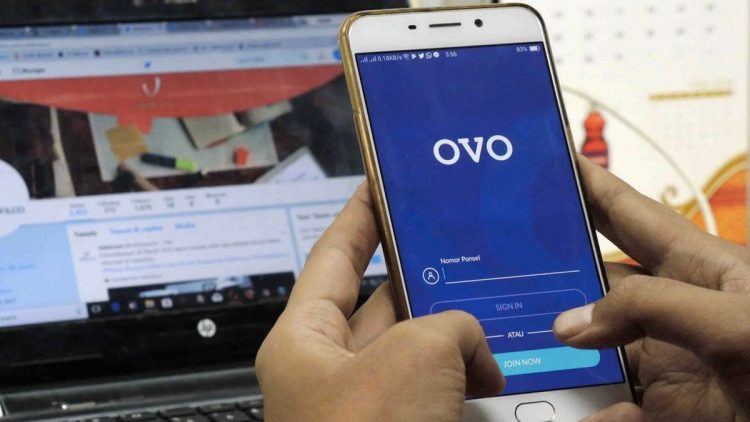
The Ovo app / Photo credit: Ovo
Based on the central bank’s data, the total digital payment transaction value for that period equaled 56.1 trillion rupiah (about US$4 billion). This means that Ovo – which has links to giants Grab and Tokopedia – generated roughly 20.8 trillion rupiah (US$1.49 billion), while GoPay brought in 9.5 trillion rupiah (US$680 million).
Bank Indonesia spokesman Onny Widjanarko declined to comment on the figures, adding that the central bank “has never issued or published individual data.” Ovo declined to comment.
Winny Triswandhani, GoPay’s head of corporate communications, said, “It is not clear what methodology was used here, but it does not tally with most research available in the market that shows GoPay to be the largest provider of digital payments in Indonesia.”
Fellow digital wallet players Dana and LinkAja contributed 10% and 3%, respectively, while the rest is mainly made up of e-money systems owned by banks like Mandiri and BCA.
The data was initially shown at a closed-door event organized by Bank Indonesia for payment industry players. While the methodology was not disclosed, the source was shown to be the LKPBU and LSBU – self-reported figures submitted regularly by banks and non-bank financial institutions to Bank Indonesia for oversight purposes.
Data from a regulatory body: a first
Both Ovo and Go-Pay have previously claimed to be the market leader in Indonesia. In an interview with Tech in Asia, Ovo CEO Jason Thompson claimed that the company is present in 115 million mobile devices in the country. That constitutes more than 60% of Indonesia’s total mobile devices, based on estimates from data research firm Statista.
Thompson attributed Ovo’s rapid rise in part to its open ecosystem, which allows it to integrate with the likes of Grab and Tokopedia while also operating a standalone app. He has credited the partnerships with both companies as an inflection point in Ovo’s growth.
Another key growth driver is each e-wallet’s adoption by offline retailers. Ovo is reportedly accepted at 500,000 merchants across Indonesia – partly the result of its ties with Indonesian conglomerate Lippo Group – while Go-Pay is accepted at about 300,000 merchants.
A recent study from Snapcart, an Indonesian research agency, claims that Ovo is the top e-wallet app in Indonesia. However, as Triswandhani noted, other studies have shown GoPay to be the leader.
A December 2018 study from the Financial Times estimated that almost 75% of mobile payment users chose Go-Pay while 42% went with Ovo. (Some also used both). In a January 2019 YouGov report, Go-Pay was used by 80% of respondents, followed by Ovo at 60%.
That said, this is perhaps the first time that the market share data came from a regulatory body instead of a third-party research firm.
Stay ahead in Asia’s tech landscape
This is premium content. Subscribe to read the full story.
The digital wallet represented roughly US$1.49 billion in transactions for the first half of 2019.
We know this is not ideal. ⌛ Sign up in 20 seconds. Cancel anytime.
Our subscriber community includes professionals from these companies:





Stay updated on the go with our mobile app.
Get latest insights with smoother, more personalized experience through TIA mobile app.