You are a college student in Singapore who’s about to fly home during the term break. You sit in a bed in a rented apartment, and realize you’re screwed: You don’t want to pay the expensive rent for the three months you’re away, but giving up the place means you’d lack a room to store your things.
That’s a problem Tseng Ching Tse and Vishesh Mittal wants to solve.
With a killer one-line elevator pitch — a Dropbox for physical things — Vault Dragon has eyes trained on an industry its founders say is ripe for disruption: Self-storage.
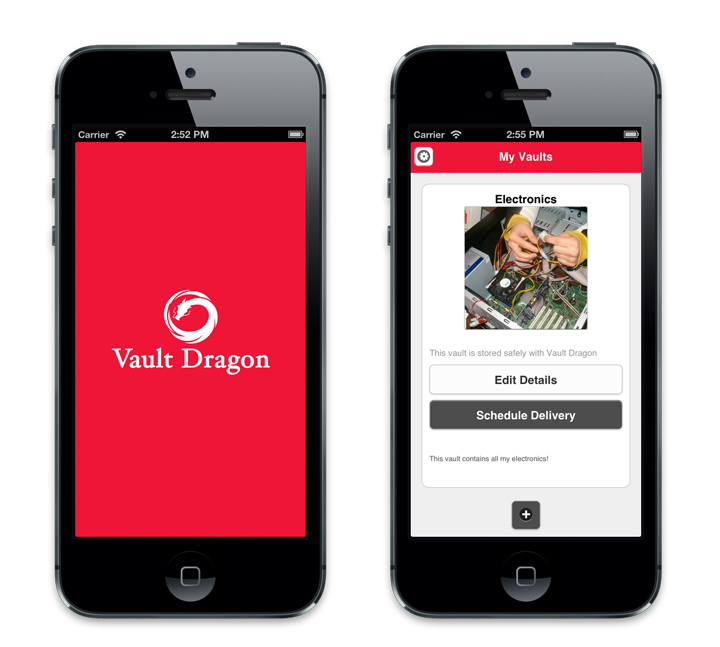
Here’s how it works: Users whip out their smartphones and open the Vault Dragon mobile app to schedule a delivery. A vault arrives at the appointed time. After placing the items into the tough, industrial grade box, they snap a picture with the app to document what’s inside, and with the same app, arrange for a pickup. It’s similar to United States startup Clutter, which just launched in Los Angeles.
Vault Dragon is a contrast from how self-storage works today: A company typically rents a warehouse, then ‘sublets’ it for weeks at a time to others. Customers then drive down to the location to deposit their stuff, and return again to retrieve it.
The model has downsides: High overheads discourage companies from offering flexible pricing plans to customers. Rentals in Singapore are exorbitant, further compounding the problem. Having a fixed location inconveniences customers, since they would need to drive or cab down to deposit stuff.
No better time
Yet the industry is rising. Ching, a former business consultant, says self-storage in Singapore has been growing at 45 percent year-on-year, to S$72 million (US$56 million).
A lot of M&A activity has occurred: SingPost bought Lock+Store last year for S$37 million (US$29 million), while CapitaLand purchased four self-storage businesses for $91.8 million.
Much growth will come in 2014 and 15, and Ching says this will be fueled by an en bloc boom for condominiums, which means many families will be moving about or downsizing their apartments. They’ll need a place to store their things.
He believes there’s not a better time to start the company.
For Vault Dragon, currently in closed beta, the keyword is flexibility. Like Amazon Web Services, users only pay for what they use: Pricing is S$0.45 per box per day, plus an extra S$19.50 for delivery of vaults back to the user. That’s between S$30 to S$50 a month.
The transparent pricing is a marked contrast from self-storage companies, which do not disclose rates online.
Vault Dragon is designed for convenience. Users won’t need to leave their house to store or retrieve the goods. With the app, they can remember what’s in their vaults and plan pickups at their convenience. For now, the startup only has one product offering. It does plan to roll out more types of boxes catering to different needs.
Still proof-of-concept





Stay updated on the go with our mobile app.
Get latest insights with smoother, more personalized experience through TIA mobile app.