Sign up for the Daily Newsletter, sent exclusively to our premium subscribers. We break down the big and messy topics of Asia’s tech and startup community. Get the newsletter in your inbox everyday with a premium subscription.
Hello reader,
One interesting thing that I’ve heard in relation to Singapore for many years – even going back to when I first started following the news – is that our survival and prosperity is almost entirely dependent on remaining as neutral as possible.
We want to be seen as being friends with everyone and we’ve had several opportunities to do that. For instance, we hosted a summit between North Korea and the US in 2018, which Kim Jong Un attended.
As a small country, we don’t have much power to swing a big sword around and bend other countries to our will, so the next best course of action is to help grease the gears a little and try to ensure that major powers don’t get too feisty with each other. After all, when the elephants fight, the grass suffers.
For today’s story, the elephants in question are the two biggest in the room: China and the US. They’ve had a rocky relationship in recent times, but perhaps that could change soon.
Today we look at:
- How US-China tensions could be easing up
- Tencent goes hard on AI
- Other newsy highlights such as a new feature in Bank Indonesia’s QR code-based digital payment system as well as Singaporean politician Tin Pei Ling leaving Grab.
Premium summary
Work this out

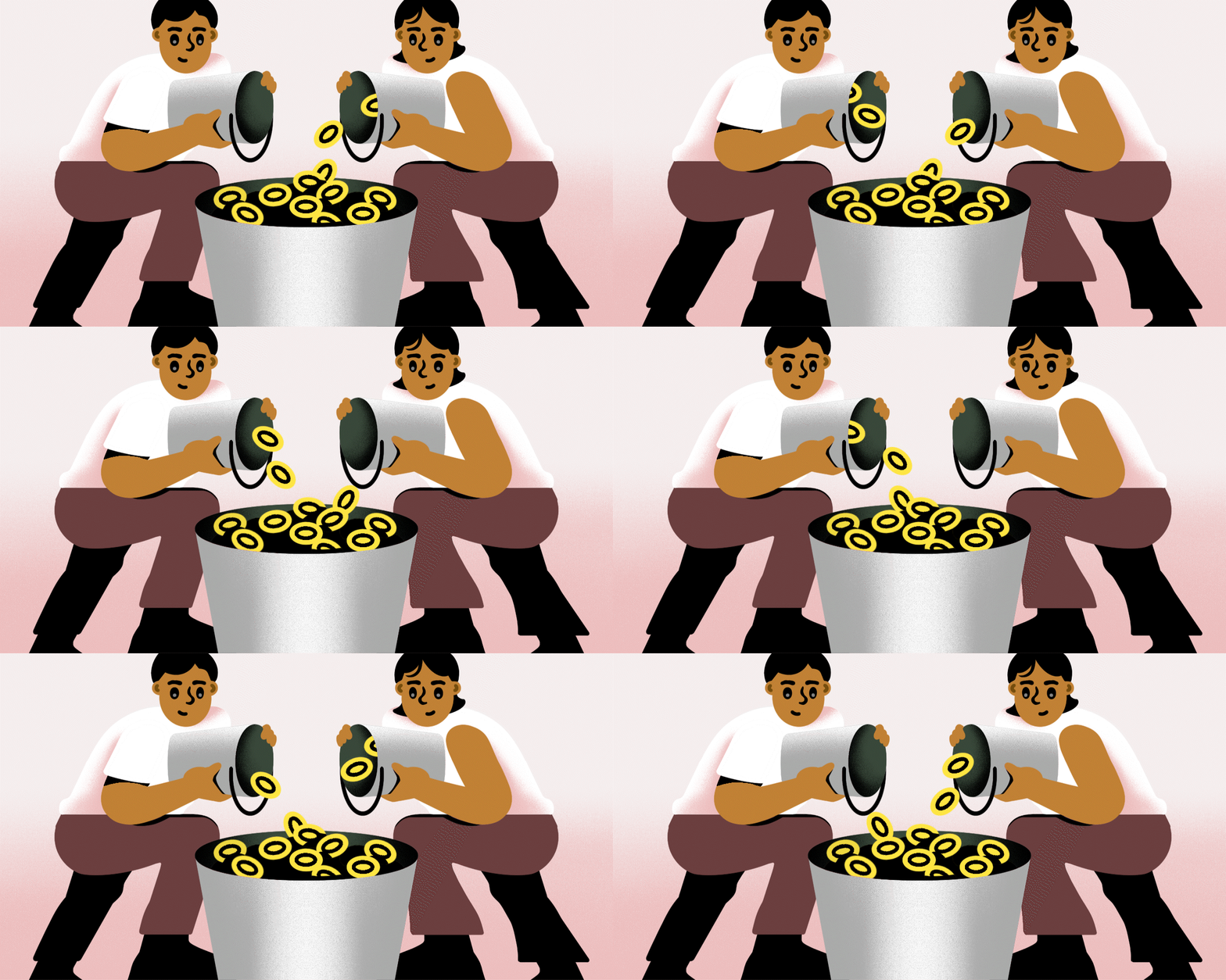
Image credit: Timmy Loen
When I was younger, teachers would often ask students who had just argued or fought each other to shake hands and apologize. It’s kind of funny to think that even at the top levels of geopolitics, shaking hands and talking things out is still probably the best way to try and repair relationships – and hopefully, that keeps things smooth and sweet like honey.
- Start of something new: It seems like US officials are trying to soften things up with China. US Secretary of State Antony Blinken, US Treasury Secretary Janet Yellen, and former secretary of state Henry Kissinger have all recently made visits to the country.
- Breaking free: That said, semiconductors remain a hot issue, especially after the US enacted significant restrictions on exports to China. In a seeming tit-for-tat, China then partially banned the use of products from US semiconductor manufacturer Micron, citing national security concerns.
- We’re all in this together: The rest of Asia would feel the effects of any falling out, although it may not be all that bad. Chinese businesses have turned to Southeast Asian companies to obtain US-made parts and startup founders may move to the region for a more stable, neutral environment.
Read more: US-China tensions may be cooling, but chips remain a hot issue
News spotlight
Big change for Tencent
We’re headed to Bangalore next! Seize your chance to be part of our exclusive founders-only networking event
Quick bytes





Stay updated on the go with our mobile app.
Get latest insights with smoother, more personalized experience through TIA mobile app.