- Insights This article was written by a TIA community member. Insights pieces undergo the same rigorous editorial process that newsroom-produced articles have.
 Sisi Song · · 7 min read
The US-China investment war through the lens of a VC investor
Investors across the globe are waiting for clarification on an executive order that President Joe Biden is reportedly close to signing that would limit outbound US investments into China. The order would regulate investments in the semiconductors, AI, and quantum computing sectors.
While the extent of the restrictions is unclear, the order is just another signal that the US-China investment war is intensifying. But what salvos have been fired so far, and how is the war going to affect founders and investors? Let’s dive in.
Photo credit: US Department of Agriculture
How we got here
The investment war between the two countries intensified around 2017, when the US government started intervening in Chinese investments and acquisitions of US companies. Some of the notable deals that were blocked include Ant Financial Group’s US$1.2 billion acquisition of MoneyGram and Canyon Bridge’s US$1.3 billion acquisition of Lattice Semiconductors.
In August 2018, then US president, Donald Trump, enacted the Foreign Investment Risk Review Modernization Act (FIRRMA), which requires any foreign investment in US companies involving critical technologies or personal data to be reviewed by the Committee on Foreign Investment in the United States (CFIUS).
Trump then pressured certain federal pension funds to halt investments in China stocks and prohibited US investments in companies identified as “Communist Chinese Military Companies.”
As a result of the enactment of FIRRMA, Chinese VC investments in US startups were cut in half to US$2.3 billion in 2019. The figure increased in 2020 due to a few large transactions in healthcare, pharmaceuticals, and biotechnology, but the number of deals continued to decline quickly.
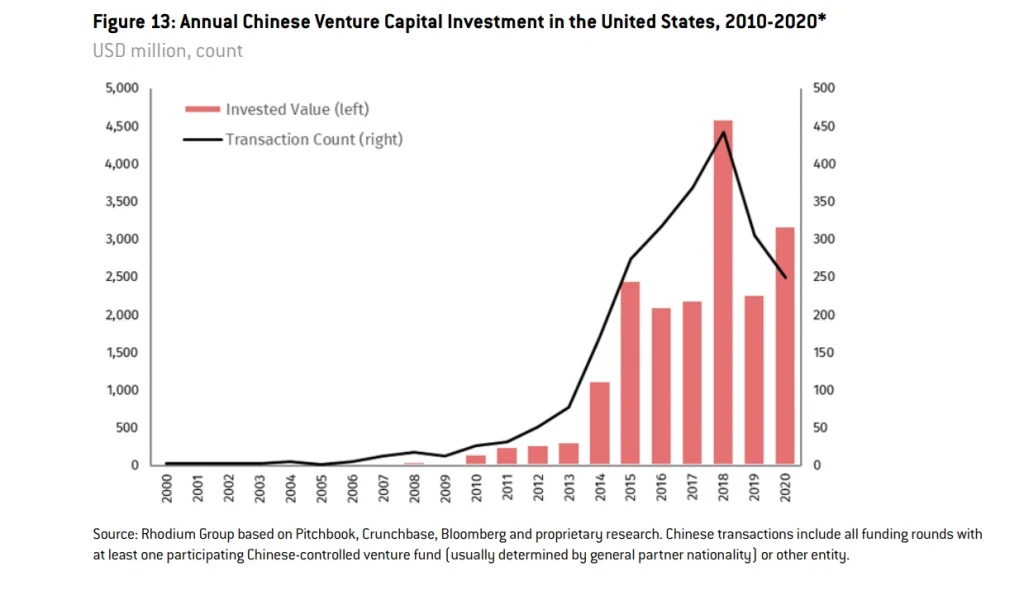
Image credit: Rhodium Group
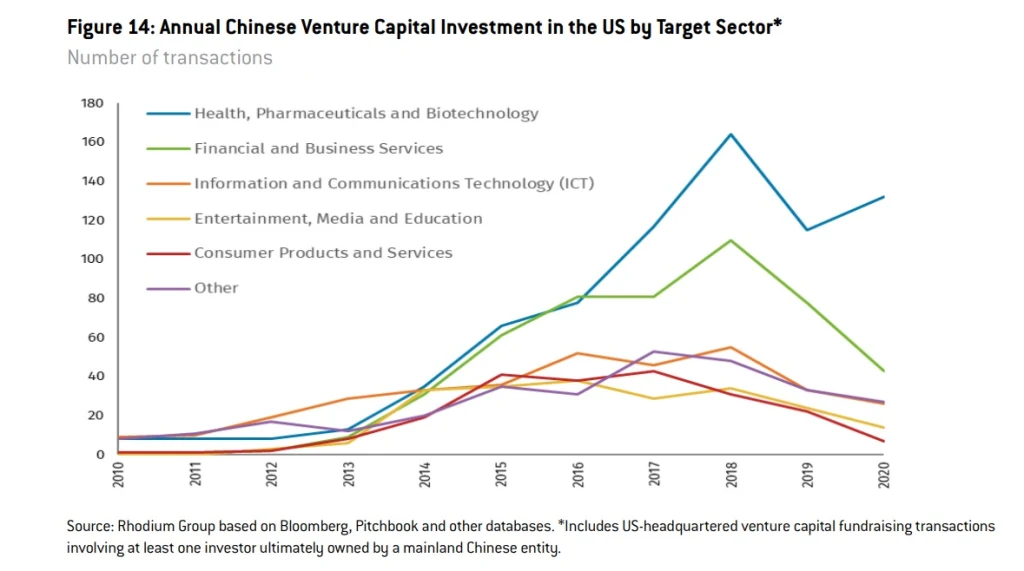
Image credit: Rhodium Group
President Biden’s proposed executive order – which observers are calling a “reverse CFIUS” – would compound the restrictions imposed by Trump and could cause US investors to depart China, similar to what CFIUS did to Chinese investors.
Interestingly, as much as China and the US disagree on many fronts, it seems that they want the same result from the investment war.
In China, many private and public firms in high-tech sectors are structured as onshore companies, meaning US investors can’t invest in them regardless of the restrictions imposed by Washington. This is so the Chinese firms can take advantage of policies that are favorable to companies fully owned by domestic shareholders.
Where is this going?
What should entrepreneurs and investors do?





Stay updated on the go with our mobile app.
Get latest insights with smoother, more personalized experience through TIA mobile app.