
One trait that successful businesses have in common is an eye for good talent. Bringing the right people onboard is extremely crucial, especially for a business that wants to scale.
But how does one identify that kind of hire? And what are the things growing companies have to keep in mind when it comes to talent?

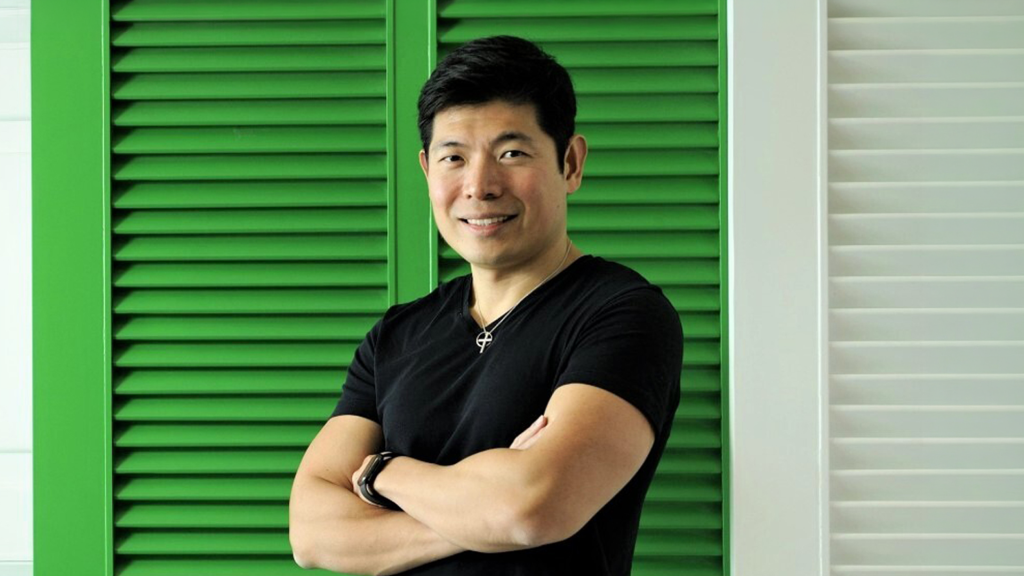
Allen Jaeyoon Lee, head of people at Aspire / Image credit: Tech in Asia
In this episode of Unstoppable Expansion, G-P Asia-Pacific general manager Charles Ferguson and Tech in Asia Studios managing editor Winston Zhang speak to Allen Jaeyoon Lee, head of people at Singapore-based Aspire. They talk about Lee’s observations on how different – and in some instances, surprisingly similar – the hiring landscape of today is from what it was 20 years ago.
Timecodes:
00:00 – What do growing companies have to keep in mind when it comes to talent?
00:57 – Welcome to Unstoppable Expansion
01:25 – Introducing Allen Jaeyoon Lee, head of people at Aspire
01:51 – A lot has changed, but some of the fundamentals still remain
02:59 – What people care about when it comes to their place of work
04:25 – The question of talent retention
05:10 – Setting up the leadership structure in a new market
06:28 – Businesses now have a lot more options when hiring
07:48 – How companies assess potential hires is changing drastically
10:39 – The importance of middle managers
14:33 – How can businesses prepare for difficulties that they don’t see coming?
15:29 – Thanks for listening – stay tuned for episode 4!
Hosts:
- Charles Ferguson, general manager for G-P’s Asia-Pacific operations
- Winston Zhang, managing editor of Tech in Asia Studios
Featured Interviewee:
- Allen Jaeyoon Lee, head of people at Singapore-based Aspire, an all-in-one finance software for growing businesses
Unstoppable Expansion is a podcast by Tech in Asia, produced in partnership with G-P. Visit G-P’s website to learn how the company can help your business gain an edge in the talent economy and scale your operations sustainably.
You can listen to the full series on Spotify here.
Transcript
Winston Zhang:
Hello Charles.
Charles Ferguson:
Good to see you, Winston.
Winston Zhang:
So we’ve been talking a lot lately about laying the foundations for a company that can scale sustainably, overcoming the initial and potential future barriers that companies will face in their attempts to expand their business.
Charles Ferguson:
That’s right – and quick note to the listener, you can check those episodes of the podcast out if you haven’t heard them yet.
Winston Zhang:
But it feels like one of the common threads that we keep tugging on as we unravel this topic of business expansion is that talent is an extremely crucial factor to a successful business and even more crucial for a business that wants to scale.
Charles Ferguson:
Of course. The people that make up the business are its lifeblood. Companies live and die by the talent they can obtain and retain.
Winston Zhang:
Right, but what are the things growing companies have to keep in mind when it comes to talent? The way we’ve been discussing the topic, I doubt it goes the same for every company of every size, just handing out skills proficiency tests and being done with it there and then.
Charles Ferguson:
You’re not wrong. But before we get into it, let’s get into the show. Welcome to Unstoppable Expansion, a podcast by Tech in Asia and G-P, where we’re going to discuss some of the strategies every business needs to know to be able to thrive in any economic climate. I’m Charles Ferguson, APAC general manager of G-P.
Winston Zhang:
And I’m Winston Zhang, managing editor of Tech in Asia Studios. Now, I assume you’re going to bring up a recent conversation you’ve had in which you just happened to discuss the answer to my question, so who’ve we got today, Charles?
Charles Ferguson:
Very astute, Winston. So I recently spoke with Allen Jaeyoon Lee, head of people at Aspire, and he’s been in the HR business for almost 20 years now.
Winston Zhang:
Wow, I can’t imagine how much the attitudes toward work and the relationship between employer and employee have changed since he first started out.
Charles Ferguson:
Well, surprisingly enough, Allen says that a lot of things have actually remained the same.
Allen Jaeyoon Lee (Recorded Interview):
I think a lot has changed, but still, there are fundamentals there. And again, it’s also very individualized. So it’s sometimes difficult to generalize, but at least from my experience, and considering some of the human nature, when people seek their career and etc., I find there are three key elements to attracting talents and what talent looks for. And the three areas are company, job, and people.
Winston Zhang:
That makes sense. Like, it matters how the company’s financial health is because that tells an employee how secure their job is, but it also matters how aligned the company’s values are to their own personal values.
Charles Ferguson:
Yes, and whether the job is interesting or exciting enough to the worker is important as well because who wants to spend most of their life doing something boring?
Winston Zhang:
Yeah, and then the people part refers, I guess, to the people that a talent would work with or work for. Could be pretty tiring to spend nine to five with people you don’t like.
Charles Ferguson:
Spot on. But although the three key areas that people consider about a job have remained the same, the priorities in which they rank those things are what’s shifting with the next generation.
Allen Jaeyoon Lee (Recorded Interview):
Sometimes, they say – for the company factor – I see more people really valuing the mission and purpose of the organization, rather than just the financial stability and things. So I think there’s differences between what you value when you think about a company.
I think what the difference is, the newer generation, perhaps, is valuing more the flexibility of the job. So that’s also kind of more important, depending on your demographics, I feel. And the last part – let’s say, manager – I feel there is much higher expectations for a manager to be, in a lot of different ways, compared to the more traditional manager. I think there’s a higher expectation, there’s also low tolerance for bad managers, to be honest.
Charles Ferguson (Recorded Interview):
Very much so.
Allen Jaeyoon Lee (Recorded Interview):
And again there’s other values that people seek for managers that didn’t used to be the case.
Winston Zhang:
Yeah, that tracks. With how the world’s become increasingly more connected, talent from every corner of the globe is almost spoiled for choice when it comes to the companies that they can choose to work for, which changes the entire relationship dynamic between them and their work.
Charles Ferguson:
Exactly, and that’s without even mentioning how different a remote working role is from the days of past where work only meant being stuck in cubicles with your eyes glued to your computer screen for hours on end. And the thing is, these factors don’t just play into how attractive a company is to potential hires. It also affects how well businesses can retain the talent they already have.
Allen Jaeyoon Lee (Recorded Interview):
So let’s say if someone is really – their job has changed – so it’s not like they enjoy – they’re not doing as much as they used to be. But if they are still really believing in the company’s mission and vision, if they really enjoy the people they work with, their managers, they will probably stay and vice versa.
Still, at the same time, even if the company may not be doing well, if your job is super interesting and exciting, and you’re growing – also, your people are very enjoyable to work with – you probably stay.
Winston Zhang:
That’s true. But how does all this play into hiring strategies for companies in scaling mode?
Charles Ferguson:
Well, that’s really just the backdrop of the conversation because one of the big questions a company that is expanding into a new market has to consider is how to structure the leadership within their business once they’ve set up shop in multiple locations.
Allen Jaeyoon Lee (Recorded Interview):
I mean, to me, it starts with the fundamental questions around centralization and decentralization.
Charles Ferguson (Recorded Interview):
That’s age-old, isn’t it? That’s like a perennial challenge for every company, which model do we use, you know?
Allen Jaeyoon Lee (Recorded Interview):
Yes, exactly. And it’s really whether you want to focus on the global leverage or do you want to really be locally empowering the business? And I think every business has different aspects to it, or strategies to it. And it should be. And as the company grows, as well, I think the company has to always kind of rethink about that right balance. Because coming from my experience, for example, companies who are more established who have gained larger global footprints already tend to focus on more decentralization piece where they want to really, really reap the benefit of a global leverage.
However, when I was looking into more startups, they will be probably more – it would be more helpful if they can be empowering the local business as well. And I think it’s not always like one-size-fits-all. But it’s, I think, to start with, how much do you want to be centralized versus decentralized in terms of org structure, in terms of decision-making, in terms of talent? I think all those things is an important factor that you think through it before you, for example, enter into market or do a global expansion.
Charles Ferguson:
On top of that, as we touched on earlier, with how much more connected the whole world is right now, it’s not just talent that has the opportunity to work for a company on the other side of the world. Businesses are now able to tap into a much deeper well of talent by accessing the global market.
Allen Jaeyoon Lee (Recorded Interview):
So that’s actually quite a new trend. That is super exciting, if you ask me, because I think that’s one of the trends that we see a bit more after Covid and after flexible work has been really implemented widely. For instance, our company, we have a lot of engineers, say, in India, but we don’t have a physical space. And that’s really kind of showing that it just opens up so much opportunities for the companies to hire from different locations, regardless of you know, to your point, like the commercial aspect of it because it just opens up for so much talent and opportunities if you just really be more flexible around location.
Winston Zhang:
Right, so because of how much the working world has changed – especially in the last couple of years – the number of things that companies now need to consider before setting out on a market expansion has increased exponentially.
Charles Ferguson:
That’s exactly right.
Winston Zhang:
But I wonder how much that’s shaped what goes on in the interview room – or, I suppose, the Zoom calls.
Charles Ferguson:
Essentially, the way companies have to assess each potential hire has changed drastically – whether or not they’re looking to scale.
Allen Jaeyoon Lee (Recorded Interview):
What I see as a change in terms of talent requirement is actually what we call values, or some company called cultural fit, some company calls whether the candidate aligns with our value system. So it’s called in slightly different ways. But I do see there’s more and more emphasis on that just because nowadays, the companies have very different cultures in very different stages of their growth.
So I think the companies are more realizing that aside from just the pure skill set, it’s really important for them to find someone who will be really aligned with our value system, but not just alignment, but who could really add on and to add value to our value system as well. So I see that part actually quite more important, or considerably more important compared to the past.
Winston Zhang:
I can imagine that gets a little messy, assessing soft skills, which are much harder to qualify as compared to technical, hard skills, where you can just do a rapid-fire quiz or get candidates to fill out a test sheet or something.
Charles Ferguson:
Oh, yeah, it’s incredibly difficult. Like, how do you know a potential hire doesn’t just know the right things to say during an interview? But it’s not escaped people like Allen that it’s hard to assess these types of skills, and so the industry’s actually putting a lot of effort into figuring out a way to do it accurately.
Allen Jaeyoon Lee (Recorded Interview):
So we try to operationalize that a bit. But yeah, there are definitely people who really, really have successful careers in an established organization, but also thrive in the startup environment. And we want that type of talent because startups are not going to be startups forever, you want to grow, they need people who know what great looks like and have built that.
But there are some indicators of predicting that, for example, and exactly to your point, someone who may have stayed with the organization for a long time, but have done some entrepreneurial pursuits within the organization, or someone who were in a very large organization, but kind of tried out different organizations throughout their career, right? So they might have stretched themselves a bit into a bit more, let’s say, scrappy environment, and also found them interesting themselves.
So if you kind of look into their career and how they have navigated the challenge, you would see some indicators of what that person could really perform in this role. And you need to kind of really assess that point to make sure that that person, despite the different profiles, could succeed in the new environment.
Winston Zhang:
OK, I see. But on that last note about succeeding in a new environment, it can be all well and good in the beginning, but how can companies ensure that the talent they bring on board continues to drive the business to success?
Charles Ferguson:
Well, it all really comes down to the middle management on the ground.
Allen Jaeyoon Lee (Recorded Interview):
On a day-to-day basis, it happens on the ground, with you having really meaningful conversations with the manager. So our focus has been really ensuring our managers have these regular sync with their employee. I mean let us do all the work related to a business as usual things, but really focus on development, career aspirations.
And, again, going back to your point, identify – the key thing here is identifying which skill set would help that individual for both him or herself, but for the team. So identify the skills and agreeing with really actionable next steps to get there. Later, the goal is for this kind of conversation to happen in very regularly throughout the whole organization, which I think is very powerful from my perspective, but again, like that means that our managers need to be really equipped and trained on these things, which is our focus at the moment. And again, it’s an opportunity and a challenge.
Winston Zhang:
That sounds like a lot to entrust to middle managers, which – now that I think about it – are people like me.
Charles Ferguson:
That’s right. But all it takes is ensuring that you keep on top of your performance reviews.
Winston Zhang:
Of course, if people perform well, they’re rewarded, right?
Charles Ferguson:
Well, actually, it goes way beyond just that.
Allen Jaeyoon Lee (Recorded Interview):
I think it’s really an important part of the organization. And that needs to be really, really solid, meaning you need to have a solid mechanism for employees to understand where they are, what they do well, what they don’t do well, and what are the ways to help them. So I think that would be, to me, like a fundamentally important aspect.
But what’s I think changing is it should be more wider in a way that it’s not just about this quarter or this year, but like, let’s say, if there are things that was good or that needs to be improved, then what’s the next steps in terms of helping that employee to be better. And that could be in the form of career conversations, that could be in the form of feedback and coaching.
So I think performance management needs to be scoped a bit wider in a way that includes the whole lifecycle of that employee and really from the intention to grow and develop that employee. And again, like there needs to be an aspect of rating and assessment. But I think it shouldn’t stop there.
Winston Zhang:
Wow, OK, I have a lot to think about because now it’s seeming a lot more relevant to my role as a manager and no longer just a musing I have about what it takes for a growing company to succeed.
Charles Ferguson:
Well, before I leave you to ruminate on what we’ve talked about, I’ll just add one last thing from my conversation with Allen about the importance of talent when it comes to the success of a business.
Allen Jaeyoon Lee (Recorded Interview):
I do think we shouldn’t think talent is an isolated topic. I think in an ideal world, it needs to come from the top – meaning the vision and the mission of the company. So where do we want to go, why we are here? And that would be very, very different across different organizations, but I think it needs to start from there.
So to get there, there will be strategies or operating priorities to get there. But then talent comes in, in that phase. So what type of talent do we want? What type of culture do we want to build? What type of employee value propositions we want to provide? And that should be linked with that mission, vision of your organization and the strategy. So then all the good people and talent, initiatives, or strategies also aligned, and I think we need to really rethink that periodically because things change, whether then that the talent strategy that we’ve said previously aligned with the overall mission, is that still relevant, or do we have to tweak again?
So I don’t think it’s also static. But I think it’s always taking a moment to really review that this is aligned and whether there’s a need for changes there.
Winston Zhang:
Right, so as long as you’re constantly keeping tabs on your talent, continuously ensuring that they’re incentivized to stay with you through an expansion and more, and as long as you keep your company attractive enough of a prospect for more people to join, you’re all good.
Charles Ferguson:
Oh, no, far from it.
Winston Zhang:
Wait, there’s more?
Charles Ferguson:
Much more. For one, you need to ensure that you’re running your business like a ship that can handle the waves – especially the waves that you might not see coming.
Kevin Sutantyo (Recorded Interview):
Doing a startup, I believe that you generally just have to know that it’s a long road. And the best founders actually have this character, where they have something more, they have a purpose, where they’re looking to solve a problem. And so therefore, when the going gets tough, they’ll find a way to break through, to go around that wall, instead of just giving up.
Winston Zhang:
So we’ve got one more episode?
Charles Ferguson:
Of course we do! But in the meantime, I hope you – you, the listener – enjoyed this episode. If you did, make sure to check out the previous episodes of Unstoppable Expansion, where Winston and I dived into more of the strategies every business needs to know to be able to thrive in any economic climate.
Winston Zhang:
And if you like us enough or have any thoughts on this episode, make sure to let us know by giving us five stars and a nice review on your podcast platform of choice.
Charles Ferguson:
Of course, if you are a business leader and thinking of – or in the process of – scaling your business and you’d like to know how we at G-P can help you in your expansion endeavors, make sure to visit our website at www.globalization-partners.com. Until next time, I’m Charles Ferguson –
Winston Zhang:
And I’m Winston Zhang.
Charles Ferguson:
– and we’ll catch you next time.
Stay updated on the go with our mobile app.
Get latest insights with smoother, more personalized experience through TIA mobile app.
Recommended reads
 Inside Singapore’s government team that kills its own products
 Once an IPO hopeful, SCI Ecommerce nears collapse
 SEA financials tracker: Traveloka profit drops 71% despite gains
 Who’s betting big on ChatGPT ads? Not Asian brands
 VC tracker: Granite Asia launches US$50 million fund
 GCash trims IPO ambitions to meet market realities
 Igloo CEO eyes global M&A: ‘We have an appetite to grow more’
 Why SBI paid a premium for Ajaib amid a tough market
 OpenAI warns building for today will cause technical debt
 Grab insiders buy in as Uber overhang weighs on stock





Editing by Jaclyn Tiu
(And yes, we’re serious about ethics and transparency. More information here.)






📅 Upcoming Events
22 October 2026
Payoneer x CSPN Summit 2026