- Premium Content It takes our newsroom weeks - if not months - to investigate and produce stories for our premium content. You can’t find them anywhere else.
 Nikita Puri · · 10 min read
The unseen human toll of Covid-19 on tech companies
Last year was a good one for eFishery. The Indonesian startup based out of Bandung had closed a funding round, doubled its headcount, and quadrupled its revenue.
“When the economy is doing a little badly, people tend to eat more fish since it is cheaper (in this part of the world) than other forms of animal protein,” says Gibran Huzaifah, founder and CEO of the company, which helps shrimp and fish farmers grow their businesses sustainably.
Then the pandemic struck, and soon, eFishery’s entire manufacturing team – the only ones in the company required to make field visits – tested positive for Covid-19.
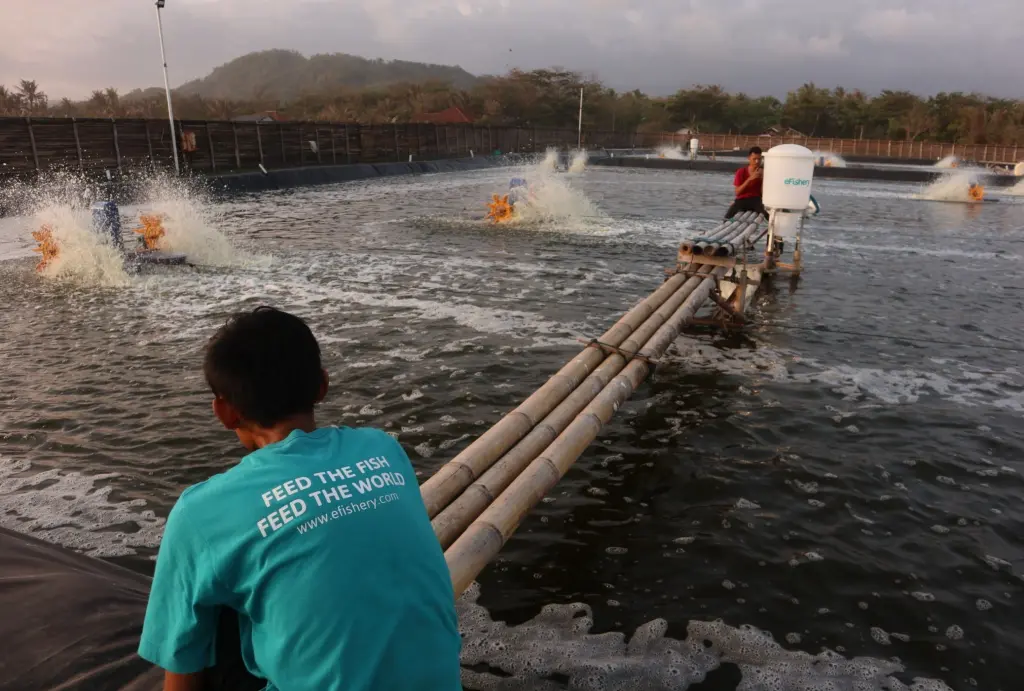
Indonesia’s eFishery helps shrimp and fish farmers grow their businesses sustainably. / Photo credit: eFishery
“I really didn’t know what to expect while I was recovering, after hearing that some acquaintances [who had also contracted the virus] passed away,” says an eFishery employee who didn’t want to be named.
The first week was especially stressful, he says, with “bad stories” running amok on social media. “There was just so much anxiety, and I was constantly thinking of having to postpone work deadlines and meetings,” he says.
Similar stories of employees falling ill still play out in many companies as the pandemic continues to cast its shadow on businesses.
Its toll on tech company workers have largely gone undocumented. But as Tech in Asia’s conversations with companies in India and Indonesia show, the handbook on human resource management is being rewritten so it could rise up to the world’s newer challenges.
Companies that pride themselves on putting people first have thrown stringent guidelines, such as those regarding leaves of absence, out the window. They have instead adopted policies better suited to contemporary times, like renewing insurance policies for employees to ensure they also cover Covid-19 infection.
Dealing with anxiety
The role of human resource and management teams has “fundamentally” changed in recent times, says Krishna Raghavan, chief people officer at Bengaluru-based ecommerce unicorn Flipkart.
With graphs charting new infection highs in India at the height of the pandemic last year, the Walmart-acquired company had its hands full.
As work-from-home policies started to kick in, Flipkart floated a survey to understand what its employees wanted, and received well over 9,000 responses. This was one of the many things it has done to ensure that employees have a say in the company policy-making.
The company also introduced a chatbot called Sia to “listen” to employees, and it has enabled Flipkart to solicit feedback from over 12,000 corporate staffers.
Examples of feedback received via Sia include requests for common breaks among team members (they now have a common lunch hour during which no meetings are scheduled), the introduction of no-meeting days, access to counseling facilities, and more.
Devil is in the details
Rise of the in-house pandemic task force
Molding culture
Stay ahead in Asia’s tech landscape
This is premium content. Subscribe to read the full story.
While tech businesses have emerged more resilient than most, they still have to work hard to help employees tide through the grief caused by the pandemic.
We know this is not ideal. ⌛ Sign up in 20 seconds. Cancel anytime.
Our subscriber community includes professionals from these companies:





Stay updated on the go with our mobile app.
Get latest insights with smoother, more personalized experience through TIA mobile app.












📅 Upcoming Events
22 October 2026
Payoneer x CSPN Summit 2026