
When Netflix first came onto the scene in 1997, it disrupted the movie rental business with mail-based solutions. It evolved to offer subscription services and on-demand video streaming, changing the way people consumed content and becoming one of the biggest streaming platforms in the world.
On the flip side, competitor Blockbuster – once a major video rental chain that dominated the market – is now but a memory. Its failure to launch new products, embrace new technologies, and keep up with customers’ demands led to its undoing.

Photo credit: Shutterstock
The story of Netflix and Blockbuster is a classic example showing how innovation is the lifeblood of businesses to meet the ever-changing demands of customers – and how failure to innovate can lead to an unhappy ending.
“[Innovation] is existential to every company,” says Aditya Goyal, director of New Businesses Build (NBB), a new division leading innovation at Singapore-based tech-enabled telco Circles. “Any company which has not transformed with the ever-changing needs of its customers has been completely wiped out.”
Building innovation into a company’s processes is crucial to staying ahead – but it’s far easier said than done.
Circles has a reputation as an innovator, having disrupted the telco scene by launching Singapore’s first fully digital telco Circles Life back in 2016. At a time when two-year lock-in mobile contracts were the default, Circles Life was the first telco in the country to offer flexible mobile plans. It also offered digital services beyond the traditional telco offerings of connectivity and made waves for unconventional marketing tactics.
Here are the three building blocks the company has in place to ensure innovation is a constant driving force for the business.
Mind over matter to unleash creativity
To foster innovation, it’s important to create a culture where people feel free to think creatively and share ideas openly.
“The first thing is to have a growth mindset,” shares Goyal. “To innovate means you have to constantly test the boundaries and see change as opportunities.”
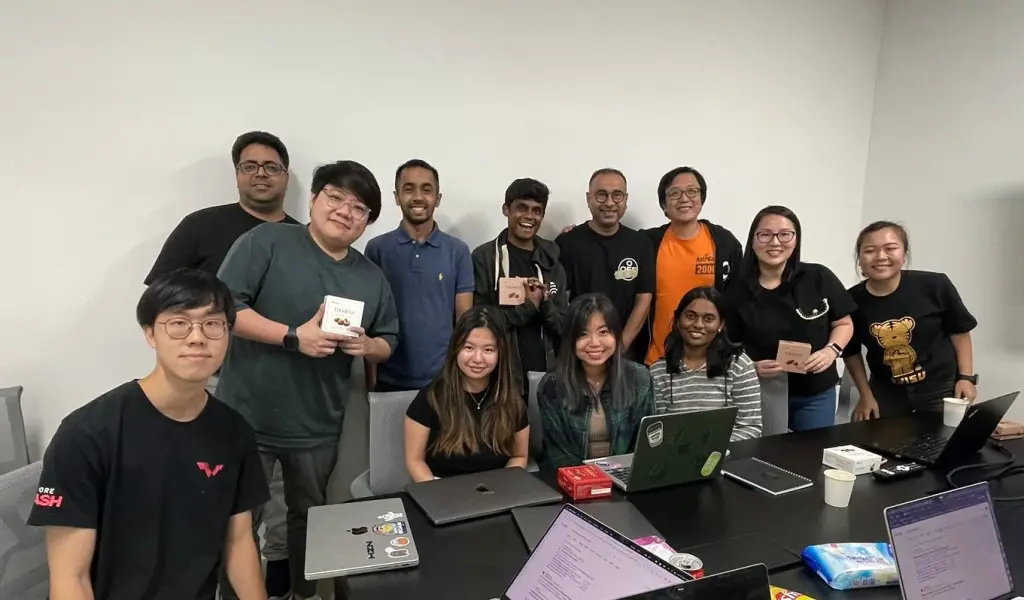
Goyal (first from left, top row) with the team behind Jetpac / Photo credit: Circles
Circles has strived to create a safe place for employees to test new ideas, allowing for iterative approaches that enable quick feedback loops and adjustments. It also emphasizes the importance of having a team of diverse thinkers who all believe in solving the industry’s problems.
“[The leadership team] has fostered an environment where employees are empowered to run their own projects as if they were the owner of the business or product launch,” says Emily Chua, product manager of NBB. “This creates a sense of ownership for employees to constantly seek innovative ways to push their creative envelope and drive successful project outcomes.”
However, carving out time for innovation can be challenging since employees have everyday tasks to accomplish. This is why the NBB division was set up.
“NBB is focused on developing and launching new ideas, making innovation the core of [employees’] work,” says Goyal.
“There’s a lot of transparency [in NBB] – we are all in the same meetings, and it’s particularly helpful because in product development, you’re often coordinating between different departments,” shares Chua.
“Now I no longer have to play that role because everybody is aligned to the same goals, and I can do a lot more exploratory work, figuring out the next product we should launch and how to meet other user needs.”
Having this environment for innovation has led to the development of new solutions, such as Jetpac, Circles Life’s global eSIM.

Photo credit: Circles
Born from one of the company’s think-tank sessions, Jetpac aims to go beyond data roaming to deliver value-added services that boost convenience for travelers. They can automatically connect to networks in 50 countries through an eSIM activation, access over 1,000 lounges globally in the event of flight delays, as well as have one-click access to emergency services in most destinations.
The product is also telco-agnostic – customers can simply purchase the eSIM to access Jetpac on top of their existing mobile plans, making it a convenient option for anyone in need of data roaming.
“We saw that in the post-Covid-19 travel era, many businesses and services had moved online, which in turn meant more time spent online and more data costs as a result. Plus, there was a heightened sense of uncertainty around travel,” Chua explains. “We had to think out of the box about what type of product and services this travel product could offer to enhance travelers’ experiences.”
Through rapid prototyping and experiments, the product was born in 2022, and since then the number of its users has grown 60% month on month.
Test fast, fail fast, repeat
However, just having the right mindset isn’t enough.
“You can’t put traditional key performance indicators on innovation,” says Goyal. “You can’t say, ‘you need to deliver this much in revenue or hit this target or you won’t get your bonus’ – it stifles innovation.”
Research has shown that 95% of new products fail. As such, firms need to be willing to embrace failure and build this mindset into their processes fast.

“We need to take the fear out of innovation,” Goyal remarks.
To that end, instead of monthly or quarterly performance indicators, innovation projects benefit more from being outcome-driven and having a long-term focus.
“Give them budgets. Make the innovation business self-sustaining. But don’t limit them with KPIs,” Goyal advises.
Companies can also take steps to “de-risk” new innovations and create a safe space for failure. For example, Circles runs hackathons to develop new features or come up with solutions. This allows employees to propose new ideas, innovate freely, and learn from failures quickly.
Circles has also launched a proprietary testing environment called Sandbox, which is isolated from the main platform. In Sandbox, the company can run experiments in a controlled setting. This enables rapid prototyping and experimentation and increases the odds of success when a product actually goes to market.
Know thy user
The last piece of the puzzle is a tale as old as time – the need to know one’s users, understand their problem, and figure out how to add value to them.
Jetpac, which was discussed earlier, is an example of this in action, having been specifically developed to meet the needs of users traveling in the wake of the Covid-19 pandemic. It also recognized the shift in the way people travel, especially how being digitally connected is a big part of travelers’ experiences.
“Sometimes, customers just tell you, ‘hey, give me data at a lower price,’” Chua shares. “That’s not really innovation, but knowing how to read between the lines and identify those pain points and opportunities is crucial to create a product differentiator that meets their needs.”
Putting everything in place
Leaders need to understand that innovation takes work, Chua says. While having the right mindset, culture, and understanding of users makes a difference, it doesn’t change the fact that innovation is a significant endeavor that requires time and effort.
“Don’t bank on it as the next big thing, as that creates unnecessary pressure and leads to short-term thinking, which is not the best environment to encourage discovery and exploration,” she says.
“Remember the North Star [metrics],” Goyal also emphasizes. “Create space, put in the right mix of people with the right mindset, and embrace failure.”
Circles is a global technology company reimagining the telco industry by offering digital services that go beyond traditional telco services. In 2016, the company launched Singapore’s first digital telco Circles Life, which then launched Jetpac – its premium travel eSIM brand – last year.
Through its operator and enterprise businesses, Circles is partnering with operators in 14 countries, with the mission to deliver delightful digital experiences to millions.
Learn more about its efforts toward transforming the telecommunications industry by checking out its website.
This content was produced by Tech in Asia Studios, which connects brands with Asia’s tech community. Learn more about partnering with Tech in Asia Studios.
Stay updated on the go with our mobile app.
Get latest insights with smoother, more personalized experience through TIA mobile app.
Recommended reads
 Building a human capital operating system for students
 An AI interviewer being built on interview data, not CVs
 What VCs need in a fund administrator
 Firing fast is the secret to building top sales teams
 AI startup Acceler8 lands backing from A16z Speedrun
 New chapter for Vietnam’s fintech sector
 The founder mistake Airbnb’s CEO thinks kills great companies
 How Europe wins the AI race in SAP CEO’s view
 Sequoia partner highlights Elon Musk’s hidden genius
 The ElevenLabs sales culture (and why inbound is a risk)





Editing by Winston Zhang, Jonathan Chew, and Dhania Putri Sarahtika
(And yes, we’re serious about ethics and transparency. More information here.)




📅 Upcoming Events
22 October 2026
Payoneer x CSPN Summit 2026