 Nadine Freischlad · · 3 min read
IPOs for startups in Indonesia ‘one or two years’ away, minister says
There are high hopes that Indonesia is on the cusp of a breakthrough in ecommerce.
In fact, an often-cited government projection believes the archipelago’s ecommerce transaction volume will reach US$130 billion by 2020. That figure was pegged at US$12 billion in 2014. In 2015, it’s said to have been at around US$18 billion.
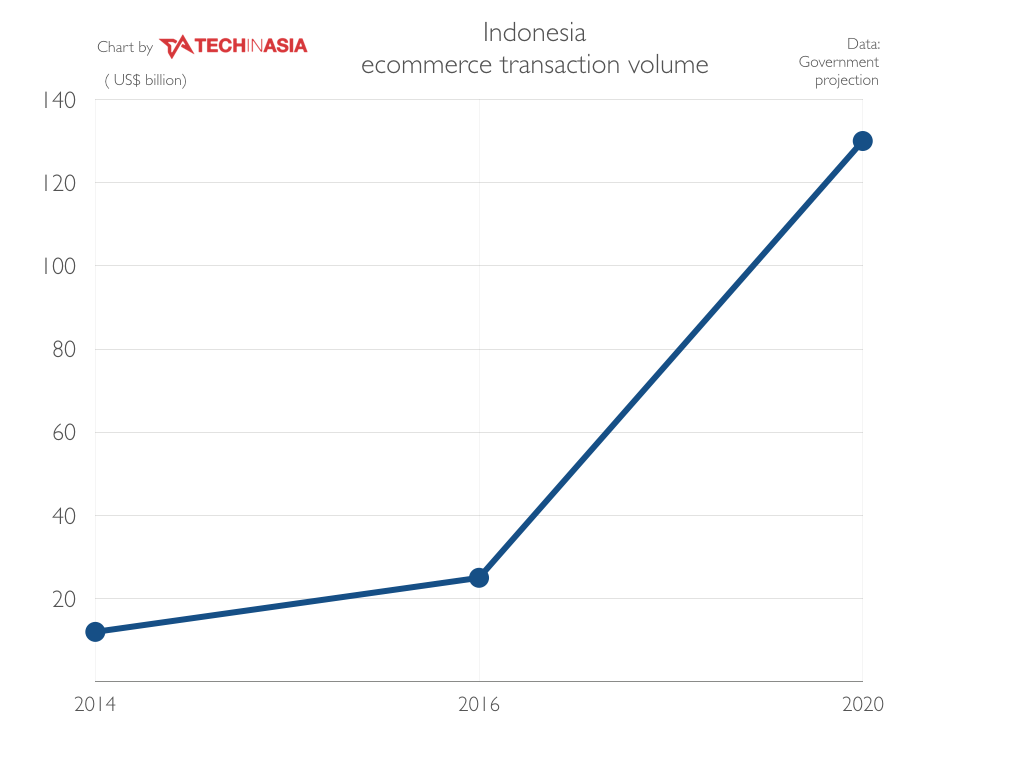
Caption: These are the figures Indonesia’s government is working with.
How, exactly, is Indonesia going to arrive at a more than seven-fold rise in ecommerce spending in just four years?
Borderless News recently sat down for a video interview with Indonesia’s IT and communications minister Rudiantara and asked him that exact question.
Watch the interview below. It’s being published in segments, so not all of it is online yet.
A ton of homework
The short version of what the minister said seems to be: we’re not sure; many things have to come together to make this work.
“Several issues need to be addressed, among others funding and taxation issues, as well as logistics, human capital resource, infrastructure, and cybersecurity issues,” says Rudiantara.
He doesn’t say much about how he arrives at the US$130 billion, despite the interviewer’s insisting. The minister merely points to broad trends like Indonesia’s “demographic bonus,” – Indonesia’s large and young population which drives consumption – and changing lifestyles.
It would have been nice to learn which economic indicators the government considered in its prediction, and what figures it uses to calculate ecommerce transaction volume.
Statistica, for example, has its own projection for ecommerce development in Indonesia. Its outlook for 2020 is much lower: only US$16.4 billion. The statistics portal qualifies its results by saying it only considers online sales of physical goods and leaves out the entire segment of small merchants and individuals selling things online. This could explain the huge difference in the predicted values.
But even if he didn’t fully explain the US$130 billion figure, Rudiantara did share two interesting details about Indonesia’s ecommerce plans.
A technology board and loans for startups
The first is possible government involvement in startup financing. A while ago, plans for a government-backed venture fund were shot down, but now, Rudiantara says the government is considering “subsidized micro-loans” for startups that can be “converted to venture capital.” How those would work wasn’t immediately clear.





Stay updated on the go with our mobile app.
Get latest insights with smoother, more personalized experience through TIA mobile app.








📅 Upcoming Events
22 October 2026
Payoneer x CSPN Summit 2026