- Insights This article was written by a TIA community member. Insights pieces undergo the same rigorous editorial process that newsroom-produced articles have.
 Sam Lim · · 2 min read
Opinion: How this cryptocurrency type can help Asia’s unbanked

Photo credit: Sasin Tipchai.
As cryptocurrency sees increased demand and growth in Asia, telecoms are using it to reach the unbanked. Enter telecom cryptocurrency, which attracts investors through trust, reach, and know-your-customer (KYC) compliance.
Snapshot
- Cryptocurrency can unlock an unbanked economy of 2 billion people. Both mobile subscribers and the unbanked in emerging and frontier markets such as Myanmar and India, respectively, can use mobile money.
- The remittance market is in need of modernization and is ripe for disruption. Today, telecoms are involved in less than 1 percent of global remittances worth US$500 billion.
- Given recent speculations on ICOs, telecom cryptocurrencies will likely stand out given their robust KYC framework and assurance that transactions are transparent and traceable.
- We found that telecom cryptocurrency reflects greater access to capital, sending and receiving remittances, inbound and outbound roaming payments, and international aid.
Unlocking the unbanked economy
Today, the unbanked economy is underserved and largely untapped. In Southeast Asia, only 27 percent of the population have a bank account in 2016, leaving more than 400 million people unbanked.
Despite that, there are nearly five times as many mobile phones in the world (5 billion) as there are active bank accounts (1.2 billion). As it is a lot easier to access mobile phone services than banking services, telecom cryptocurrency can capitalize on this disparity and disrupt the current traditional banking and financial systems.
See: They want to bring cryptocoins to the ‘unbanked’
Our recent use case study at Telcoin showed that cryptocurrency can tap into the synergies between the reach of mobile telecoms and the fast, borderless nature of blockchain to unlock the unbanked economy.
Transforming telecoms with cryptocurrency
The telecoms industry now is stagnant and commoditized, particularly in Asia. Telecoms globally are seeking ways to innovate and bring greater value to customers by adopting mobile financial services. The telecom cryptocurrency, for one thing, can help drive further adoption of mobile money.
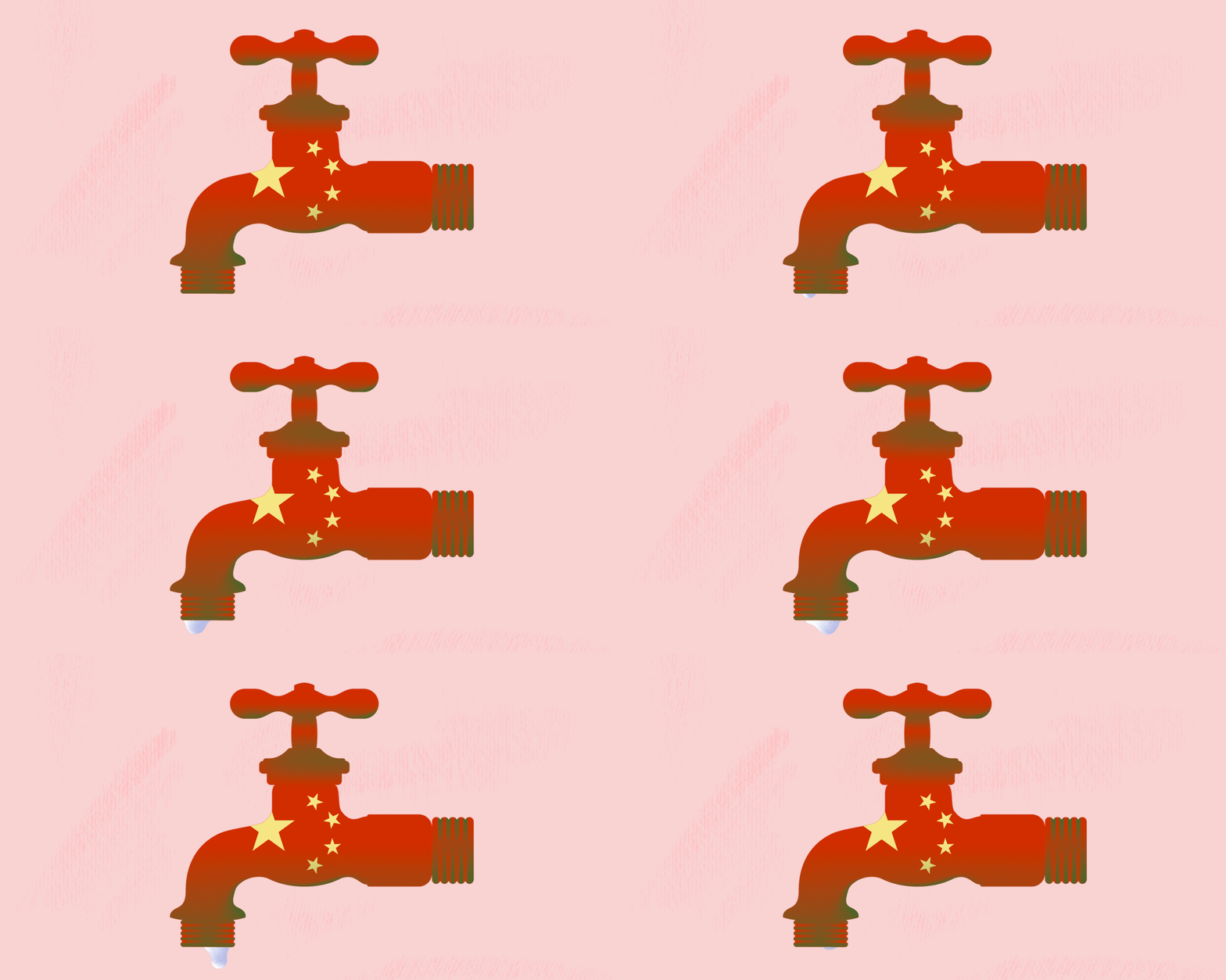
That said, as cryptocurrencies today develop at an exponential rate, several governments are making their stance known. In September, China and South Korea banned ICOs, and Russia has called for regulation of cryptocurrencies.
Other governments around the world, however, are starting to accept the new technology.
- Bank Negara Malaysia is developing guidelines for digital currencies.
- Hong Kong SFC has stated that “digital tokens involved in an ICO fall under the definition of securities, dealing in or advising on the digital tokens, or managing or marketing a fund investing in such digital tokens” and be subject to regulatory authority.
- The Monetary Authority of Singapore monitors but has not regulated cryptocurrencies in most cases.
Ultimately, transparency and KYC is key. For KYC, the telecom cryrptocurrency would have access to robust framework that the industry already has in place. As for transparency, the cryptocurrency needs to address regulatory considerations and industry developments. There should also be a mutual understanding where cryptocurrency firms provide a high level of transparency to central banks and other regulators.
Editing by Charmaine de Lazo
(And yes, we’re serious about ethics and transparency. More information here.)





Stay updated on the go with our mobile app.
Get latest insights with smoother, more personalized experience through TIA mobile app.








📅 Upcoming Events
22 October 2026
Payoneer x CSPN Summit 2026