 Samantha Cheh · · 6 min read
How two innovative firms turned great ideas into global growth

Summary:
- Building a product means protecting not only its brand, but also the technology and know-how that make it defensible.
- Flexxon and Hummingbird Bioscience show how a strong IP strategy can unlock new markets and partnerships, and build credibility.
- IP protection is an ongoing process – businesses need to start early, prioritize key markets, and continually monitor the IP landscape.
- Flexxon and Hummingbird Bioscience use IP strategically to create business value and unlock growth – qualities celebrated by the IP for Growth Awards. Stay tuned for the inaugural winners at Singapore IP Week 2026 and updates on the next edition here.
Sometimes, the quickest way to learn something is the hard way. That’s how Flexxon’s founders learned the value of intellectual property (IP).
In its early years, the Singapore-based storage device maker was drawn into a costly trademark dispute with a much larger company. For co-founder and COO May Chng, the episode changed how the company thought about growth.
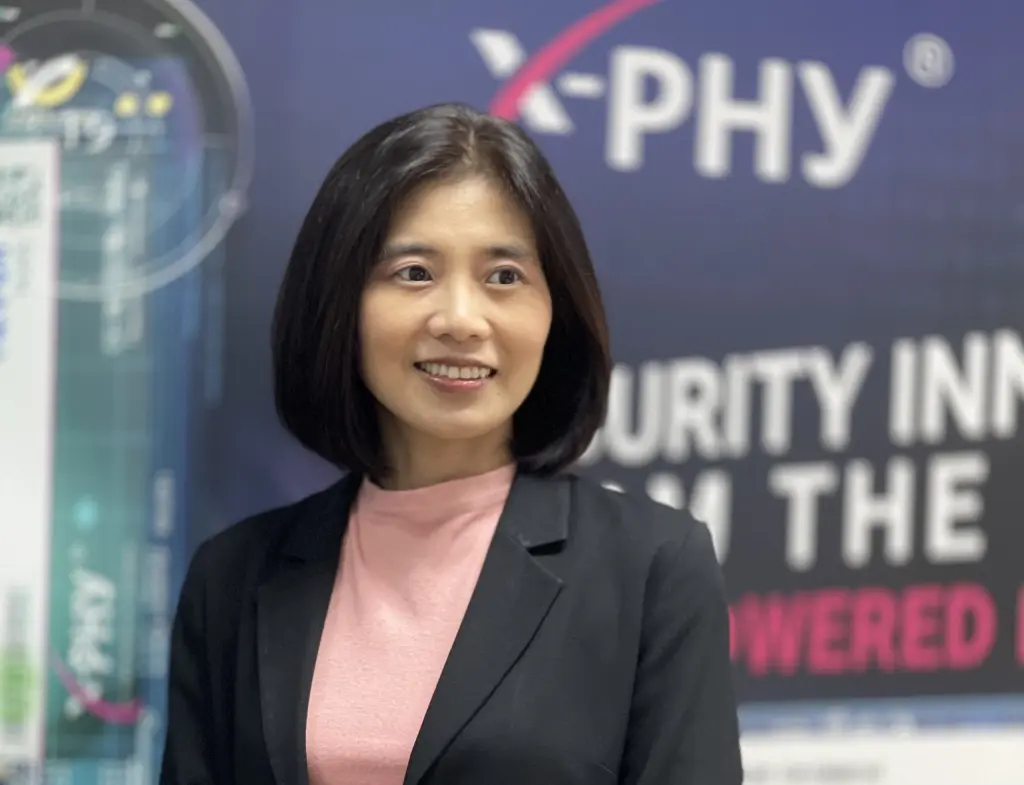
May Chng, co-founder and COO of Flexxon / Photo credit: Flexxon
“We were a young Singapore SME going up against a global incumbent, and the experience was extremely challenging – both financially and emotionally,” says Chng.
It laid bare a clear lesson: Building a product means protecting the brand, technology, and know-how that made the product defensible.
It’s also imperative to do all this before others in the market, especially larger players, notice the innovative ideas being put out. According to Chng, the firm’s IP is now developed in parallel with Flexxon’s R&D activities and actively shapes the direction of the company’s global expansion.
“You do not need a 200-person legal team to do this well. We started from scratch, made mistakes, and built our IP discipline as we went,” Chng says.
This experience underscores the critical importance of understanding and protecting IP, and Flexxon wasn’t the only one that learned it.
Start early, start safe
AI-first biotherapeutics company Hummingbird Bioscience came to the same conclusion as Flexxon – to file protections early when IP is basically the business – albeit from a different direction. For co-founder and chief scientific officer Jerome Boyd-Kirkup, IP is something central to the company’s value.
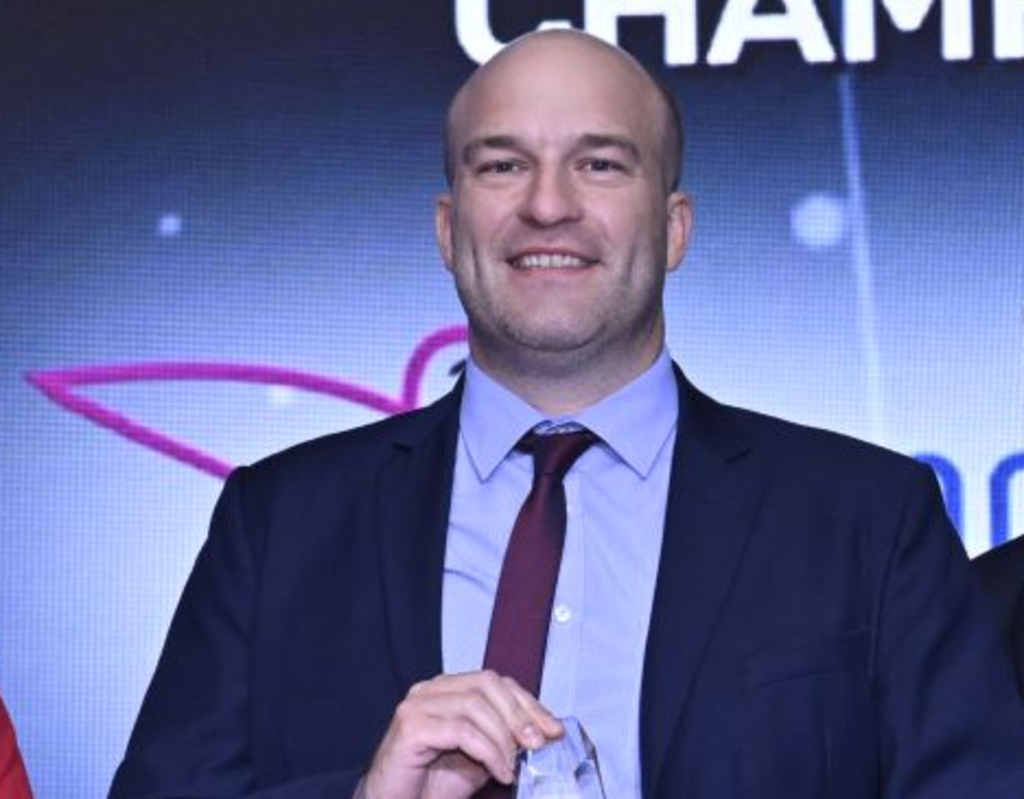
Jerome Boyd-Kirkup, co-founder and chief scientific officer of Hummingbird Bioscience / Photo credit: Hummingbird Bioscience
In its early years, Hummingbird Bioscience was trying to unravel the mysteries of how cancer cells communicate and propagate. Previous therapies to intervene in those processes didn’t work that well, so Hummingbird Bioscience developed antibodies that could suppress cancer cell growth more effectively. It uses a proprietary AI-first system to engineer differentiated antibody medicines that could reach patients faster than conventional methods.
These antibodies, other therapeutic assets, and tech form part of Hummingbird Bioscience’s valuable IP portfolio.
“We prioritize these because they represent both our competitive differentiation and our long-term value drivers,” says Boyd-Kirkup.
A guiding light for expansion
Flexxon and Hummingbird Bioscience exemplify the qualities celebrated by the inaugural IP for Growth Awards (IPGA). They’re enterprises that have used IP strategically to create business value, strengthen competitiveness and unlock growth. Their stories show how a well-planned IP strategy can support innovation, expansion and long-term success.
Besides protecting innovation, Boyd-Kirkup and Chng agree that having a robust IP strategy can also open up new markets and strategic partnerships as well as generate the critical industry credibility small companies need to succeed.
“For an early-stage company, IP is the core asset of the business,” says Boyd-Kirkup. “Much of a biotech company’s value is tied to its IP portfolio.”
In this area, these assets can act as a guiding signal for which markets can best support a company’s operations and expansion goals.
Flexxon’s cybersecurity arm X-Phy launched in 2021 with the world’s first AI-embedded solid state drive. Today, X-Phy offers an ecosystem of AI-powered, hardware-rooted security products designed to protect both the physical and software layers of its tech stack.
According to Chng, Flexxon’s IP strategy for X-Phy focuses on both its security technology and its brand.
She attributes Flexxon’s roots in Singapore as consequential to its success, highlighting the city-state’s deliberate efforts to develop the robust infrastructure that has made it a global IP hub. These include mentorship from world-class IP experts as well as close proximity to the broader Singapore business regulation ecosystem.
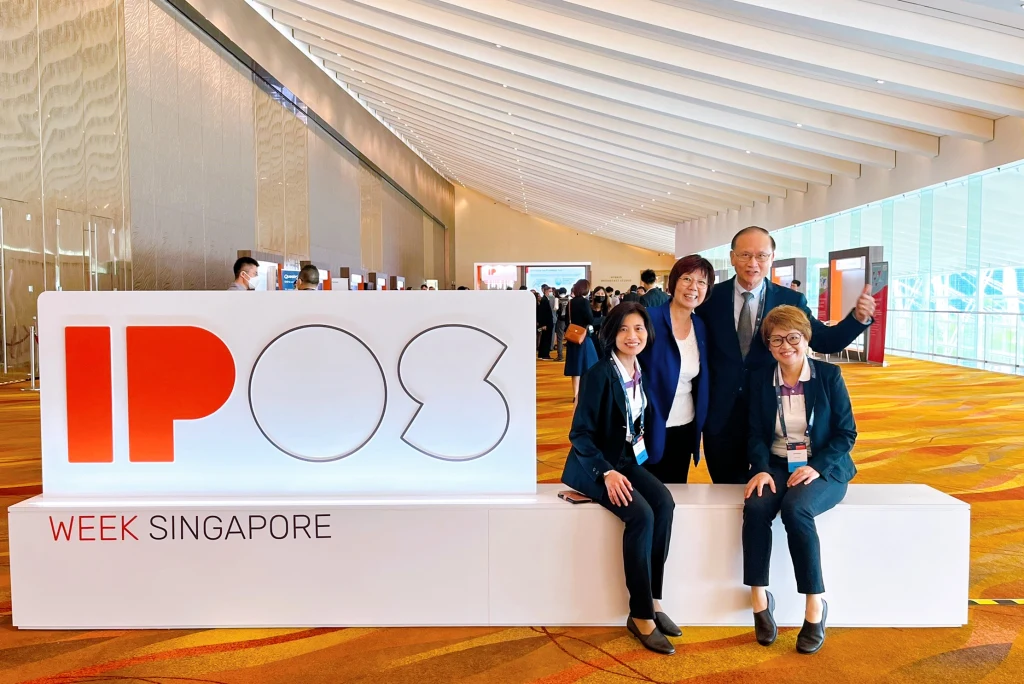
Chng (left) and fellow Flexxon co-founder Camellia Chan (right), together with their advisors Annie Koh and Ted Tan / Photo credit: Flexxon
When it came to overseas expansion, Flexxon moved quickly to establish protections in its target markets, prioritizing those with IP regimes robust enough to enforce its patents and trademarks.
“We treat IP regime quality as a primary filter,” says Chng. For Flexxon, that meant focusing on more developed markets like the US and Japan. “There is no point launching a flagship product into a market where, if a counterfeit appeared, you would have no practical way to fight it.”
As for Hummingbird Bioscience, partnerships have played a key role in enabling its global expansion by allowing the company to “leverage the scale, expertise, and global reach of established pharmaceutical companies and academic organizations,” says Boyd-Kirkup.
“These are capabilities that would be difficult and capital-intensive to build independently, especially as a growing biotech company.”
He added that human diseases – such as cancer – affect patients all over the world, making drug development inherently global. As such, the decision for Hummingbird Bioscience to expand overseas was a natural part of its clinical development strategy.
“Regulatory and business considerations were a priority, but countries with strong IP protection and commercial significance were also some of the factors,” he emphasized.
IP is an ongoing process
Global expansion has come with its fair share of challenges for both these companies. Flexxon, for instance, continues to grapple with the costs and complexities of protecting a massive portfolio spanning several markets.
“We’re an SME, so we don’t have a multinational’s budget to file in every country and litigate every dispute,” says Chng. “What I learned is that our IP strategy has to be selective.”
Flexxon has since developed a case-by-case approach that matches the intensity of its IP protection to how much commercial activity or risk there is.

Photo credit: Shutterstock
“We also learned to start the IP process before the product is finalized, not after,” Chng adds.
Hummingbird Bioscience faced similar challenges, including the monumental task of navigating the highly competitive and litigious patent law landscape.
“File early, tailor your applications, and continuously monitor the landscape,” Boyd-Kirkup says. “IP protection is an ongoing process, and not a once-off effort.”
Both companies also point to the role of Singapore’s IP ecosystem in helping them put these lessons into practice. Through IPOS and IPOS International, Flexxon and Hummingbird Bioscience accessed specialist expertise, connected with the local IP community, and gained global exposure through recognition programs.
“What makes Singapore distinctive is that the support is operational and granular – built for SMEs that want to play globally,” Chng says. “For a small company trying to compete with multinationals on technology, that scaffolding is invaluable.”
She concludes with a powerful piece of advice for SMEs to not be intimidated: “SMEs can compete here, and we have been proving it for nearly two decades.”
The inaugural IP for Growth Awards (IPGA) celebrates enterprises and innovators from Singapore and across Asia that are using IP strategically to create business value and competitive advantage. Whether protecting breakthrough technologies or building trusted brands, both companies show that IP is most powerful when it is treated as a business strategy rather than a legal exercise. With nominations for IPGA 2026 now closed, stay tuned for the announcement of the inaugural winners at Singapore IP Week 2026 and updates on the next edition here.
This content was produced by Tech in Asia Studios, which connects brands with Asia’s tech community. Learn more about partnering with Tech in Asia Studios.
Stay updated on the go with our mobile app.
Get latest insights with smoother, more personalized experience through TIA mobile app.
Recommended reads
 Tracking AI hiring in Singapore: OpenAI, Anthropic, and more
 Last to board: why travel may be AI’s final frontier
 Why ‘cheaper’ no longer wins dev deals for Vietnam
 Alibaba’s capex isn’t the full story
 Forget startups. Buy the business running on Excel
 Life’s a game, and AI agents are Animoca’s new play
 Indonesian AI startup goes global
 Forrest Li on scaling Sea, building smarter bots, and founder grit
 An AI assistant that joins sales calls and scores team skills
 Beyond the check: Why VCs need more than capital





Editing by Jonathan Chew, Stefanie Yeo, and Jaclyn Tiu
(And yes, we’re serious about ethics and transparency. More information here.)







📅 Upcoming Events
22 October 2026
Payoneer x CSPN Summit 2026