- Premium Content It takes our newsroom weeks - if not months - to investigate and produce stories for our premium content. You can’t find them anywhere else.
 Peter Guest · · 8 min read
Is scooter-sharing another tech bubble or the real deal?
It isn’t quite riding on unicorns, but it’s the next best thing. Last year, electric scooter-sharing startups Lime and Bird became the two fastest companies to go from launch to a US$1 billion valuation in US history.
After an accelerated transit from open mockery to viral success and grudging acceptance, 2018 seemed to be the e-scooter’s breakout year – although the founders of two of Southeast Asia’s early leaders in the field insist it’s not really about scooters, after all.
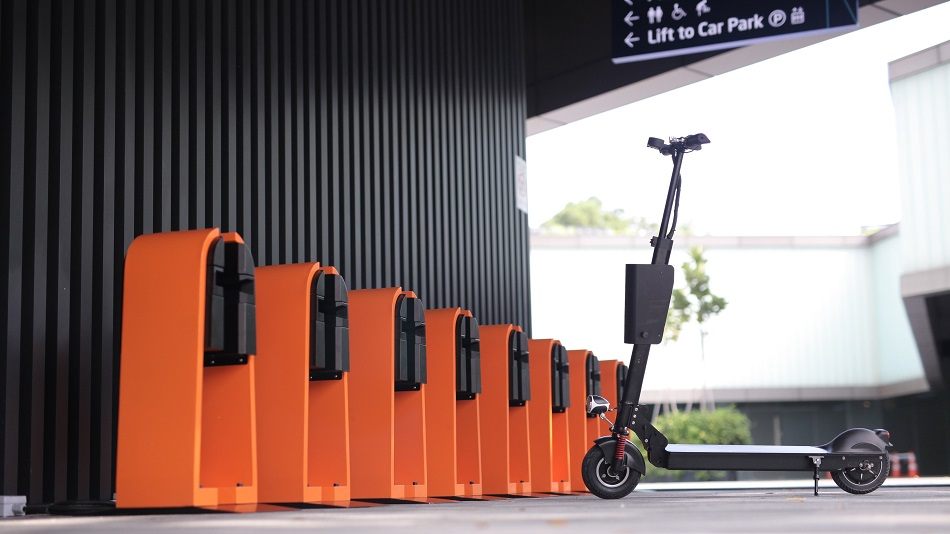
Neuron’s electric scooter and its smart charging dock / Photo credit: Neuron Mobility
For Alan Jiang, CEO of Beam, it’s an entirely new mode of transportation – above and beyond the four options currently available to urban populations (i.e. walking, taking public transport, using a private vehicle, and taking a cab or ride-hailing service). “We see ourselves creating a fifth option for you,” Jiang says.
For Zachary Wang, CEO of rival service Neuron Mobility, it’s a paradigm shift in transport at the confluence of two significant trends: electric mobility and mobility-as-a-service.
“We are moving away from owning assets [towards accessing] services,” Wang says. At the same time, “the cost of [devices] is going down rapidly. A lot of things start to make sense. Combine them together, and you get electric mobility service.”
Both Beam and Neuron Mobility successfully raised seed funding in the last quarter of 2018. Beam netted US$6.4 million in a round led by Sequoia India, Founders Fund, Zhenfund, and Class 5 Global. Neuron Mobility, on the other hand, raised US$3.7 million last month in a round led by SeedPlus. It’s planning a series A raise this year.
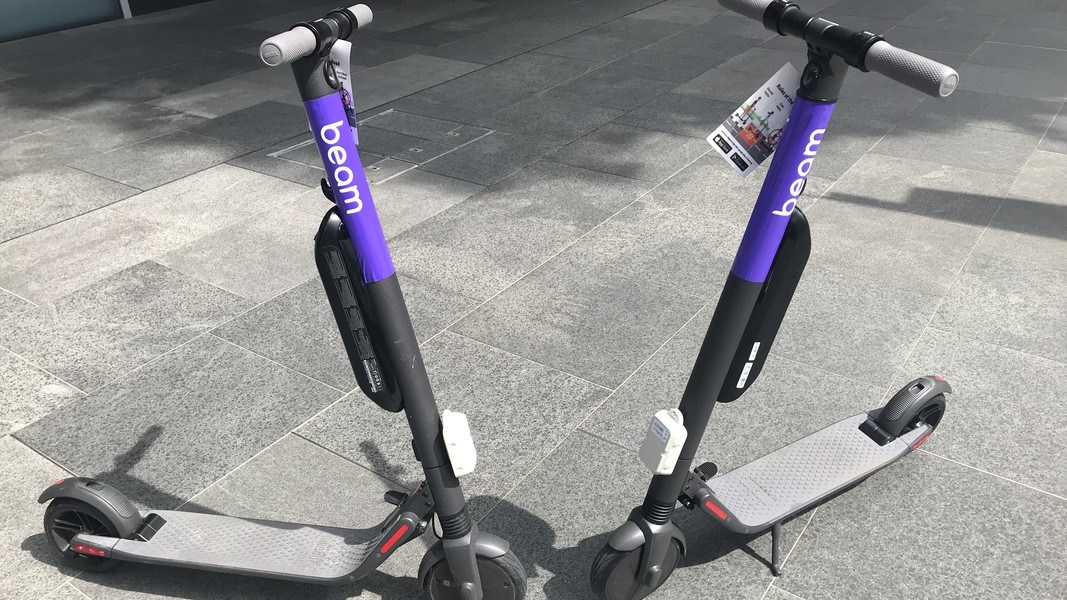
Photo credit: Beam
Both companies have regional ambitions: Neuron Mobility has launched in Chiang Mai, Bangkok, and Kuala Lumpur, while Beam “wants to be the largest micro-mobility player in Asia,” says Jiang.
Their pitch is that urban users have a need for affordable point-to-point transport over short distances, whether it’s on the “last mile” between public transport and their final destination or on journeys within a central business district where a cab or ride-hailing service is impractical due to traffic or wait times.
Singapore is still in a “regulatory sandbox” phase, in which companies can run trials. But seven companies have indicated that they will be applying to operate full services when licensing opens in January.
The conditions of those licenses are yet to be publicly revealed, but they could well be restrictive. Scooter-sharing has come to the Singaporean market hot on the heels – or back wheels – of the bike-sharing business, which has gone through a high-profile but often painful rationalization.
Bike-sharing has struggled to cope with a public backlash against the large volumes of abandoned bikes left lying around in cities, while startups burned their way through investors’ money trying to gain market share. Ofo, which started in China and raised more than US$1 billion from investors including Alibaba, Xiaomi, and Didi Chuxing to expand worldwide, has come close to folding, withdrawing from all of its international operations.
Is scooter-sharing like bike-sharing?
Stay ahead in Asia’s tech landscape
This is premium content. Subscribe to read the full story.
Superficial similarities with bike-sharing have driven some analysts to question whether the scooter-sharing industry is doomed to suffer the same fate.
We know this is not ideal. ⌛ Sign up in 20 seconds. Cancel anytime.
Our subscriber community includes professionals from these companies:





Stay updated on the go with our mobile app.
Get latest insights with smoother, more personalized experience through TIA mobile app.









