- Premium Content It takes our newsroom weeks - if not months - to investigate and produce stories for our premium content. You can’t find them anywhere else.
 Glenn Kaonang · · 5 min read
Meta-Manus deal reversal redraws lines for global AI startups
With additional reporting from Elyssa Lopez, Melissa Goh, and Scott Shuey
China’s order to unwind Meta’s US$2 billion acquisition of Manus has sent AI founders into panic mode, especially those with strong Chinese roots who are building outside their home country.
Even before the decision was made, the January announcement that China was investigating the Meta-Manus deal – over concerns that Chinese AI intellectual property was being transferred to a US company – had already made some founders nervous, Tech in Asia has observed.
“The announcement was the message,” says Amit Verma, founding head of technology at US-based Neuron7.ai. “Everything after that was just enforcement.”
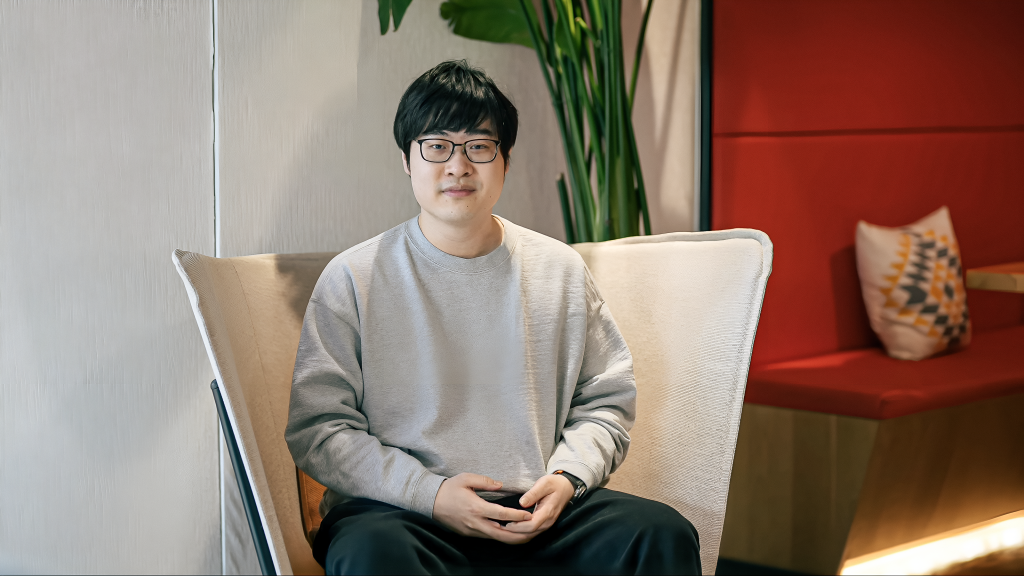
Manus co-founder and chief scientist Yichao Ji is reportedly barred from leaving China, alongside CEO Xiao Hong. / Photo credit: Manus
In one instance, a founder with Chinese origins – who, like many, asked not to be named in this story – postponed going public with the funding his Singapore-based startup had received to avoid scrutiny from Chinese officials potentially misperceiving it as yet another Manus.
In another instance, a Chinese founder explicitly asked if Tech in Asia could describe their company as “Singapore-based,” as that would be “very helpful” to its growth. The founder emphasized that they were building their firm from scratch in Singapore and that its product was meant for a “global market.”
Both indicate the level of caution founders need to exercise after the country started cracking down on companies, even when they don’t have much in common with Manus other than being of Chinese origin.
While a case more blatant than Manus’ is hard to imagine, there’s still concern that China could target other firms perceived as moving AI assets to Western companies, especially as the country continues to strengthen its AI powerhouse status.
Relocating is a bust
Jeremy Ang, co-founder and CEO of Singapore-based Axium Industries, says that China’s decision shows the growing complexity for AI firms operating across borders.
“Moving headquarters is no longer a silver bullet for bypassing the national security concerns of major powers,” he says.
Ang believes that Singapore will become an “increasingly attractive” AI hub, and founders in the city-state have the opportunity to build corporate structures that can navigate the “tech-stack decoupling” between the US and China.
That comes with a caveat because, as Manus has shown, even complete relocation isn’t enough to avoid China’s intervention in its exit strategy. Moving headquarters and laying off the entire China team doesn’t change the fact that Manus’ product was built entirely in the country using local resources.
Moving headquarters is no longer a silver bullet for bypassing the national security concerns of major powers.
Playing it safe
Stay ahead in Asia’s tech landscape
This is premium content. Subscribe to read the full story.
China’s ruling on Manus isn’t just about a single firm. It exposes how fragile the global AI playbook really is and shows the need for a full rewrite.
We know this is not ideal. ⌛ Sign up in 20 seconds. Cancel anytime.
Our subscriber community includes professionals from these companies:





Stay updated on the go with our mobile app.
Get latest insights with smoother, more personalized experience through TIA mobile app.








📅 Upcoming Events
22 October 2026
Payoneer x CSPN Summit 2026