Ursula Florene · · 8 min read
Grab, Gojek used to intimidate activists in Indonesia
June was a rough month for Indonesian human rights activists. At a time when most people were staying home to ride out the Covid-19 pandemic, and hence relying on web-based delivery services to procure groceries, meals, and daily necessities, unknown perpetrators appropriated these channels to intimidate activists in an attempt to cow them into silence.
For the people who received these threats, this was a new form of coercion. By hijacking the victims’ on-demand app accounts and sending a slew of drivers to their home or workplace, the underlying message was clear: we know where you are.
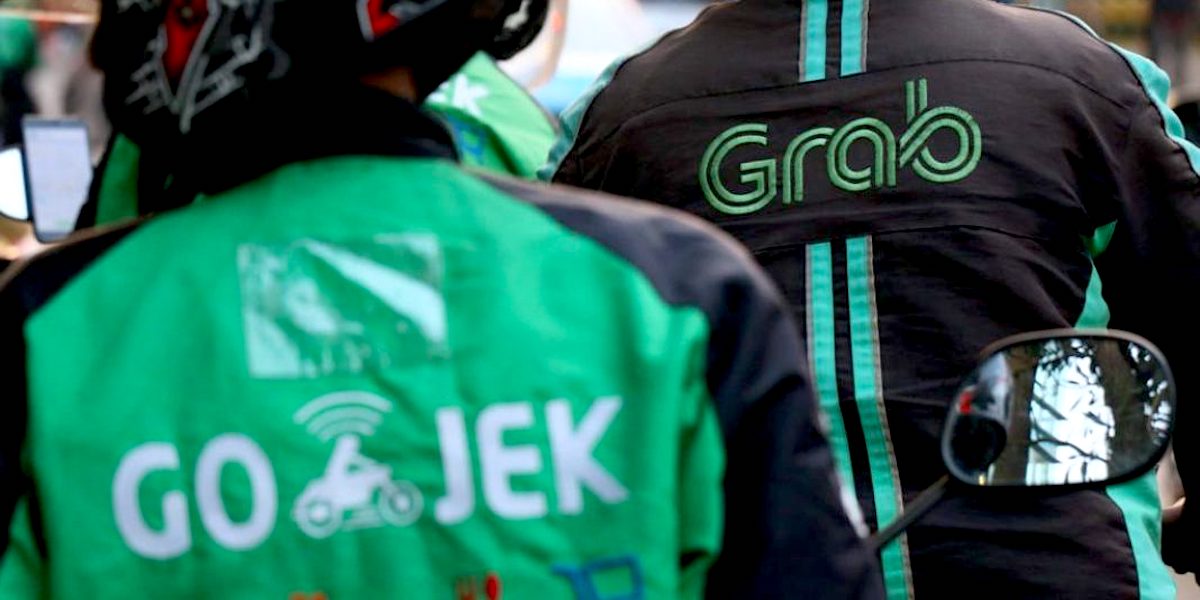
Photo credit: The Low Down
One of the victims was Mitha Setiani Asih, the editor-in-chief of Lampung University’s student publication Teknokra. Asih had planned to host an online round table on June 11 about the racial injustice suffered by Papuans in Indonesia. It was a sensitive topic, and she and her guests aimed to discuss and unpack the Indonesian government’s oppression of the indigenous people living in its easternmost province.
One day before the event, Asih was hanging out with two of Teknokra’s editorial staff in their secretariat room. It was just past 7 pm, and she was watching a YouTube video when her phone chimed. A WhatsApp notification from an unknown number appeared on her screen: “What’s the address for the food delivery?”
Heaps of unwanted food
“At first, I thought it was a spam message, so I ignored it,” Asih told KrAsia. “Then, suddenly, there was a chat notification from the Gojek app, asking for my address for food delivery.” This caught Asih off guard. Nobody present had ordered anything using the app.
Thinking there was a glitch in the system, she opened the app to report the problem. To her surprise, there was a long sequence of orders she did not place. They were all on their way to her, so she couldn’t cancel them. WhatsApp messages and calls from Gojek drivers started flooding in, overloading and then freezing her phone. She realized that someone had hijacked her Gojek account – but it wasn’t for the perpetrator’s own benefit.
Panicked, Asih uninstalled the Gojek app from her phone. That didn’t stop the fake orders, which were sent to multiple locations. It wasn’t long before delivery drivers showed up one by one. Accompanied by her friends, Asih met them and explained the situation.
“Some drivers were mad and didn’t believe that my account had been hijacked. They thought I was pranking them,” she recounted.
In the past, there have been cases where Grab and Gojek drivers continually harassed customers who they deemed rude or abusive. Wanting to avoid any conflict, Asih and her friends were moved to a safe house provided by the regional Alliance of Independent Journalists. In all, more than 50 orders had been placed via Gojek under Asih’s name by whoever had stolen her personal details.
Meanwhile, 363 kilometeres away, Tantowi Anwari and his wife Salbiyah faced a similar problem at their home in South Jakarta. At 8:53 pm, Anwari received a WhatsApp message from an unknown number. “Don’t overdo the fake orders. This is just a warning from me. Be careful when you leave your house,” wrote the sender, according to a screenshot that Anwari shared with KrAsia.
Initially, Anwari ignored the message, but then the sender attached a picture of Anwari’s ID card. A few minutes later, around six GrabFood drivers showed up at his house.
“It was really strange as my husband almost never ordered food deliveries, it was usually me,” said Salbiyah. “When I asked if he made those orders, he said no. He didn’t order anything, and we were together in our room, so I knew he was telling the truth.”
She uninstalled the Grab app from her husband’s phone and then went out to talk to the drivers. Salbiyah explained that they had not placed those orders and asked the drivers to tell their colleagues not to pick up any more orders placed through his account. She still paid for the delivered food by cash, reasoning that the drivers were also victims of these fraudulent orders.
Blaming the customer
Systemic weaknesses
Moving forward with no resolution





Stay updated on the go with our mobile app.
Get latest insights with smoother, more personalized experience through TIA mobile app.