 Jum Balea · · 2 min read
Travis Kalanick hits back at Manila freeze on new Uber drivers
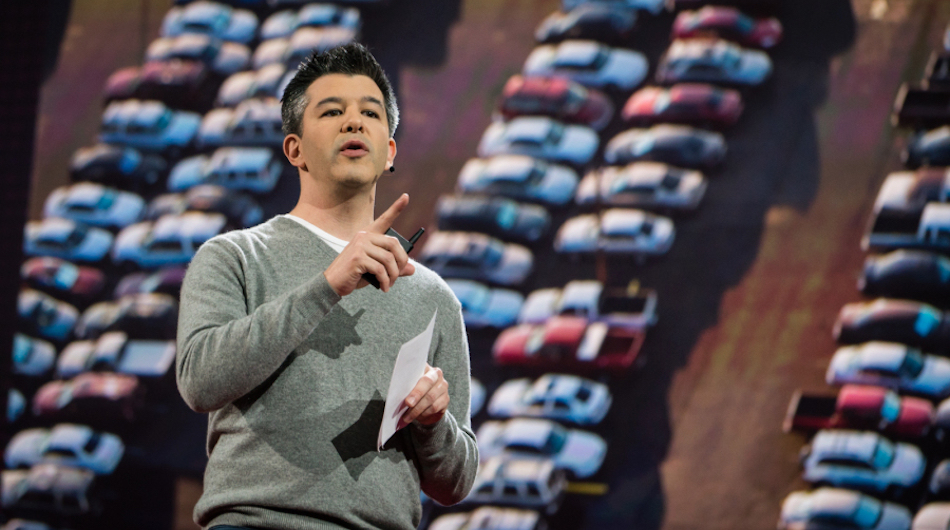
Travis Kalanick speaks at TED2016 – Dream, February 2016, Vancouver, Canada. Photo: Bret Hartman/TED.
What’s the best way to combat traffic congestion in Manila – dubbed the “worst on earth”? For Uber founder Travis Kalanick, it’s to put more passengers into fewer cars – which is now an option in the ride-hailing app. But he laments how recent unfriendly regulation in the Philippines prevents them from doing so.
In a commentary published today in the Philippine Daily Inquirer, Travis writes:
“Last year the Philippines became the first country in the world to pass nationwide ride-sharing regulations. That is tremendous progress. But there’s more to be done if we want to turn every trip in Manila into a shared ride. We estimate that Uber accounts for less than 1 percent of the traffic in the capital today. Yet new drivers wanting to use the app can no longer apply for a permit.”
He recalls seeing ‘carmageddon’ whilst growing up in LA.
In July, Philippine transport authorities suspended the processing of ride-hailing service permits, which means Uber and other transportation apps can’t add any new drivers. Authorities cited the supposed rise in the volume of applications and a review of the apps’ fare scheme. There’s no word as to how long the suspension will last.
Travis says the problem of endless traffic isn’t new to him. He recalls how he witnessed “carmageddon” as a child growing up in Los Angeles.
Like in LA, he claims Uber’s carpool service has made a difference in Manila. Since UberPool was launched in June, more than 73,000 people in the capital have opted to use the feature – and that number is growing “exponentially,” reveals the Uber boss. This has cut the number of kilometers driven in Manila by 568,000 – equivalent to 27,200 liters of fuel and 64,000 kilograms of carbon dioxide.
“So we have the technology today. Now we just need some smart regulation to help everyone pool together,” he says, taking a jab at the authorities. “There is an alternative to a world that looks like a parking lot and moves like a traffic jam. We just all need to pull together.”
Editing by Steven Millward and Terence Lee
(And yes, we’re serious about ethics and transparency. More information here.)





Stay updated on the go with our mobile app.
Get latest insights with smoother, more personalized experience through TIA mobile app.










📅 Upcoming Events
22 October 2026
Payoneer x CSPN Summit 2026