Jum Balea · · 5 min read
Transferwise: banks are greedy – that’s why they’re losing out to fintech startups
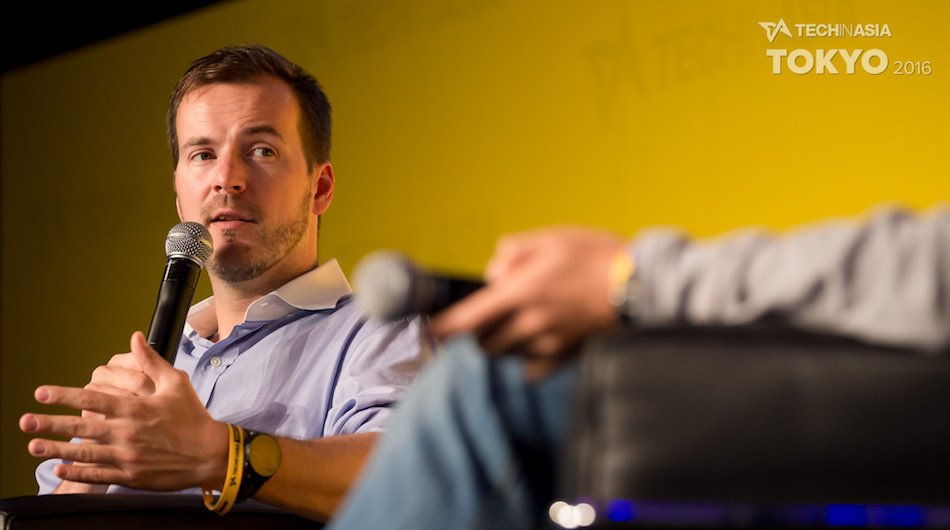
Transferwise CEO Taavet Hinrikus talks about how his company is disrupting banks at Tech in Asia Tokyo 2016. Photo credit: Tech in Asia / Michael Holmes.
Banks are losing business to fintech startups. But just how much?
“Ten years from now, 30 percent of financial services in the world will be owned by tech companies,” Transferwise co-founder Taavet Hinrikus told the audience at Tech in Asia Tokyo 2016.
He had tough things to say about the banking industry. He said its business model is “outdated” and will start “crumbling and falling apart.”
We’re kind of getting to the end of the cycle now.
Even if, say, banks are quick to adopt technology, most of it has been put to use for their own selfish desires and not their customers’ welfare.
Customers know that, he said, that’s why they’re turning to fintech startups that can offer cheaper, faster, and better services – options that weren’t really available before.
“It was 10 years ago, during the financial crisis, when we realized that’s there this whole bubble built by banks to serve bankers’ greed. How much did consumers benefit from that? Not much.”
“What the banks are doing is not working for customers. If you look at history, then you’d see that whenever that’s the case, sooner or later that industry will be turned on its head,” he explained.
He mentioned Skype – where he was the first employee – and what it had done to the telecommunications industry. In 10 years from its launch, he said Skype was allowing people to make long distance calls.
“We’ll see something similar in banking […] Banking has been dominating for way too long and we’re kind of getting to the end of the cycle now,” he opined.
More transparent than banks
Taavet recalled how he and his co-founder, Kristo Käärmann, were themselves victims of this greed.
Taavet joined Skype during its early days in Estonia. At one point, the company moved him to London, but his pay was still coming through his bank account in Estonia. Every month, he had to go to his Estonian bank to ask it to wire his money to his bank in London. The first time he did it, he sent a thousand euros and the bank told him they would charge 20 euros. But more money went missing.
“First of all, the money took three to four days to arrive. I was sending a thousand euros and I should have received 800 pounds, but what I got was 750.”
Building trust
The relationship? It’s complicated





Stay updated on the go with our mobile app.
Get latest insights with smoother, more personalized experience through TIA mobile app.