 Peter Rothenberg · · 4 min read
Preferred Networks’ technology plans to drive your car and ship your Amazon goods
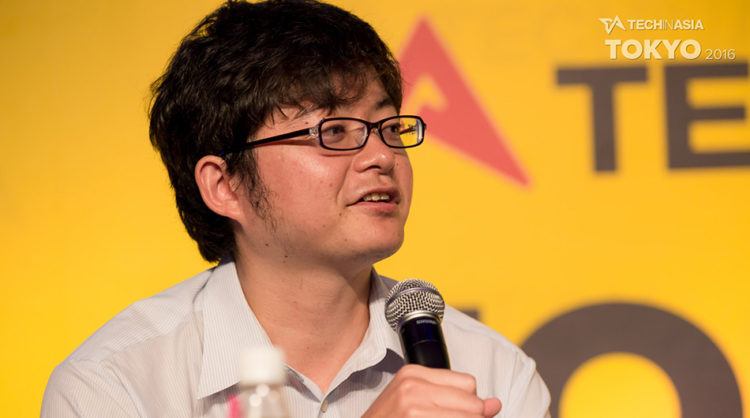
Founder and CEO of Preferred Networks Toru Nishikawa.
Toru Nishikawa aims to be a step ahead of Google. Last week at Tech in Asia’s Tokyo conference, Toru spoke about leading the artificial intelligence (AI) revolution and where smart machines will take us.
His company Preferred Networks is one of Japan’s most innovative startups and was valued over US$325 million after its last funding from Toyota in December 2015. It’s focused on AI for devices and machines. The goal is to make machines smarter with neural networks and connect them in the smartest way with computer networks.
I thought if we could move full pace, then we would be able to become number one in the world.
“AI is an intelligence that continues to evolve by using the power of computers and networks,” Toru explains.
Unlike humans, by leveraging the power of the network and adding data lines, computers can send a potentially unlimited amount of data. We are in an era where computers can beat world champion chess and Go players, where cars have started driving people around, and where AI can learn to play new video games.
While Toru says the company culture is more like a research lab, the researchers are business oriented. The team works with leading companies such as Fanuc and Toyota in developing smart robots and autonomous cars. Preferred Networks technology was featured at the world famous consumer technology event CES earlier this year showcasing self-driving Priuses.
The six white cars in the video undergo deep learning and share sensor data with each other over the network. While the cars frequently crash in the beginning, after two hours of learning the vehicles can already drive a set course automatically. After only 12 hours of learning, the cars can make complex movements and adjust for the human driver in the red car who is purposefully interfering with the flow of traffic.
Toru and his team also recently came in second place for the Amazon Picking Challenge, a competition where robots have to move various items from a shelf into a crate. The goods on each shelf are scattered randomly and the robot must be able to adjust to different situations. Preferred’s robot is able to grab any item in 90 percent of cases after just eight hours of training.
This success rate is as high as a robot pre-programmed by a human according to Toru, meaning hours, perhaps even weeks or months, of labor can be achieved by just letting the robot move and learn. Toru is confident his team will win next year. A member of the first place team even joined Preferred Networks after the picking contest.
Model research
“I thought if we could move full pace, then we would be able to become number one in the world.”
Toru was originally against the idea of outside funding after a poor experience at a biomedical startup during his graduate school years, but reconsidered after the AI boom started. He better understood how outside capital could increase their speed and likelihood of success. While many research labs or startups get shafted working with large corporations in Japan – the big guys often take the intellectual property (IP) rights – Toru’s main concern is synergy with clients.
“If they take all the IP, we won’t be able to create the platform to make machines smart.”
Toru also isn’t worried about cash flow. They have raised roughly US$21 million and have contracts with major companies. “It’s not like we will increase from 50 people to 500 all of a sudden… we will just focus on getting excellent people.”





Stay updated on the go with our mobile app.
Get latest insights with smoother, more personalized experience through TIA mobile app.











📅 Upcoming Events
22 October 2026
Payoneer x CSPN Summit 2026