- Insights This article was written by a TIA community member. Insights pieces undergo the same rigorous editorial process that newsroom-produced articles have.
 Peter Cowan · · 6 min read
What separates B2B sellers who win big in price negotiations
Just how often do B2B startups get their pricing right? Not nearly often enough, according to the authors of a recently released book.
Madhavan Ramanujam, co-founder and general partner at VC firm 49 Palms Ventures, and Eddie Hartman, partner and board member at consulting firm Simon-Kucher, argue that while many startups obsess over building great products, they routinely neglect pricing execution. This leaves significant revenue on the table.
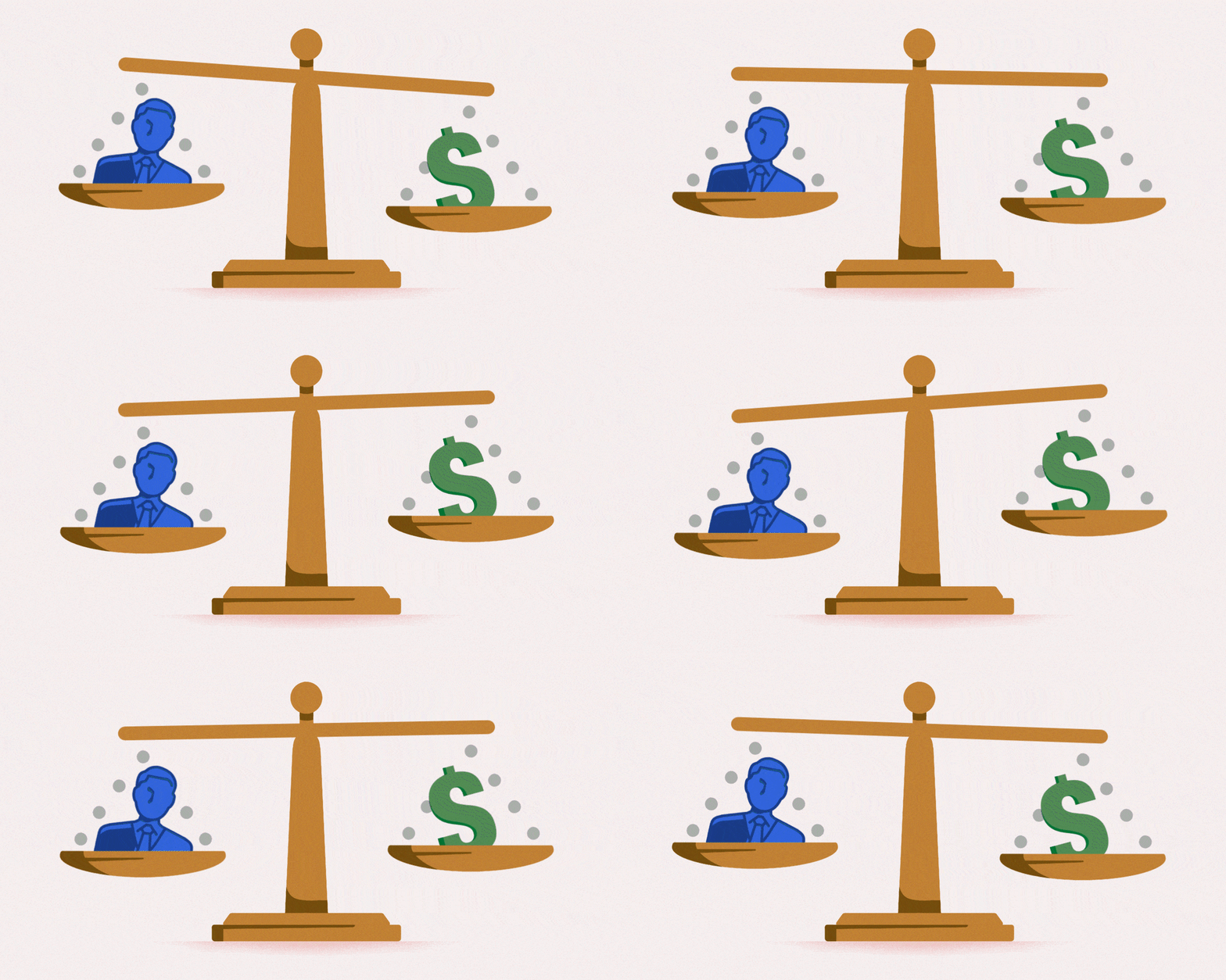
Image credit: Timmy Loen
Part of their new book, Scaling Innovation: How Smart Companies Architect Profitable Growth (published by Wiley in July 2025), shows how even strong go-to-market teams falter when it comes to pricing strategy – especially in high-stakes B2B negotiations. From setting the wrong anchor to conceding discounts too quickly, these common missteps add up to lost margin and weakened positioning.
But the good news, the authors say, is that these pitfalls can be avoided. In the excerpt below, they share three negotiating tactics that helped one global software-as-a-service (SaaS) company they worked with more than double its average deal size, without changing its product or customer base.
This excerpt from the book is published with permission from Wiley and has been moderately edited to reflect Tech in Asia’s editorial guidelines.
Which negotiation tactics should we use?
Although numerous books have been dedicated to soft skills in negotiation, we believe mastering just a few key strategies is sufficient to drive favorable results. They include these three particularly useful tactics: anchoring, the consistency trap, and forced trade-offs.
Anchoring
Anchoring occurs when the seller (yourself or your sales team) sets a higher reference point that influences subsequent offers, shifting the negotiation in the seller’s favor. The principle is simple: If you aim high, you’ll end up higher; if you aim low, you’ll only go lower.
This tactic is especially effective in the early stages of negotiation as it shapes the buyer’s perception of what is achievable right from the start.
In the case of the SaaS company, for example, we trained its sales teams to say something like, “Companies like yours have typically paid us in the low seven figures, with a typical return on investment of at least 10x,” when asked about pricing early in the conversation.
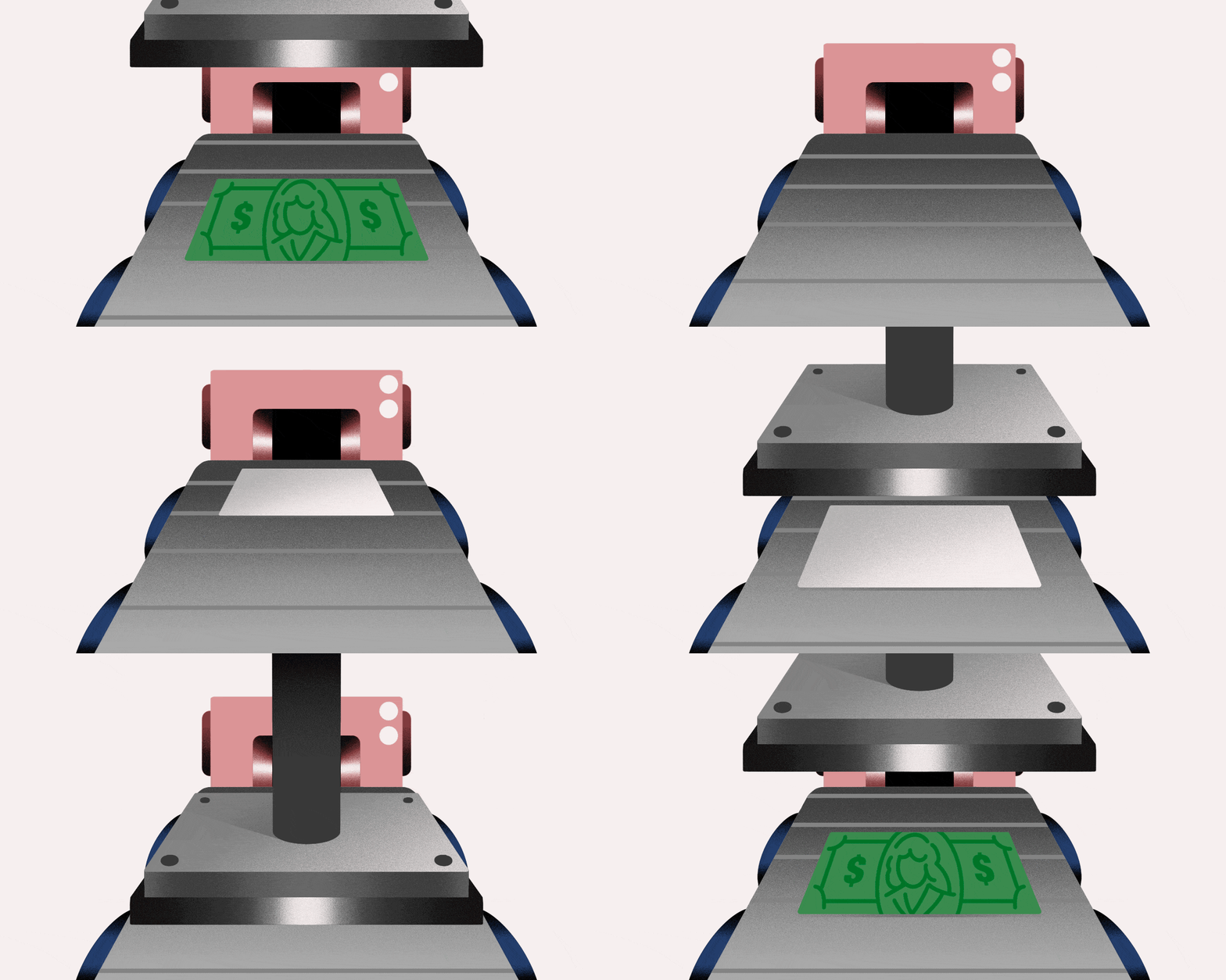
Image credit: Timmy Loen
Such a comment not only sets a high reference point but also acts as a lead qualification tool. If a prospect reacts negatively to your pricing, it’s better to know early on as this allows you to focus on more promising opportunities.
Stay ahead in Asia’s tech landscape
This is premium content. Subscribe to read the full story.
A great product draws interest, but pricing wins deals. This excerpt by Madhavan Ramanujam and Eddie Hartman shows how a SaaS firm doubled its average deal size.
We know this is not ideal. ⌛ Sign up in 20 seconds. Cancel anytime.
Our subscriber community includes professionals from these companies:





Stay updated on the go with our mobile app.
Get latest insights with smoother, more personalized experience through TIA mobile app.







📅 Upcoming Events
22 October 2026
Payoneer x CSPN Summit 2026