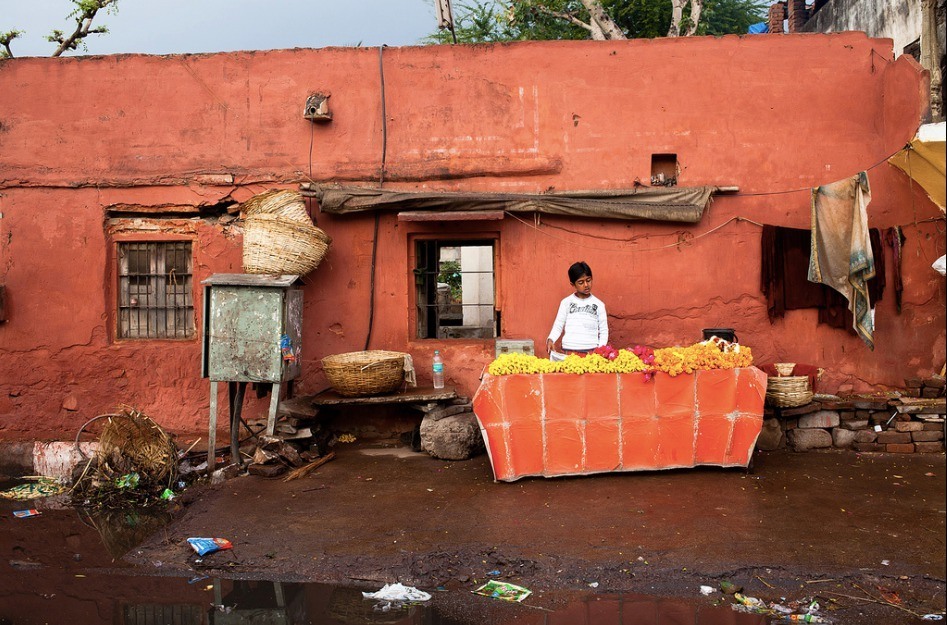
For most of the world, there is absolutely nothing to do on the internet.
While translation services are a good way to communicate with non-English speakers, most online content continues to target a specific group of people. If a man in a rural village in Andhra Pradesh, India watches a Telugu-translated TED talk titled “10 Reasons Waking Up Early Can Gamify Your Life,” none of the advice will be useful.
“It’s not up to us to decide what everyone else wants to see,” explains Rikin Gandhi, founder of Digital Green, a YouTube for rural India and parts of Sub-Saharan Africa. “These are the types of questions that those not on the internet need to answer.”
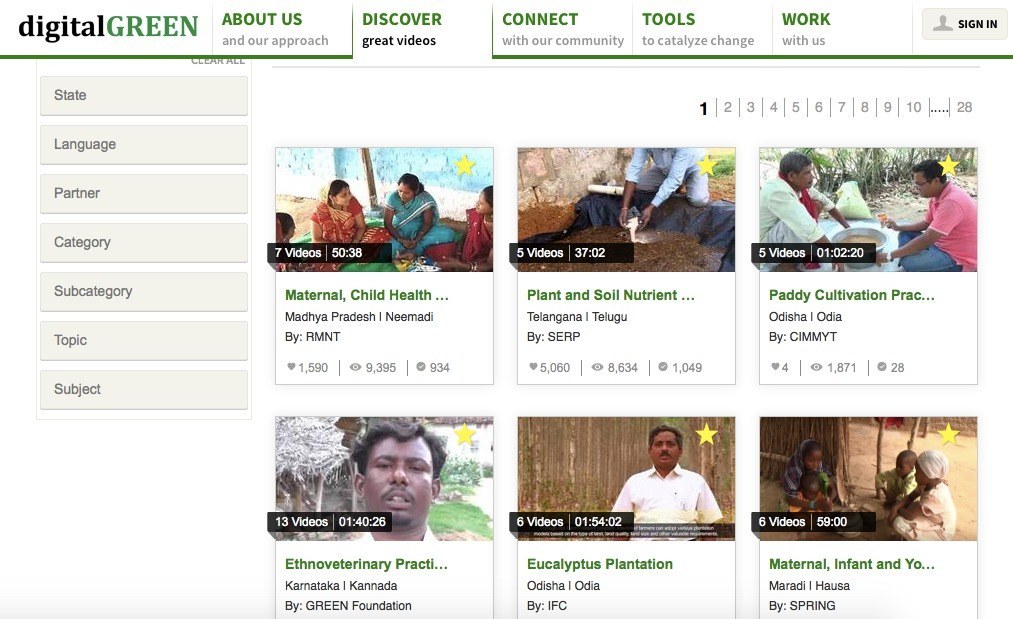
Digital Green provides people living in rural India with the opportunity to create and star in helpful, relatable videos. The non-governmental organization works with other NGOs and development initiatives to teach those in rural communities how to record and share videos about things like agriculture, health practices, livelihood, nutrition, and social issues. Digital Green works across 5,000 villages in India with 600,000 individuals, 85 percent of whom are women. They’ve used Digital Green’s resources in many ways – from an activist in Uttar Pradesh teaching women about infant care to a farmer in Madhya Pradesh adopting new practices to combat climate change. As of now, their largest partner in terms of scale and reach is the National Rural Livelihoods Mission, a poverty alleviations project started by the Indian government.
“It’s interesting to see the types of questions that people ask when they see these videos,” explains Rikin. “They’re always asking things like ‘What village is this guy from?’ or ‘What is his name? How big is his family?’ People are really interested in establishing a connection with the person that they see on the screen. They’re tired of the disconnect.”
There’s good reason for that. India has 22 officially-recognized languages and, according to the People’s Linguistic Survey of India, has at least 780 more that are unrecognized. This means that a person can travel 10 kilometers and find themselves in a place where they can not speak the local language.
The site currently has over 330 video collections, some of which contain up to 20 videos. Digital Green’s most-viewed series is a collection of videos about pest management in Andhra Pradesh and has over 350,000 total views. The first video in the series, “Weeding in SRI Paddy with cono weeder” has 2,668 online views and 11,303 offline.
Expressing yourself means transparent communication
Once Digital Green enters a district, they interact with the local community in order to find a group of four to six people that they can then train to record and produce short, eight to 10-minute videos. These videos are uploaded online and distributed among local leaders from villages inside the district. These leaders then use mobile projectors to show the videos at community events where they can pause, rewind, and fast-forward in order to facilitate discussion. Viewers are asked to give feedback as they would online, with “likes” and “comments”.
VideoKheti, the organization’s video aggregator, allows users to find specific videos by adding filters like “crop”, “crop phase” and “action”.
“Many of our videos are testimonials or demonstrations featuring local individuals,” explains Rikin. “People are always excited to appear in our videos because they are taken by their peers which means that they’re much more comfortable and they get to be seen as role models.”
In order to provide viewers with long-lasting benefits, material is also sourced from companies that are looking to work with farmers. “We help them with best practices that can then be used to sell the right crops to these companies,” explains Rikin. “Let’s say a company is looking to grow something like timber, or gherkins, or a crop that’s unavailable in a certain part of India, we communicate this with the right farmers and spread best practice videos. This increases transparency and actually makes farming about supply and demand.”
All of Digital Green’s information, including adoption rate and attendance across countries, is available online on an open analytics dashboard.
With many screens, there are many ways for rural India to be recognized





Stay updated on the go with our mobile app.
Get latest insights with smoother, more personalized experience through TIA mobile app.













📅 Upcoming Events
22 October 2026
Payoneer x CSPN Summit 2026