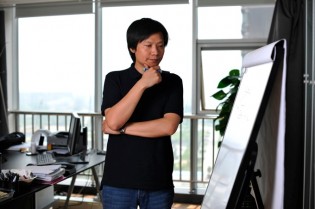
Xiaomi founder Lei Jun wearing a black shirt and jeans and thus totally copying Steve jobs.
It’s pleasing to see that the overseas media is finally paying some attention to Chinese smartphone maker Xiaomi. But unfortunately, the New York Times’s latest piece on the company was, I think, extremely misleading. So while I have nothing but respect for author David Barboza, I feel I can’t help but rip this one apart.
The whole article is based on the premise that Xiaomi is aping Apple and Steve Jobs, and on a surface level, this is pretty true. Both companies sell smartphones. Both founders favor black shirts with jeans. But beyond that, it all starts to break down. So let’s go through this article bit by bit and see what we can say about it. It begins:
China is notorious for its knockoffs. But now comes a knockoff of one of the gods of American ingenuity: Steven P. Jobs.
In a country where products like iPhones are made but rarely invented, Lei Jun — entrepreneur, billionaire and professed Jobs acolyte — is positioning himself and his company as figurative heirs of Mr. Jobs. The Chinese media have nicknamed his company, Xiaomi, the “Apple of the East.”
The article certainly begins provocatively, with an assertion that Lei Jun is just “a knockoff” of Steve Jobs. Yes, there are some aesthetic similarities in their press conference styles (both in terms of clothing and in terms of presentation), and I highly doubt that’s a coincidence. But beyond that, are they so similar that Lei Jun, a longtime China tech industry veteran, can really be called a knockoff of Jobs? Since the late 90s, Lei Jun has been working and investing almost exclusively in software and web platforms while Jobs was pushing Apple hardware; Lei’s career cetainly hasn’t mimicked Jobs’s. Even the aesthetic argument is questionable; the black-shirt-and-jeans look Jobs preferred almost exclusively is something Lei Jun employs only on occasion (here’s a launch event, for example, where he wore a suit). And Lei typically prefers short-sleeve polo shirts to Jobs’ long-sleeve turtlenecks.
Moreover, the term “the Apple of China” is not something that I have ever read in the Chinese press in my two years of covering the company for Tech in Asia. I don’t doubt that some Chinese media outlet has, at some point, called Xiaomi this. But it’s certainly not a common nickname, and when I did a search for the term in Chinese, every result I could find was just quoting the New York Times article. In fact, there doesn’t seem to be a single instance of this term’s use in the Chinese press before June 5 (the day after the NYT article was published) on Google News.
But those are really just minor gripes. Let’s move on to the big stuff.
The title is a stretch, by almost any measure. But Mr. Lei nonetheless is carefully cultivating a Jobsian image here, right down to his jeans and dark shirts. He is also selling millions of mobile phones that look a lot like iPhones. Chinese consumers — and deep-pocketed investors overseas — seem to be believers.
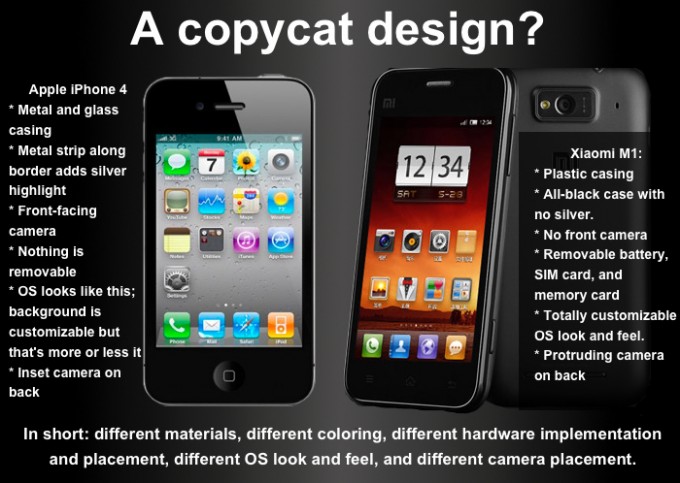
The opening line about Lei Jun is something that I would actually sort of agree with, at least on an aesthetic level. But Xiaomi phones look like iPhones? That’s nonsense. Yes, they’re black rectangles with screens, but that’s true of virtually every smartphone on the market. Beyond that, where are the similarities? iPhones are all glass and metal; Xiaomi phones are pure plastic. As someone who owned an iPhone, then switched to a Xiaomi, and recently moved back to an iPhone, I feel quite confident saying that the phones have a very different overall look and feel. If Xiaomi is trying to make smartphones by copying the iPhone’s design, as Barboza is suggesting here, it is truly awful at copying.





Stay updated on the go with our mobile app.
Get latest insights with smoother, more personalized experience through TIA mobile app.











📅 Upcoming Events
22 October 2026
Payoneer x CSPN Summit 2026