Miguel Cordon · · 3 min read
Spacetech firm Aliena to spend half of $5.6m raise to ramp up engine production
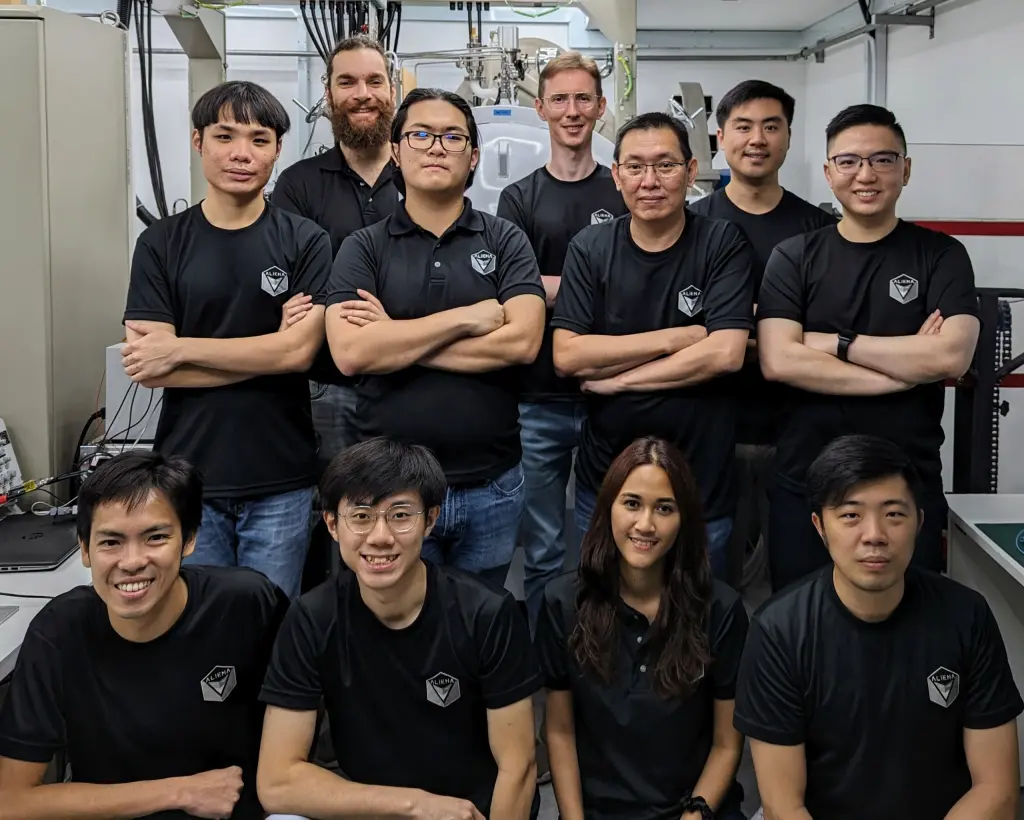
The Aliena team / Photo credit: Aliena
The global spacetech industry has seen a lot of activity recently. Startups in the industry have collected 31% more funding in the fourth quarter of 2023 compared to Q3, carried by record launch numbers and government-backed projects, a Space Capital report noted in January this year.
While startups from East Asia have received much of the attention, with Japanese space cleanup firm Astroscale eyeing a Tokyo listing soon after a US$76 million raise last year, Singapore is not far behind with Qosmosys’ US$100 million seed round in October 2023.
Another spacetech startup in the city-state looking to take on the global stage is Aliena, which recently secured US$5.6 million in a recent series A financing round.
The round was headed by Wavemaker Partners, with contributions from institutional investors like Seeds Capital, Cap Vista, Paspalis, and NTUitive.
The company plans to use half of its raised amount to upgrade and relocate its facility for jet propulsion testing, its co-founder and CEO Mark Lim told Tech in Asia.
Strong boosters
Spacetech is a varied industry. While Astroscale focuses on cleaning space debris and Qosmosys looks to help businesses develop operations on the moon, Aliena specializes in electric propulsion systems.
With this, Lim said that Aliena’s tech is application agnostic. Whether a company builds satellites for telecoms and observation or for emerging applications like quantum key distribution, secure distribution of information, and deep-stage missions, the company can serve them.
This also helps Aliena reach global markets, the executive said. The firm currently has customers from the UK and the European Union, adding to its Asian operations. As Aliena is only just starting to ramp up its business, it currently has five customers.
Lim shared that Aliena has been contracted to help build a very-low-Earth orbit (VLEO) satellite. It will custom-build a version of its off-the-shelf system to be provided for Singapore’s remote sensing VLEO satellite.
Propulsion systems for VLEO operations are highly specialized, as lower flight levels introduce more air drag to the mix. This necessitates power-efficient and fuel-efficient engines that can still provide high thrust to combat drag – criteria that Aliena’s systems meet.
The company expects the satellite to be operational at VLEO in 2025.
More space for production





Stay updated on the go with our mobile app.
Get latest insights with smoother, more personalized experience through TIA mobile app.