Despite being known mainly as a ride-hailing company, Grab’s transport business is no longer the key driver of its growth.
With the company expanding into other services in the past few years, food and financial services now generate more than 50% of the Singapore-based company’s gross merchandise volume (GMV), according to Lim Kell Jay, regional head of Grab’s food delivery service GrabFood. GMV is the total value of sales transacted across the platform.
Grab, which first started out as a taxi-hailing company seven years ago, is valued at US$14 billion. And the company is betting on food delivery and financial services as the next big engines of growth.
“We started off as a ride-hailing company and built up this user base, and saw the opportunity to provide more services to users,” Lim said. “[That way], we get to engage customers more, and they will transact more on our platform.”
Grab’s move into food delivery and financial services, like payments, comes as transport-hailing companies – notorious for being either low-margin or loss-making – look to expand outside ride-hailing for growth and profitability.
Taking a leaf out of WeChat, which pioneered the original super-app model, Grab has branded itself as an “everyday app,” offering multiple services to users on its platform. This follows a similar strategy to Indonesian rival Gojek, which offers everything from on-demand massage to courier services on its platform.
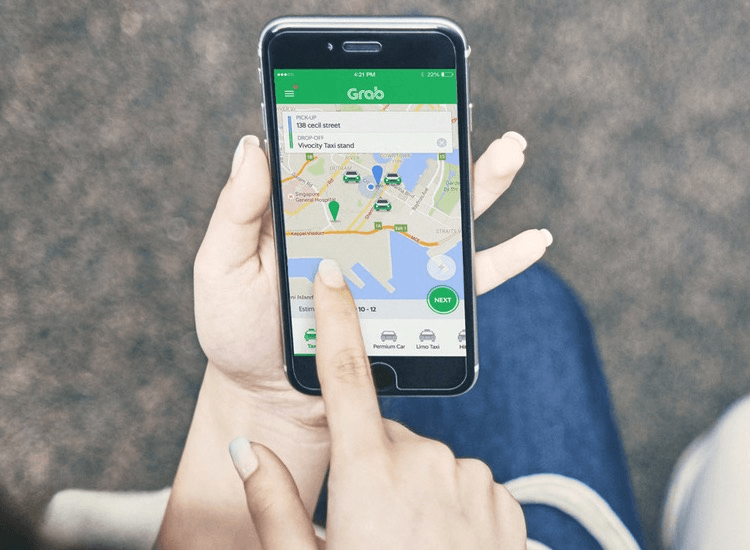
Photo credit: Grab
China’s Meituan proved last month that a food delivery-heavy super-app model can be profitable, posting a 1.3 billion yuan (US$184.6 million) post-tax profit in its third quarter results.
Grab has similarly been placing a growing emphasis on food. Since it took over Uber’s Southeast Asia operations in 2018, the company has expanded its GrabFood delivery service to six countries in Southeast Asia – Indonesia, Singapore, Malaysia, the Philippines, Thailand, and Vietnam – spanning over 220 cities.
Although it is the largest provider of transport, food delivery, and financial services in the region, it is facing fierce competition from Gojek, which has strong roots in Indonesia – the largest market in the region.
Both Grab and Gojek are still working toward full profitability, even though Grab often states that it is profitable in certain markets.
It is known to be difficult to turn a profit operating a food delivery-specific app, but when it comes bundled with other services, users tend to stick around and engage with the platform more, according to GGV Capital partner Hans Tung’s post analyzing Meituan.
This increases economies of scale and brings in more advertising revenue, Tung wrote.
For food delivery, companies usually take a cut of the sales for each food merchant. When an order is placed, Grab matches a delivery driver from its fleet to the order, which collects the food from the restaurant and delivers it to the customer.





Stay updated on the go with our mobile app.
Get latest insights with smoother, more personalized experience through TIA mobile app.