Malavika Velayanikal · · 4 min read
Fleeing Tiger: hedge funds fall off the cliff in India

Photo credit: Pixabay.
Hedge funds were all over the Indian startup scene last year. Look around now and it will be hard to spot one. They have simply fallen off the cliff in 2016.
There have been only 10 deals involving hedge funds in the first three quarters of 2016, compared to 50 deals in the same period last year, shows a study by tech industry think tank iSPIRT and advisory firm Signal Hill.
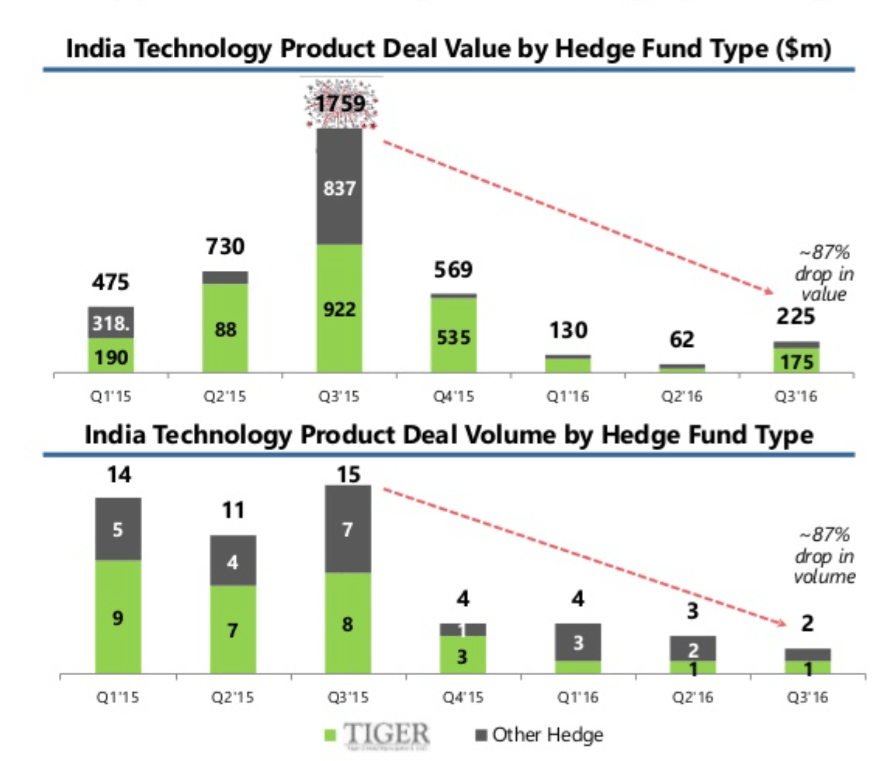
Source: An iSPIRT & SignalHill report.
Hedge funds typically manage billions of dollars and find alternative investment avenues for high returns. Traditionally, they invested in listed companies, but later moved into growth stage startups just like big VCs. The hyperactive one in the startup space is Tiger Global, which has US$20 billion under management.
Last year, Tiger Global was the most active hedge fund in India with 24 investments amounting to US$1.2 billion in the first three quarters, including follow-up rounds in Flipkart and Ola. This year in the same period, it made only three investments, worth US$305 million in total. Some other hedge funds which were active last year, like Falcon Edge and Steadview, disappeared altogether. Overall there has been an 87 percent drop in hedge fund investments this year.
See: Can’t eat paper profits: India’s startup ecosystem has a vital cog missing
Starving unicorns
Hedge funds invested US$3.9 billion into Indian startups – almost entirely in consumer tech – from the start of 2015 to the end of Q3 2016. Eighty percent of it was absorbed by just eight companies:
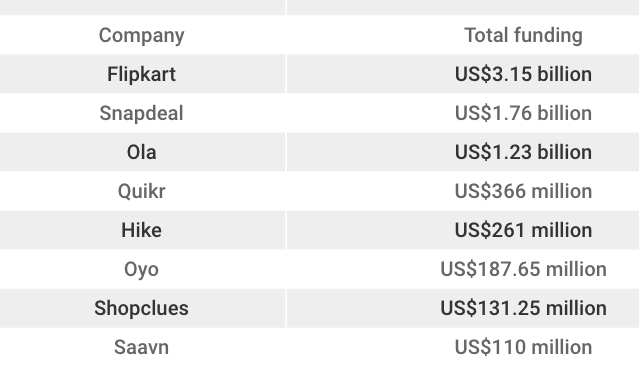
The biggest of them – Flipkart, Snapdeal, and Ola – have been struggling to raise follow-up funding this year, and the main reason for that is the flight of hedge funds from India. Tiger Global, for instance, made further investments in Shopclues and Hike this year, but not in its biggest bets, Flipkart, Ola, and Quikr. Oyo raised another round from Japanese giant SoftBank this year, but its American hedge fund Greenoaks Capital did not participate in the round.
Rollercoaster valuations and uncertainty over how long it will take to make decent exits have discouraged the hedge funds. India’s unicorns seem disinclined to go for IPOs. Flipkart, for example, has been around for nearly a decade, but it’s unlikely to get a great reception on the stock market. Even its valuation has had a series of markdowns, dropping down to US$6 billion from its high point of US$15 billion last year. Snapdeal has a similar story, which forced SoftBank to write down its first major investment in India.
See: Something’s rotten in India’s startup scene – and it’s time to call it out
Trapped Tiger





Stay updated on the go with our mobile app.
Get latest insights with smoother, more personalized experience through TIA mobile app.