Stefanie Yeo · · 6 min read
More than capital: How HSBC helps SEA’s startups scale up

Summary:
- Southeast Asia’s startup ecosystem has moved past its formative phase, and the digital economy has become a fundamental backbone of regional growth.
- In the face of the ongoing funding winter, startups are seeking alternative financing options. However, they face a structural gap where traditional banking models struggle to support businesses that are not yet profitable or successful by traditional measures.
- HSBC Innovation Banking aims to bridge this gap, offering specialized services to address the challenges startups face with capital and more.
- Explore new opportunities with HSBC Innovation Banking.
For Southeast Asia’s startups, the heady days of easy capital and chasing growth at all costs are now but a sweet and distant memory.
Compared to the previous year, private funding for the region’s internet economy grew 15% to US$7.7 billion in the 12 months leading up to June 2025, lagging behind the global growth rate of 25%. Funding, while higher than that of 2024, is still 70% below the 2021 record of US$27 billion.
Additionally, heightened scrutiny around startups and the larger macroeconomic uncertainty continue to weigh Southeast Asia’s startups down. However, despite these odds, the region still persists, and its digital economy is an undeniable part of its growth story.
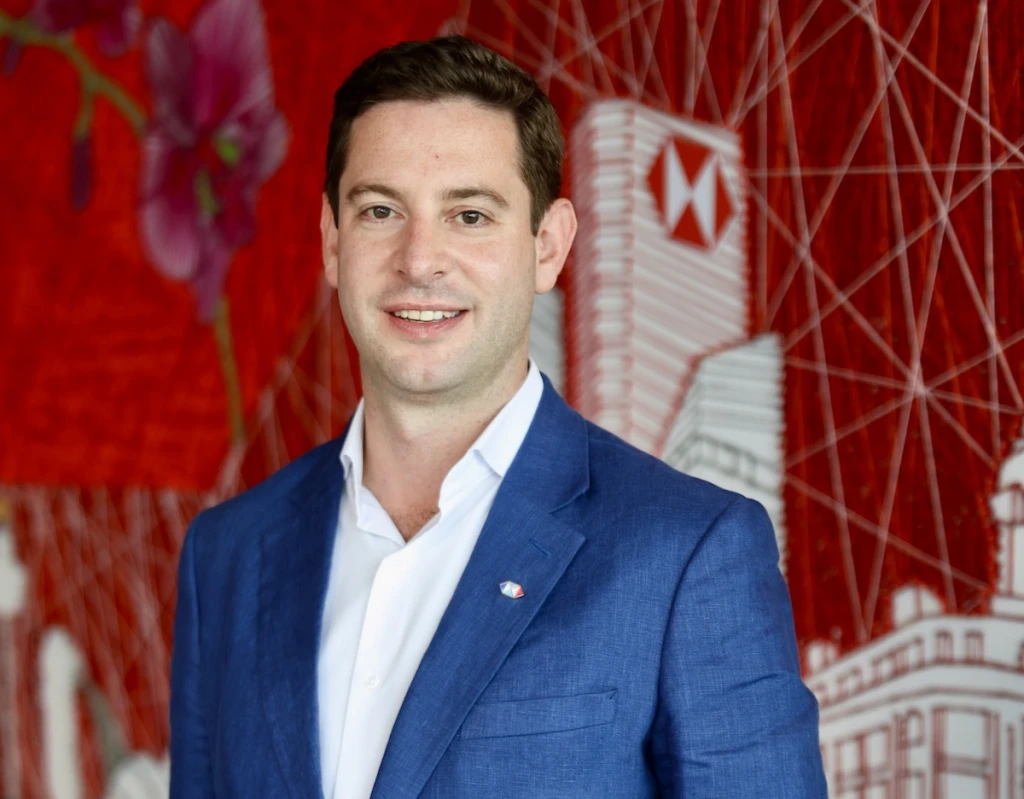
Neil Falconer, head of Innovation Banking at HSBC Singapore / Photo credit: HSBC
According to Neil Falconer, head of Innovation Banking at HSBC Singapore, 58% of ASEAN’s digital economy is made up of digital entrepreneurs. These 75 million founders generated an estimated US$175 billion in gross transaction value in 2025.
“What this signals is a fundamental shift in market infrastructure,” says Falconer. “The tech and startup ecosystem has moved beyond its formative phase and is now entering a period of structural scale. We are no longer talking about a digital economy on the margins – it is becoming the backbone of growth across the region.”
The challenges at play
The digital economy may be a pillar of growth in Southeast Asia, but the question of capital remains pertinent.
“One of the most persistent challenges facing startups and digital economy businesses in Southeast Asia is access to the right kind of capital – funding that supports growth without forcing premature equity dilution,” Falconer explains.
There’s a fundamental friction in how digital economy businesses are funded and supported, and the ongoing funding winter has exposed those cracks as startups look beyond typical sources – such as venture capital – toward alternative options.

Photo credit: PanuShot / Shutterstock
Traditional banking models often struggle to evaluate companies that operate ahead of profitability, leading to what Falconer describes as a “structural gap” in capital.
“When capital is assessed too narrowly, promising businesses can find themselves constrained just as they are ready to scale,” he shares. “What is required instead is a longer-term, more holistic approach – one that evaluates companies based on operating fundamentals such as customer acquisition, unit economics, scalability of the business model, and the quality of execution, rather than short-term profitability alone.”
Connectivity is another barrier.
“Southeast Asia’s startup ecosystem is vibrant but fragmented, and young startups often struggle to access the networks, partnerships, and market insights needed to expand across borders,” Falconer adds.
To help address these hurdles and better support startups and the digital economy, HSBC Singapore launched its Innovation Banking service in October 2025.
Support system
HSBC Innovation Banking was developed to meet a simple but growing need: innovation-led businesses require banking partners that understand how they grow, their capital structures, and their ambitions.
“HSBC Innovation Banking reflects a shift in how banks support the digital economy: less transactional, more specialized, and built around long-term growth rather than short-term milestones,” says Falconer.
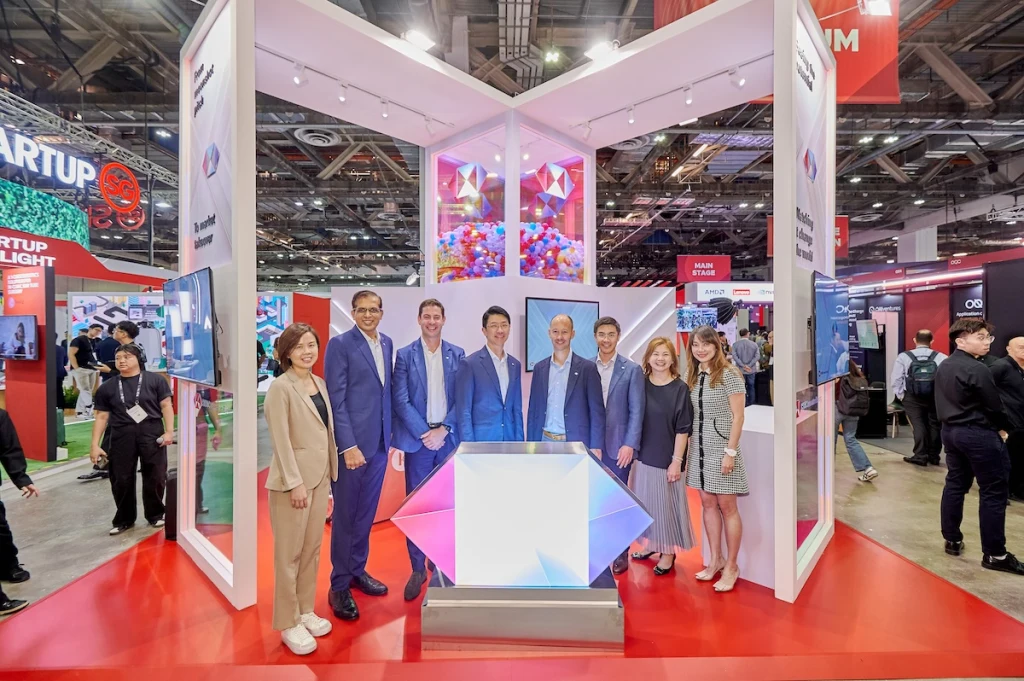
Photo credit: HSBC
As part of this, HSBC has committed US$1.5 billion in Singapore to support venture-backed startups, as well as the investors behind them, while working closely with partners to foster dialogue, share best practices, and build meaningful connections.
Why Singapore, out of all the options in the region?
“As a regional capital and innovation hub, Singapore plays a critical role in connecting founders, investors, and enterprises across Asia and beyond,” Falconer shares.
At its core, HSBC Innovation Banking leverages its investment banking franchise to provide strategic capital solutions, such as venture debt and platform finance. Startups can also tap into HSBC’s Global Payments Solutions, which offers a range of digital payments and cash management solutions to help companies optimize their use of capital.
HSBC Innovation Banking – connecting you to what’s next
According to Falconer, HSBC brings a broader banking and capital markets perspective, offering founders a more practical understanding of the considerations involved with IPOs or M&As.
“With our global network, founders can access connections with institutional investors and strategic counterparties, alongside support to think early about potential exit pathways,” he shares.
It also has a dedicated team – focusing on tech-enabled businesses and life sciences – to act as a banking partner for startups, which helps founders looking for growth alongside capital investments. Coupled with its own roster of over 900 venture capital firms and a network of over a thousand internationally connected specialists, HSBC is clear about its goal to support startups as they grow and scale.
“Our aim is to give startups the confidence, connectivity, and financial flexibility to pursue growth and innovation,” Falconer says.
HSBC Innovation Banking also supports founders beyond financing with a more holistic proposition, including access to HSBC Private Bank for tailored wealth planning, investment events, and advisory sessions to help them plan for the long term.
Building up
This confidence, connectivity, and financial flexibility has certainly helped LionsBot, a Singapore-founded cleaning robotics manufacturer that is expanding globally.
2026 is shaping up to be a landmark year for the company, as it commercializes its new generation of robots, the R5.
On this journey, HSBC has provided LionsBot with crucial support.
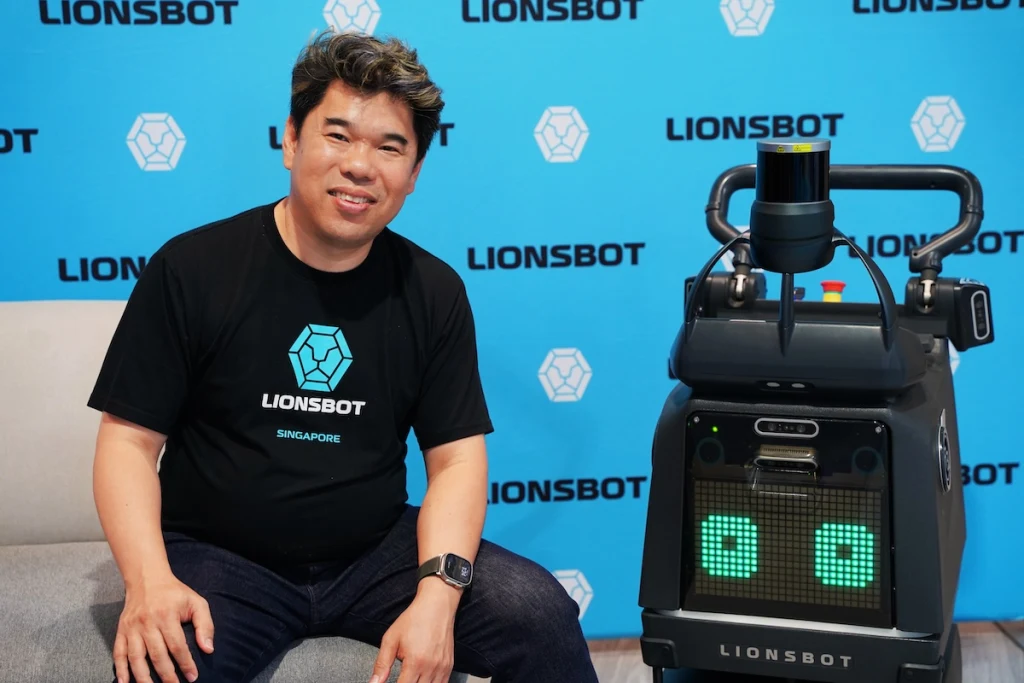
Dylan Ng, co-founder and CEO of LionsBot / Photo credit: LionsBot
“Robotics manufacturing requires inventory commitments before revenue is collected, and HSBC’s invoice financing facility helps improve our cash flow,” shares Dylan Ng, LionsBot’s co-founder and CEO. “The financing enables LionsBot to scale production with confidence while maintaining financial discipline.”
LionsBot is also gearing up for a potential IPO.
“HSBC’s global network has supported our expansion across Europe, our largest market today, as LionsBot prepares for a potential IPO,” Ng says.
HSBC will continue to serve as a valuable banking partner for LionsBot on this journey, offering key support with working capital solutions and international banking capabilities as LionsBot scales and prepares for its next phase of growth.
From Falconer’s perspective, LionsBot’s story exemplifies the key value of HSBC Innovation Banking.
“At their core, these solutions are designed so founders can focus on what matters most: building and scaling their businesses,” he says. “By offering dedicated coverage, sector expertise and access to a global network, we simplify banking so founders are not distracted by complexity as they scale.”
Navigating what’s next
For Southeast Asia’s startups, the road ahead will be one “defined less by cyclical volatility and more by structural transformation,” says Falconer.
According to HSBC’s 2026 Innovation Horizons report, AI will remain a dominant force reshaping economic outlooks and the venture ecosystem across the region.
At the same time, founders are also seeing more paths to liquidity. The planned partnership between the Singapore Exchange and Nasdaq to enable dual listings by mid-2026 is a potential game-changer for the region’s startups.
Against this backdrop, HSBC Innovation Banking aims to be a steady banking partner through this evolution, providing capital to fuel growth, connectivity across over 900 VC relationships, and infrastructure that allows startups to expand internationally with ease.
“Ultimately, our role is not just to provide capital but to be a long-term partner,” Falconer concludes. “The businesses that succeed will be those that pair innovation with discipline, and ambition with access to the right resources.”
HSBC Innovation Banking supports the innovation economy, particularly venture-backed startups and their investors. It understands the tech ecosystem and offers global connectivity and expertise to benefit businesses as they scale, giving companies vital support and access to banking solutions.
Learn more about HSBC Innovation Banking.
This content was produced by Tech in Asia Studios, which connects brands with Asia’s tech community. Learn more about partnering with Tech in Asia Studios.
Stay updated on the go with our mobile app.
Get latest insights with smoother, more personalized experience through TIA mobile app.
Recommended reads
 Life’s a game, and AI agents are Animoca’s new play
 Indonesian AI startup goes global
 Forrest Li on scaling Sea, building smarter bots, and founder grit
 An AI assistant that joins sales calls and scores team skills
 Beyond the check: Why VCs need more than capital
 SGX’s CEO says it doesn’t need a unicorn to win
 SMEs want AI too, but not the kind Big Tech is selling
 Oatside’s alt-milk rise hits a profitable gear
 Alibaba’s financial health in 12 charts
 Asia’s telcos bundle AI into mobile plans. Will it pay off?





Editing by Jonathan Chew and Jaclyn Tiu
(And yes, we’re serious about ethics and transparency. More information here.)