 Mary-Anne Lee · · 3 min read
This is why the International Game Concept Challenge is important for students
The International Game Concept Challenge (IGCC) drew to a close for 2014 last week at Singapore’s Game Solution Centre. This is the second year Singapore has played host to student delegations from participating schools Supinfogame (France), Kajaani University of Applied Sciences (Finland), Trident College of Information Technology (Japan), and of course, its own Nanyang Polytechnic.
From August 25 to September 3, the participating students—43 in all—worked in groups and raced to conceptualize and innovate on the tired battle systems seen in RPG games. The theme of IGCC 2014 had been set by its main sponsor, Gumi Asia. It was a bigger challenge compared to last year’s challenge, which had been held in Japan. This year, the IGCC involved a prototyping stage on top of conceptualization.
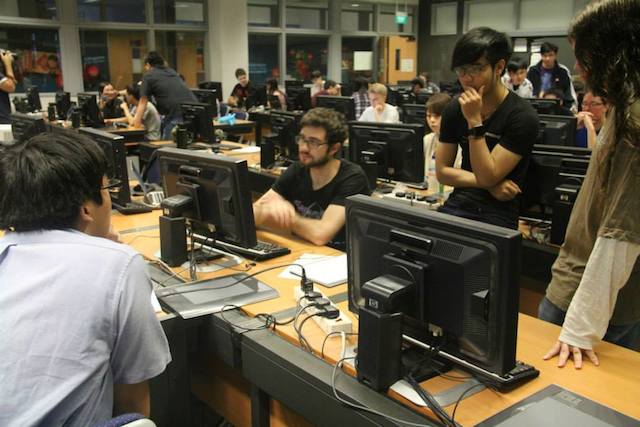
The concepts were judged by a panel including David Ng, CEO of Gumi Asia, and James Barnard, founder of Springloaded Games. Of the top three finishing groups, the first designed a card-based battle system, where characters had to be awarded cards before they could attack. The other two groups presented concepts that involved combining elements to form attacks.
(See: Digital Knights studio not giving up despite failed Sienna Storm Kickstarter)
In truth, most of the concepts were not impressive, nor were they easy on the eyes. They looked exactly like what a rushed student job, produced within the tight timeline of about a week, would have looked like. But the International Game Concept Challenge goes further than that.
“In the area of games creation, it’s common for companies to be multinational,” Daniel Tan, director of Nanyang Polytechnic’s School of Interactive and Digital Media shared. “[With the challenge], we are preparing the students for that, so that they can be accustomed to working with people from different countries.”
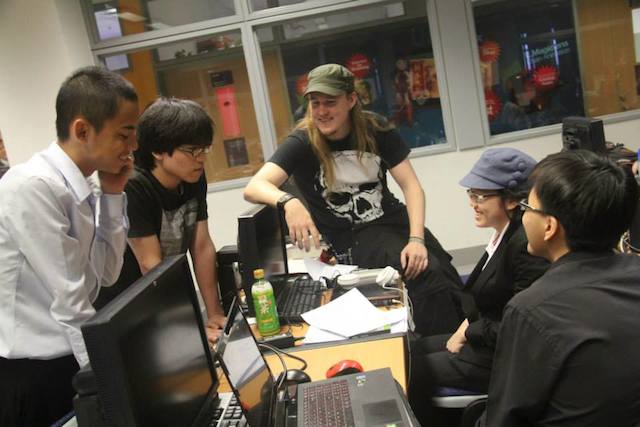
Gumi Asia’s Ng and Supinfogame’s Laure Casalini from France both echoed the same sentiment, reiterating on how important it is to experience working with people beyond one’s own nationality.
Victor Wee of Nanyang Polytechnic, who organized the challenge alongside Stanley Haryoto, shared that it felt it had been “enriching” even for the teachers involved to be exposed to different cultures and mentalities.
While all concepts created during the course of the challenge will belong to Nanyang Polytechnic, Haryoto said that the school might consider opening them up for final year students to work on.
The International Game Concept Challenge will be held in France next year.
Baby photo app InstaB adds in Q&A section to become Quora for parents





Stay updated on the go with our mobile app.
Get latest insights with smoother, more personalized experience through TIA mobile app.










📅 Upcoming Events
22 October 2026
Payoneer x CSPN Summit 2026