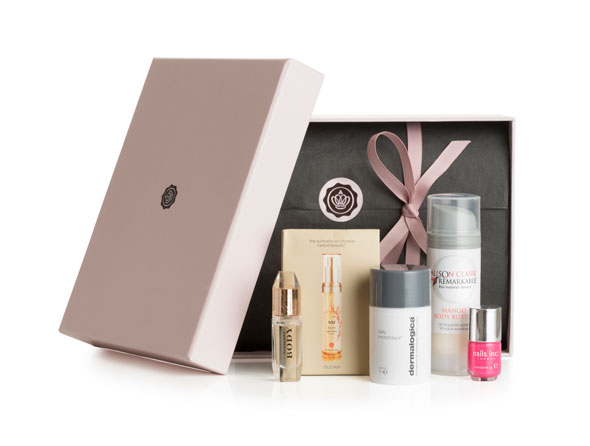
Glossybox is possibly the largest beauty box company in the world. Photo: Glossybox
As the daily deals fever dies down, entrepreneurs in Asia have been on the lookout on the next big idea. It looks like they have found it. In the region, a new crop of startups have arisen, all centered around a singular concept: Beauty boxes.
The idea sounds simple. Subscribers, who are mostly young women, pay a monthly fee to have a box of cosmetics samples delivered to them on a regular basis. Beauty brands have been freely giving out sample products, so why not mail them to potential customers instead?
The market opportunity is there: Outside of China and India, the Asia-Pacific cosmetics market is valued at USD45.7B. The business model is proven: In the United States, Birchbox, which launched in 2010, has surpassed the 100,000 subscriber mark for its women’s boxes. It may have even reached 200,000. The company is popular with investors too: It raised a series A round of USD10.5M.
The concept soon spread to Europe and finally to Asia. Rocket Internet launched its clone Glossybox in March 2011 and now has a presence in 19 countries, including Japan, South Korea, Taiwan, Hong Kong, and China. Other prominent players are coming up in the region too, and they’re getting a lot of customers.
Memebox from South Korea has 13,000 subscribers, while Singapore’s Vanitytrove and Australia’s Bellabox have each delivered more than 60,000 boxes to date. Other beauty box companies that have gotten traction include Glamastar and LustHaveIt!.
The business is potentially lucrative. Assuming a beauty box company has 10,000 subscribers and they’re each paying USD20 a month, it can easily generate USD2.4M in annual revenue.
Much of the growth has been organic. While beauty box companies have spent some money on social media marketing and sending free boxes to women, a lot of them willingly upload videos of themselves onto YouTube to document the process of “unboxing”. Each video can easily generate hundreds, if not thousands of views.
With such fantastic numbers and the ability to make money from the first month, it’s no wonder many entrepreneurs have hopped onto the bandwagon. But entrepreneurs have thought the same about daily deals too, and as a result the industry was decimated by the flood of competitors fighting for scraps.
There are signs that a similar development can occur with beauty boxes. In fact, it is already happening in certain markets.
Australia once had as many as five competitors fighting for market share. But Rocket Internet quit the country in March this year, while another competitor, called ilovethisbox, has shut down.
“Brand managers were receiving phone calls all day from beauty box companies,” said Emily Hamilton, co-founder of Bellabox, a company that has survived the onslaught.
In Malaysia, a country that hasn’t seen much traction yet, FabulousFinds has already closed shop. Meanwhile, the South Korean market has reached a fever pitch.





Stay updated on the go with our mobile app.
Get latest insights with smoother, more personalized experience through TIA mobile app.