 Joydeep Sengupta · · 5 min read
DBS CEO on banks going digital and the expected challenges
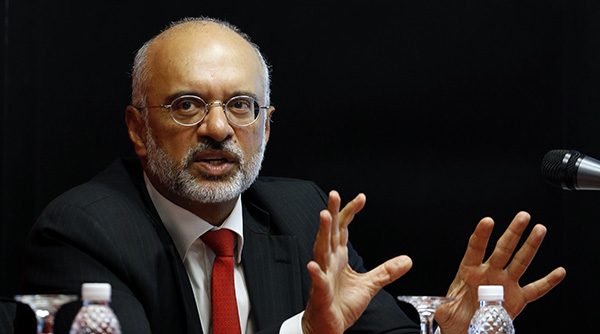
DBS CEO Piyush Gupta. Photo credit: Euromoney.com.
DBS is one of the many financial services groups in Asia. Headquartered and listed in Singapore, the company has a growing presence in the region. One of its ambitions is to embrace technology.
I recently sat down with Piyush Gupta, the CEO of DBS since 2009, to discuss the challenges and opportunities he has encountered along the way and the future shape of banking, including the threat from platform companies.
What made you want to go digital?
The experience of telcos, transport, and retailing shows that we’re changing the way we communicate, the way we commute, and the way we consume. So why would banking be immune or be safeguarded from any of this? Banking is arguably the most digitizable industry of all so, in some ways, it’s surprising that we haven’t been more disrupted. I think part of that has to do with psychology—people think about money a little bit differently than they do about other things—and it’s partly to do with regulatory barriers.
That said, with so much money going into fintech, we have reached a tipping point in the last couple of years. Incumbent players are wrestling with the challenges of how to transform themselves. In Asia—notably in China—the actions of new players, such as Alibaba and Tencent, and of established banks, like Minsheng, Ping An, and ICBC, have made this all the more visible.
In 2013, the DBS board took the view that the future for us and for our industry would have to be digital. We felt that if we didn’t lead the charge, frankly, we might die.
To what extent were you inspired by new-economy companies?
When we first started out along this road, we compared ourselves with emerging fintech [companies] and the startup world and concluded that we really had to digitize completely, not just by putting on digital ‘lipstick.’ A company like Uber has reimagined its processes and digitized everything from end to end.
More important than digitizing per se was to embed ourselves in the customer journey. This is about much more than automation. Hotel chains, after all, had been automating for the last two decades—most have a version of SAP, Oracle, or what have you—but when Airbnb came along, it fundamentally rethought the customer journey for people seeking accommodations.
Today, we are up against businesses that work out of a garage, take risks, operate in a nimble way, and have a different kind of energy and drive. Large incumbent companies that can’t create a similar kind of culture just won’t be able to compete.
What are some key takeaways?
I once worked for an organization that tried to create a separate R&D organization, but several billion dollars and several years later, we had to shut it down without getting much productive output. I realized then that a lack of ownership at the core of a company is a hurdle. There were too many detractors—people on the sidelines taking potshots. That’s obviously not helpful, nor is a separate R&D organization able to embrace the issues that are really fundamental to a company. It did a lot of stuff that was nice at the margin—nice to have. But the core P&L and the balance sheet were not addressed.
My takeaway from that earlier experience is that if you want to make change real and if you really want to make change cohesive, then you have to attack the core.
We have many more people who are part of this transformation than we would if we had just focused on one part of the company.
How does a company know if they are succeeding in the challenge?
There are areas where you don’t obviously see the revenue-expense impact (or at least it takes time to come through). So we have measures we call ATE.
The A stands for acquisition. What percentage of our customers can we acquire without paper, totally digitally and in the online space? T stands for transacting, which essentially is about straight-through processing. What percentage of transactions can we put through with no manual intervention? The E stands for engagement, the hardest metric. Here, we’re trying to measure how much more of the customer’s time, share of mind, and incremental wallet can be retained as a result of a digital experience. We do that by measuring how many products the customer buys when he or she is digitized, as opposed to not digitized.
Is there anything that worries you as you look to the future?
Do you see any bank effectively emerging as a platform company?





Stay updated on the go with our mobile app.
Get latest insights with smoother, more personalized experience through TIA mobile app.








📅 Upcoming Events
22 October 2026
Payoneer x CSPN Summit 2026