Sid Talwar · · 4 min read
Don’t be afraid to pivot. Everybody does.
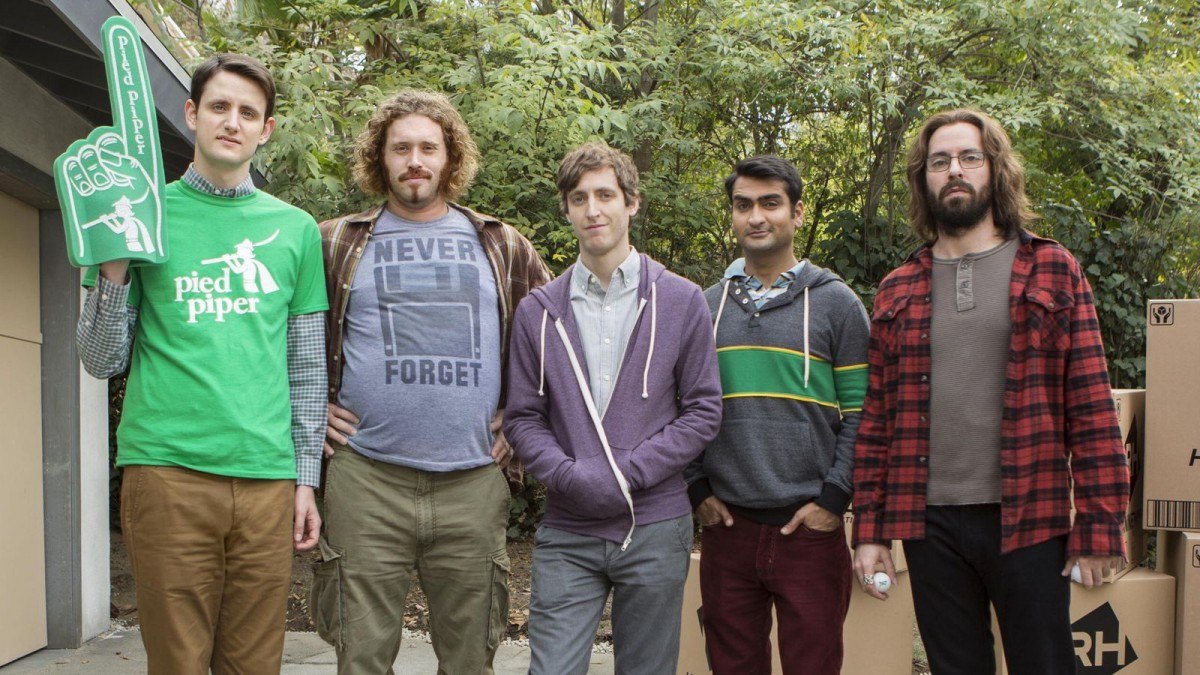
The team of HBO’s comedy Silicon Valley.
There’s a moment during the season 1 finale of “Silicon Valley” when the founders of Pied Piper (the fictional company at the center of the show) realize their company might die. “We’re going to be poor,” one of them cries. But then out of nowhere, in true Hollywood style, the founder saves the day…by pivoting.
The episode is a reminder of how important pivoting is in the world of startups and how often it happens. Somehow, in recent conversations I’ve been having with entrepreneurs in India, I’m getting the feeling that many people think pivoting is bad and tantamount to failure. And that’s absolutely not true.
Everybody pivots. If you ask anyone who’s run a business in the past, they’ll tell you they have pivoted a lot. They pivot based on everything from customer feedback, to external advice, to market conditions. And its a good thing…it’s not shameful (another comment I heard recently).
In fact, as an entrepreneur, you should be ashamed if you don’t consider the possibility of pivoting based on the circumstances in front of you to give your company the best opportunity to succeed. And that means making tough decisions, basing those decisions on relevant data, making them quickly, and then acting on them immediately.
I really enjoyed a post recently on this topic. In it, the author suggested “If you’re going to pivot, look at everything you’ve learned and put everything into the most promising, simple piece of your failed business”. I agree. But sometimes, you need to do this even when your business isn’t failing. Many times, you need to consider whether the decisions you’re making support your original vision.
Here’s why with an example
My favorite example of this is Embibe. Embibe is a company in our portfolio. It’s a test prep platform helping students prepare for JEE exams. When we first met Aditi, the founder, the business model was to charge students an upfront fee for access to the Embibe platform. Most students pay hundreds of thousands of rupees each year to sit in over crowded classrooms to prepare for this exam. Embibe would charge a fraction of that and provide individualized support based on powerful analytics tools and relevant content. To attract students, Embibe would partner with training institutions and offer the platform as a supplementary tool to their student population. We loved the idea and made the investment. As soon as it launched, it started making money. In fact, within a few months we could see a roadmap for profitability – something unheard of so quickly in the technology world.
But there was a realization that although the unit economics were fantastic, scaling a model like this would be difficult. It would be a profitable, self sustaining company, solving a large problem for a small number of people. The majority of students who could benefit from the product weren’t in institutions – they were struggling to learn on their own. The original vision was to see the platform reach millions of students who really didn’t have access to any support – and the model in its current avatar wasn’t going to accomplish that.
So, Embibe pivoted. And it was a tough decision. In hindsight, it makes sense but at the time, it was nerve-wracking. They were pivoting from a model that was actually making money to something completely untested.
Pivot number 2. And 3.
And so Embibe became a pure consumer play growing the potential user base manifold. Revenue fell, but the number of people using the platform started growing, but not by a lot. The company realized that most students in India weren’t able or weren’t ready to pay for a technology solution that helped them study. The institution model had given Embibe credibility with students (and parents) and an incentive to buy, but now Embibe was on its own.
So, they pivoted again. With their product showing showing positive results, they decided to give it away for free. Once people started using it, they would find the benefit – a 180-degree turn from the original business model. The goal was to give access to each and every student who wanted to try it. Prove to the larger community that they could prepare online effectively. Monetization was no longer a priority.
Students started coming in large numbers, staying for longer periods of time, and most importantly, seeing their scores improve over that time. And the company started benefiting from the increased volume. At the core, Embibe is a data company and data companies feed on more and more data – and suddenly there was a tidal wave of data.
And that growth in the user base has led to their latest pivot. They’re now starting to experiment with monetization (again) – but this time in a manner that would stay true to their vision of universal availability. They’ve created a credit system similar to many of the games students play online like Candy Crush. Students can earn credits either by working hard on the platform or by buying them. Credits open up new parts of the platform. Money makes credits come faster, but everyone still has the opportunity to access everything. The initial traction to use the credits is encouraging, but it’s only the first step on a long road. A road they wouldn’t even have been on, had it not been for the pivots.
2016 is going to be a tough year. Entrepreneurs are going to need to make tough decisions. Those decisions cannot be based on ego or the fear of failure. Base your decisions on what’s best for the company. And do it fast.





Stay updated on the go with our mobile app.
Get latest insights with smoother, more personalized experience through TIA mobile app.