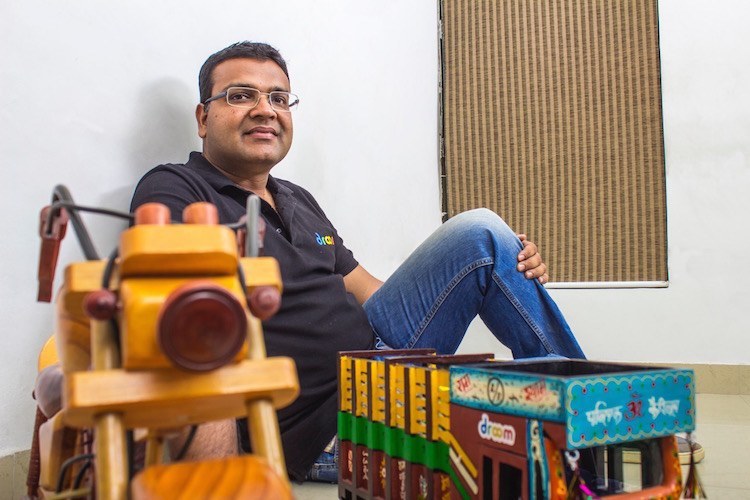
I remember the first time Sandeep Aggarwal called me to tell me about his new idea, Droom (‘To dream’ in Dutch). It was almost exactly a year ago. I knew then that if Sandeep was starting something new, we had to be involved.
We’ve known Sandeep from the time he started ecommerce marketplace Shopclues. There was no Lightbox then. But as a group of individuals, the present Lightbox partners made an angel investment in his vision, his passion, and his determination to succeed. And through that investment, we built a relationship, a friendship, based on trust and mutual respect.
So, when Sandeep called, you can imagine I was all ears. Partly because it had to do with cars, but mostly because it was Sandeep. In fact, it was Sandeep 2.0 – a battle tested entrepreneur with a tremendous amount of exposure and experience in the Indian market and in scaling businesses.
Outside of Sandeep though, I understood very little about his new venture Droom, and he was looking at a large round with a sizable investment from us. Now that we’ve done the deal, I can tell you it was a major decision for us. Droom is the largest series A bet we’ve ever made. And since it was such a big deal for us, I thought this was an ideal opportunity to walk you through how we decide to make investments in general.
3 core questions
When we dive into prospective investments, we normally ask the same three core questions. First, Does the space excite us? Second, how differentiated is the model? Finally, is the founder someone we want to work with – this last one is so critical for us. As a fund, we maintain a very small number of investments, mainly so we can work closely with our entrepreneurs. If we can’t see ourselves being able to create a long term partnership with the founder, it’s very difficult to make the investment – irrespective of how promising the deal looks.
Quickly, let me tell you what Droom does – it’s an online marketplace to buy, sell, and service used automobiles.
Okay, now let’s talk about how we dissected Droom.
Let’s discuss the space. Suffice it to say that the used automobile industry is gigantic and really, really fragmented. Besides being large, three things really grabbed our attention. One, in 2012, the used automobile market became larger than the new automobile market. That’s a fundamental shift in consumer behavior and thinking. And an important one in this context.
Two, as more and more people were looking to buy used cars and bikes than ever before, no one had been able to solve the inherent issues with the process – even in the West, the experience is marred with confusion, frustration, and distrust. In India, it gets even more cumbersome. There are no guidelines on pricing. Almost anyone can become a dealer. Liquidity for specific models is almost impossible to find. There is almost no ecosystem for evaluating the condition of the vehicle or any regulation that protects buyers from bad deals. The issues go on and on.
And yet, no one in India was looking at addressing this issue head on. Competition in the space was mainly playing the listing or lead generation game. There was an opening here that Droom could address.
Three, as the larger vehicle market was growing, the opportunity for ancillary services was growing along with it, but it was even more fragmented than the vehicle market. And again, no one was helping aggregate all these small operators who were offering services that weren’t readily available at scale – from car inspection to roadside assistance to even car washing services. This was a wide open market for anyone who could bring it together.
We were sold on the space.





Stay updated on the go with our mobile app.
Get latest insights with smoother, more personalized experience through TIA mobile app.