Tech companies are getting a bad rap.
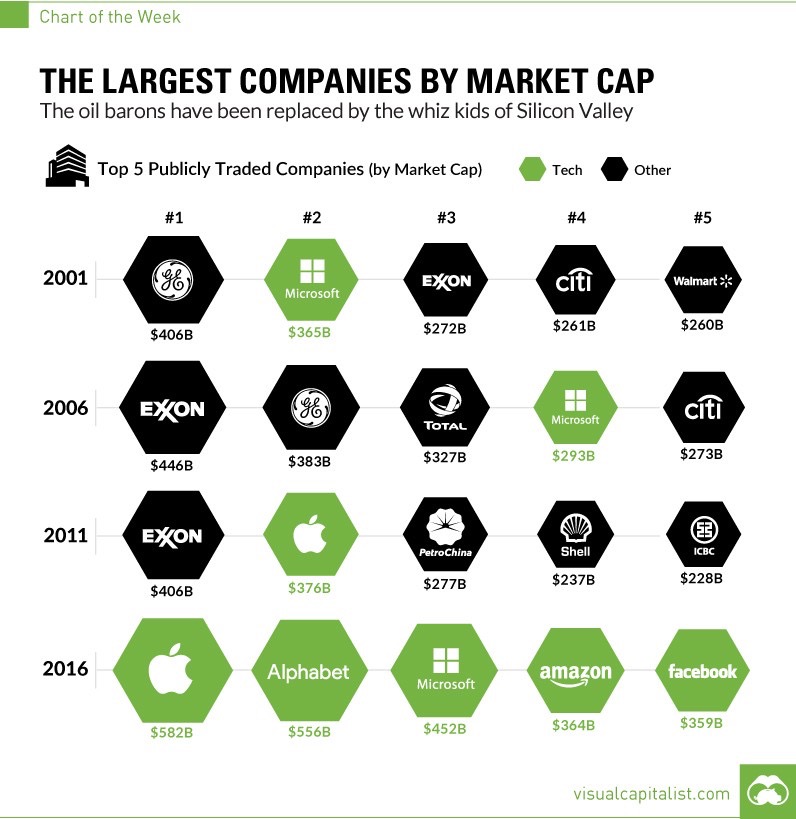
That’s not surprising, as they make for easy targets. As Alexis Madrigal points out in her new The Atlantic column, 10 years ago, the top five tech companies (Apple, Alphabet, Microsoft, Amazon, and Facebook) were worth US$577 billion. Today, they represent US$2.9 trillion worth of market value. That’s bigger than the combined market cap of the top 10 largest companies in the world in 2007. They’re also sitting on mountains of cash, with combined profits of US$96 billion from 2016. They’ve transformed themselves from scrappy upstarts to giants of the global economy in a very short span of time.
With that kind of profile and power, they’re under scrutiny like never before. Their list of supposed sins grows by the day. On the one hand, they’re criticized for overreach, privacy invasions, unfair hiring practices, enabling fake news, terrible workplace diversity, and destroying democracy in less than 140 characters. On the other hand, they’re blamed for irrelevance, vapidity, building products that nobody wants, and building a world where venture capitalists achieve ketosis before breakfast and drink the blood of supple young debutantes over lunch.
There’s an element of truth in some of these allegations. Power corrupts, as we know all too well. That’s why it’s important to be able to call out immoral behavior when we see it. The more society lets the bad brogrammers know their actions are unacceptable, the sooner we’ll see change. It’s also crucial that regulators get their act together and start actually regulating the tech giants properly.
But perhaps it’s also worth remembering that in our rush to criticize, we risk losing a bit of perspective. Remember the old titans (tobacco, cars, oil, finance)?
Not exactly the world’s nicest people.
Yes, tech companies should be doing a lot better on gender and racial diversity. But at least they’re not knowingly destroying lives with lung cancer and covering it up, refusing to recall life-threatening products or deliberately inserting software to mislead environmental agencies about their emissions.
Yes, tech companies should be trying harder to stop hate speech online. But at least they’re not pillaging the Niger Delta, destroying rainforests, cozying up to dictators, or causing global economic crises and making everyone else pay for it.
Let’s put it another way. It’s less than ideal that a small group of people has amassed such a huge amount of wealth. We need to fix that as soon as possible. It’s a problem of governance and one that politicians in English-speaking countries have done a horrible job at fixing.
However, if we have to have someone’s grubby hands on the levers of the global economy, who would you prefer?

Photo credit: Digital Spy.
This lot?





Stay updated on the go with our mobile app.
Get latest insights with smoother, more personalized experience through TIA mobile app.