- Insights This article was written by a TIA community member. Insights pieces undergo the same rigorous editorial process that newsroom-produced articles have.
 Steve Blank · · 6 min read
Why most startups die at 40+ people and what to do about it

Photo credit: Daniel Tuttle.
I got a call from Patrick, an ex-student I hadn’t heard from for eight years. He was now the CEO of a company and wanted to talk about what he admitted was a “first-world” problem. Over breakfast, he got me up to date on his life since school and his two non-CEO roles in startups. But he wanted to talk about his third startup, the one he and two co-founders had started.
“We’re at 70 people, and we’ll do US$40 million in revenue this year and should get to cash flow breakeven this quarter,” he said. It sounded like he was living the dream. I was trying to figure out why we were meeting. But then he told me all about the tough decisions, including firing his best friend, and pivots he had to do to get to where he was. He had been through heck and back.
He said:
“I made it this far and my board agreed they’d bet on me to take it to scale. I’m going to double my headcount in the next three quarters. The problem is, where’s the playbook? There were plenty of books for what to do as a startup and lots of advice on what to do if I was running a large public company, but there’s nothing that describes how to deal with the issues of growing a company. I feel like I have been just driving without a roadmap. What should I be reading or doing?”
I explained to Patrick that startups go through a series of steps before they become a large company.
Search phase
In this first step, the goal of a startup is to search for a repeatable and scalable business model. It typically takes multiple iterations and pivots to find product-market fit or the match between what you’re building and who will buy it.
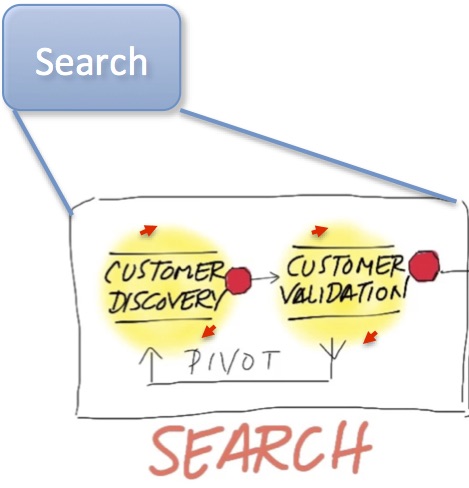
You’ll realize you’re ready to exit the Search step when you have customer validation:
- You’ve found a sales channel that matches how the customer wants to buy and the costs of using that channel are understood.
- Sales (and/or customer acquisition in a multi-sided market) becomes achievable by a sales force, network effect, or virality without heroic efforts from the founders.
- Customer acquisition and activation are understood, and customer acquisition cost (CAC) and lifetime value (LTV) can be estimated for the next 18 months.
Startups in Search mode have little process and lots of “do what it takes.” Company size is typically less than 40 people and may have been funded with a seed round and/or series A.
Most startups die here.
Build phase
Grow phase
Lucky you’re not the ex-CEO
Time to make new friends
Lessons learned





Stay updated on the go with our mobile app.
Get latest insights with smoother, more personalized experience through TIA mobile app.