- Insights This article was written by a TIA community member. Insights pieces undergo the same rigorous editorial process that newsroom-produced articles have.
 Eugen Esanu · · 6 min read
Why small teams win and bigger ones fail
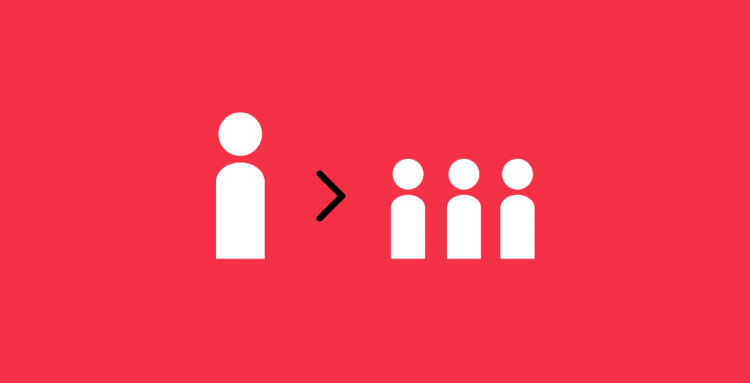
We live in a world of abundance—more people, more resources, bigger offices, more products, more features . You might think that a company like Facebook would need hundreds of designers. You need dedicated teams to work on a simple share button. How else can you serve 1 billion people?
When you see big companies pumping money in like crazy into their design teams, you start to feel that you need dozens or hundreds of designers to make it happen in the new “design-driven era.” But that’s not true.
Usually, if not always, it’s a waste of money. We slowly start forgetting that less is a good thing. Constraints are advantages in disguise.
The Ringelmann effect
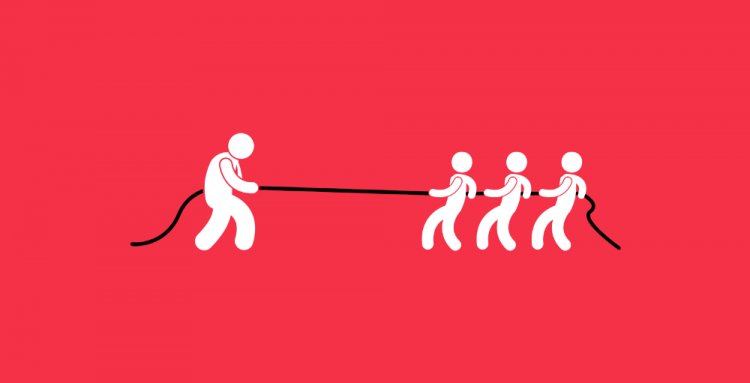
The Ringelmann effect is the tendency of individual members of a group to become less and less productive as the size of the group increases.
Ringelmann’s experiment consisted in letting 20 students—alone and in groups—pull on a five-meter rope, the other end of which led to a dynamometer. When two people pulled together on the rope, each of them performed on average only 93 percent of what he had before achieved alone. It became 85 percent for three people, 77 percent for four, until it came to 50 percent in a group of eight people.
This is what the psychologists call the Ringelmann effect: In the case of joint effort, the impact of the individual commitment is less intense, and so the motivation to give everything is lacking. Personal contribution also becomes indistinguishable, which leads to piggybacking.
Below are examples of how fewer people working on a problem can bring the best creative results possible.
Nike’s HTM
HTM is the name of Nike’s experimental design project launched in 2002. In a nutshell, three designers and a primary decision maker go into a room, put aside their regular work, and reinterpreted existing product designs to develop new ones.
It was meant to be a meeting of the minds. There were no titles, no politics, no requirements, but only creative freedom. This is also a fantastic example of how designers can work with the CEO, rather than just receiving orders. And if you wonder what results could three people possibly bring, here are some of the stuff they’ve created:
The Lego study
When things aren’t working…
But why do we still scale teams like crazy even though this does not work so well?
It’s of course challenging…





Stay updated on the go with our mobile app.
Get latest insights with smoother, more personalized experience through TIA mobile app.








📅 Upcoming Events
22 October 2026
Payoneer x CSPN Summit 2026