A month ago, I joined a startup for the role of a content writer. My first ever job.
Was I excited?

Hell yeah. Photo credit: Giphy.
Was I nervous?

Hell yes. GIF credit: Giphy.
Up until that point, the greatest responsibility I’ve had was when an air hostess made me sit near the emergency exit of a two-hour domestic flight. So, yeah, you can imagine. I’m the first content hire of my company and it’s like having the entire house to yourself. And for a 20-year-old, it meant only one thing — party!
How did an amateur content writer go about setting up a content strategy for the company?
The first thing I did was, like a complete professional, I freaked out! How? By asking the HR personnel random questions about attrition rate and ‘firing’ policy. And then have her pacify you. The next thing I did was to ask one of the founders to help me out. And we had a long talk in his cubicle. The end result looked something like this:
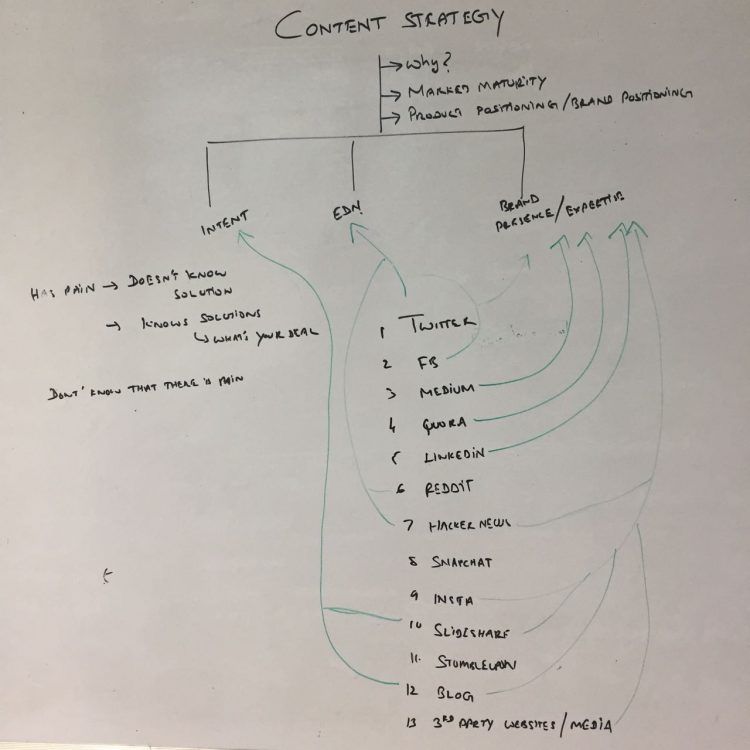
Pipecandy’s content strategy.
The first thing we discussed was the need for a content strategy. This was mostly to nudge me in the right direction. Depending on your market conditions, you either write to educate or you write to differentiate or to opinionate your users towards a future that you think is a great place to be in. Often, you do all three.
Following this were a lot of other questions: What are we going to write? Where do we distribute the content? For whom are we writing? Why are we writing this?
User context is everything
To answer all this, we had to gauge the market maturity. A deep understanding of the user’s context should drive content. Otherwise, we’d be talking to an empty room. Does the user know her problem? Does she believe that there is a solution, and does she know the products that provide the solution? Place this framework into your market context and you’ll discover the user’s context.





Stay updated on the go with our mobile app.
Get latest insights with smoother, more personalized experience through TIA mobile app.










📅 Upcoming Events
22 October 2026
Payoneer x CSPN Summit 2026