 Angela Gratela · · 5 min read
The Philippine ecommerce arena: Local vs international players
In the Philippines, SMEs and big corporations are shifting to ecommerce to broaden their consumer base despite the country’s “mall culture.” Philippine ecommerce has the lowest share among Southeast Asian markets but shows potential with its growing internet and smartphone penetration, rising middle class, and young population. According to a joint research from Google and Temasek Holdings, the Philippines’ ecommerce market share will reach US$9.7 billion (11.05 percent of SEA’s projected digital economy) by 2025.
As the Philippine retail industry continues to harness the power of ecommerce, iPrice Group mapped the country’s top retail ecommerce platforms’ online reach by analyzing website traffic through SimilarWeb, Google application downloads, and their respective Facebook, Twitter, and Instagram follower counts. Our analysis showed that 83 percent of the top 48 ecommerce stores are local players.
Overall, Lazada is the country’s leading retail ecommerce platform in terms of website traffic, followed by Zalora, Shopee, and eBay. BeautyMNL tops local ecommerce.
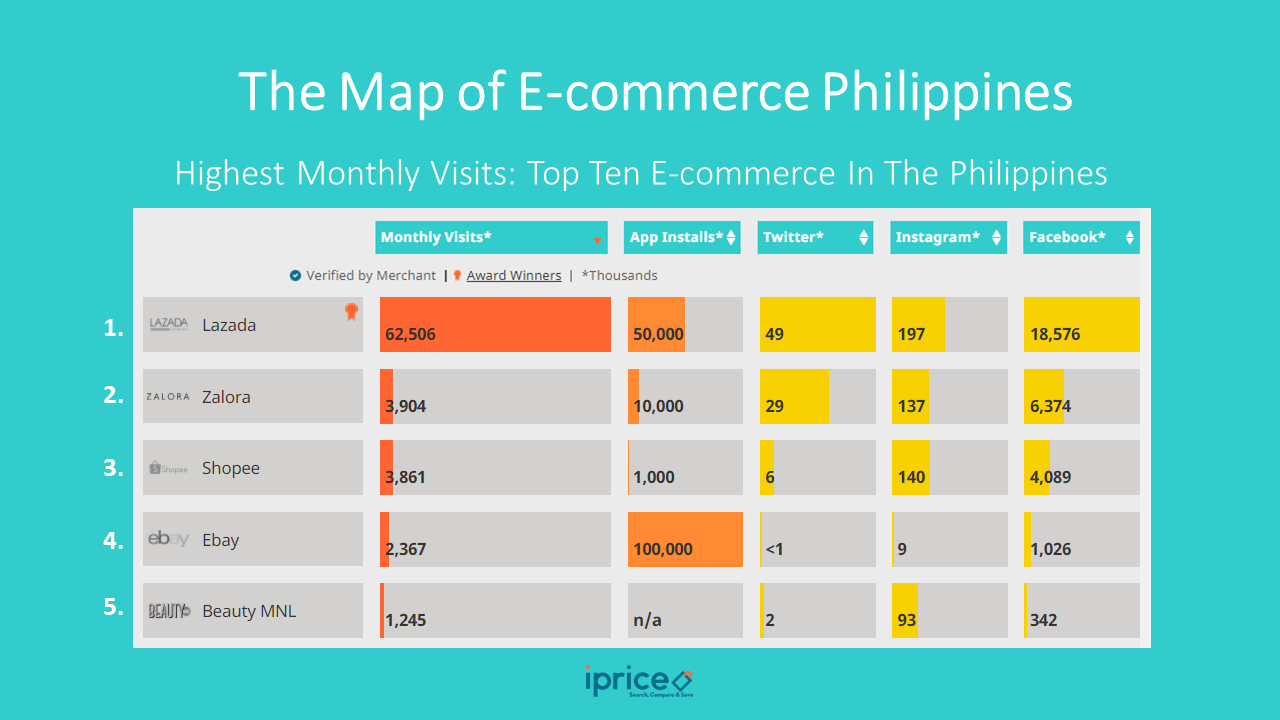
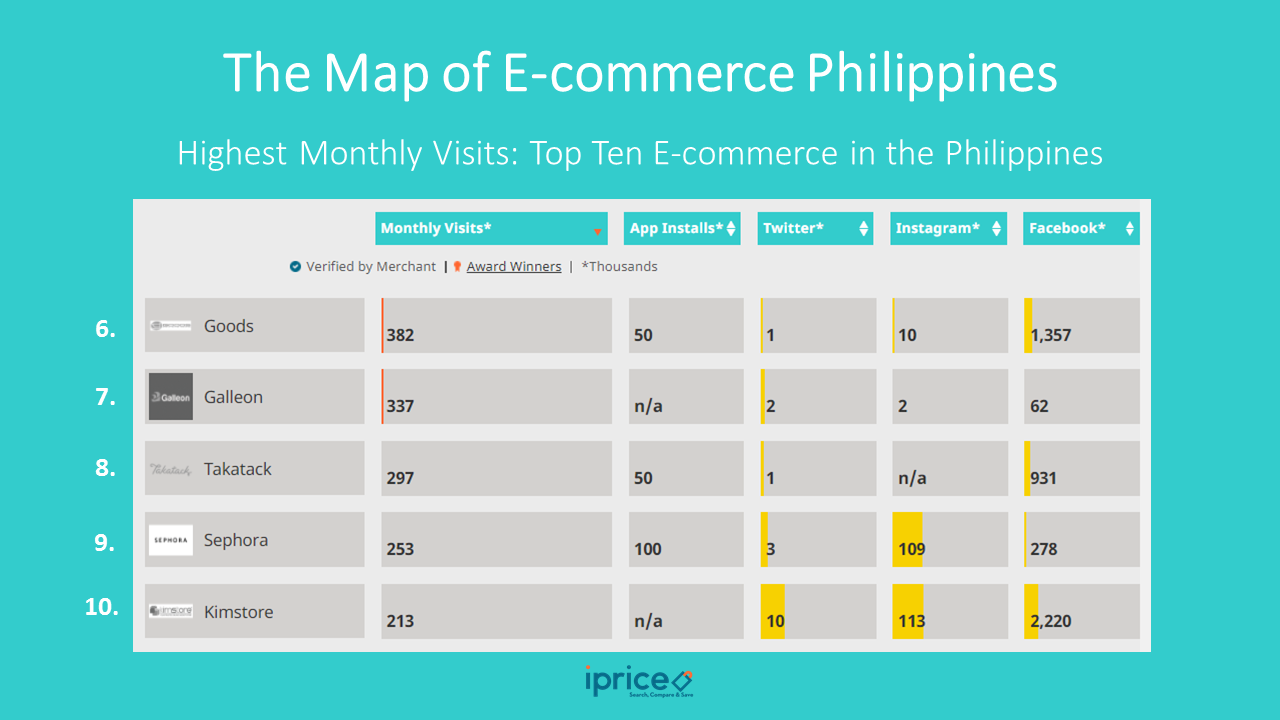
The Philippines’ most popular retail ecommerce platforms
According to SimilarWeb’s Q2 average monthly traffic, Lazada is the country’s most visited ecommerce platform and by far the only one to amass more than 60 million monthly average visitors. It surpassed Zalora, Shopee, and eBay with a 30-fold lead at most. Despite the entry of Amazon in SEA through Singapore last July, Alibaba-backed Lazada remains confident of its market-specific knowledge in the region.
According to CEO Inanc Balci, strategy-wise Lazada Philippines’ will continue to solidify its brand, assortment of products, and logistics infrastructure. Last October 11, Taobao Collection went live in Lazada Philippines, following its launch in Indonesia (it will be available in Thailand by November), offering a diverse inventory for Alibaba Group.
The Philippines’ two largest retail conglomerates, Ayala Group and JG Summit, acquired Zalora Philippines and Shopee Philippines, respectively. Ayala Group, the owner of Ayala Malls, holds a controlling stake (49 percent) in Zalora Philippines, increasing its partner stores’ leverage in ecommerce. Zalora, on the other hand, gained access to Ayala’s technology for digital payments through Globe GCash.
Meanwhile, the Gokongwei-led conglomerate, JG Summit, acquired a significant stake in Shopee Philippines, a Singapore-based ecommerce company. A majority of Shopee’s recent funding will be leveraged for the growth of its ecommerce platform, especially for its key markets.
Shopee is the fourth most downloaded application on the list for its peer-to-peer key feature. In terms of application downloads, eBay leads the top ecommerce list with a whopping 500 million users.
Established in 2014, Beauty MNL is the most visited local ecommerce platform in the top 10. Unlike its competitor, Sephora, Beauty MNL has its own beauty and skincare magazine called Bloom, which publishes localized content daily.
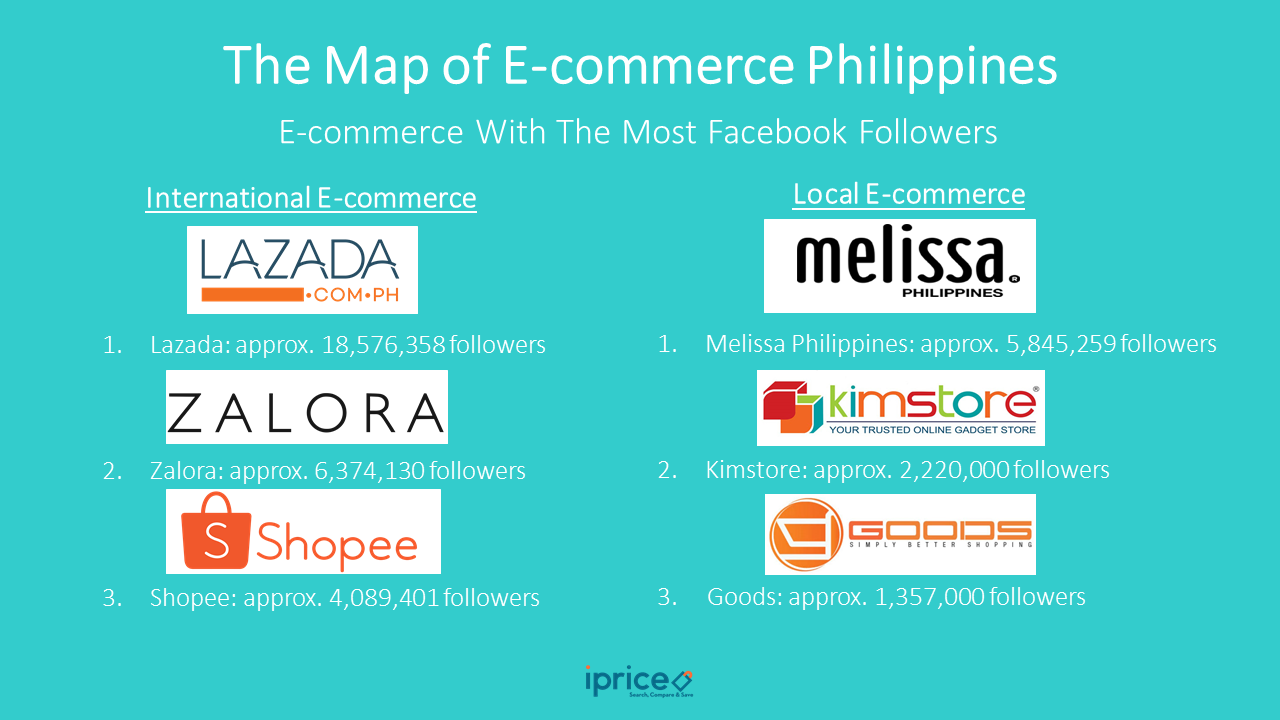
Less monthly visits, more Facebook followers
Fashion brands are the most popular on Instagram
Social media is an integral part of ecommerce





Stay updated on the go with our mobile app.
Get latest insights with smoother, more personalized experience through TIA mobile app.







📅 Upcoming Events
22 October 2026
Payoneer x CSPN Summit 2026