Viktor Makarskyy · · 5 min read
Opinion: The future of apps is in not building any apps
Nine years after the first app store was launched, a majority of US consumers are downloading zero new apps per month on average. While consumers spend roughly 85 percent of their time using apps, a majority of this time is spent on just five different ones per person.
So, is building a native app still an option? How do you justify the price of development and the constant maintenance and updating? How will you know your app will be picked up by consumers and have positive ROI?
More and more, advice for SMEs suggests skipping native apps altogether and opting for in-browser experiences through Google or in-app experiences through WeChat in China.
Below, I’ll go through the two major players at the forefront of mobile innovation and my predictions for the future.
The little Chinese messaging app
WeChat is dominating the Chinese market with 963 million monthly active users as of Q2 2017. To put that in perspective, Messenger only has a slight lead at 1.2 billion.
We’ve all heard stories of the app’s ubiquity. Hail a taxi, make mobile payments, rent a bike, get food delivered, request a babysitter, get laundry picked up, and use a full suite of social media—all inside WeChat. A16z partner Connie Chan even described the messaging app as the “one app to rule them all.”
So, how are many of these crazy-sounding features implemented? By using mini programs.
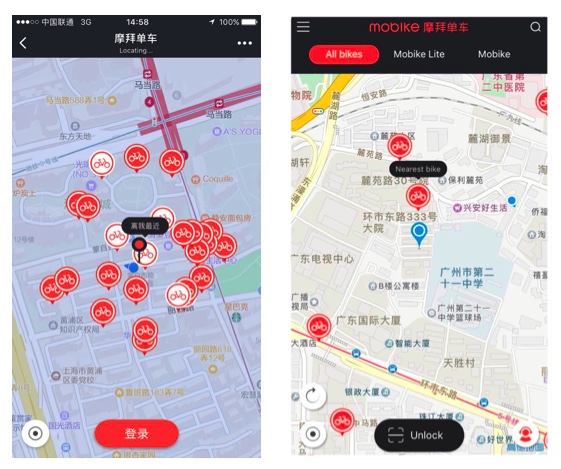
(Left) An embedded WeChat mini program. (Right) A native application. Photo credit: That’s.
An extension of WeChat Official Accounts, new mini programs allow developers/merchants to reach an audience without having to worry about app downloads. Business owners can now reach the Chinese consumer instantly with high customization, easy coding, and integrated payment systems.
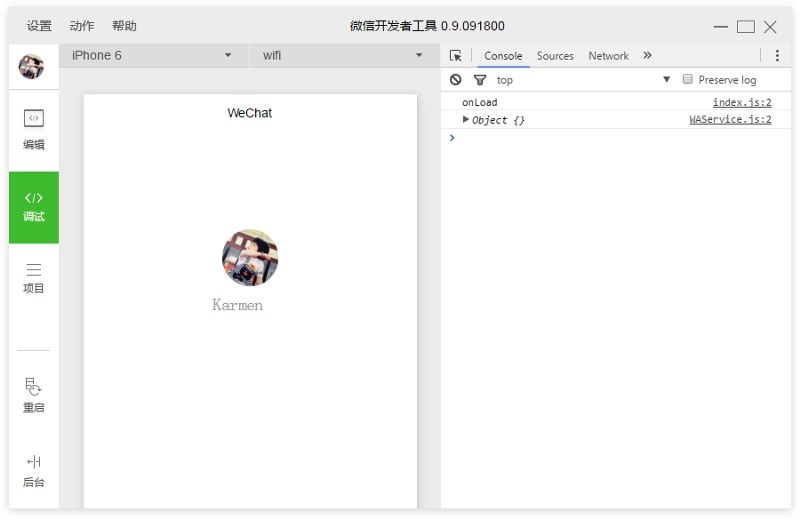
WeChat mini-program development tool. Photo credit: Yelin Qiu.
Tencent, WeChat’s parent company, claims that mini programs drive higher purchasing conversion rates. This makes sense, as people are less likely to download a heavy and complicated app if there’s a hassle-free mini-app available. The Wall Street Journal says WeChat could turn into “a one-stop app that users would rarely have to leave to use other mobile apps.”
Users can access mini programs in three ways:
- Scanning printed QR codes in the real world
- Searching in WeChat
- Sharing directly in chats
Android Instant Apps
Facebook Messenger





Stay updated on the go with our mobile app.
Get latest insights with smoother, more personalized experience through TIA mobile app.