- Insights This article was written by a TIA community member. Insights pieces undergo the same rigorous editorial process that newsroom-produced articles have.
 Daniel Song · · 5 min read
This VC explains the funding gap in Southeast Asia and the danger of convertible notes
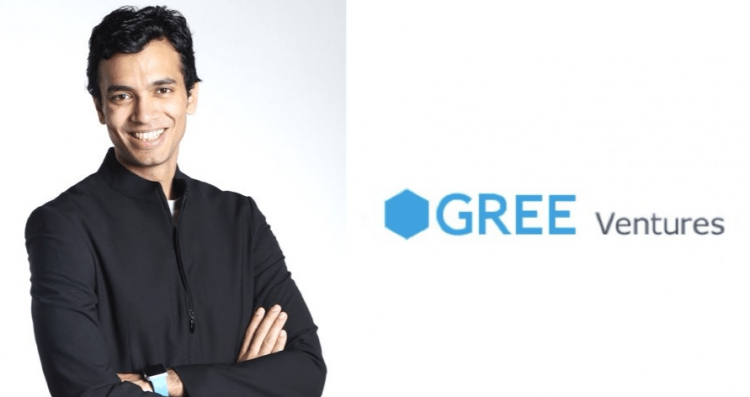
Nikhil Kapur, principal and head of South Asia at Gree Ventures
This article is part of Tech in Asia’s partnership with Asia VC Cast hosted by Daniel Song where we publish the revised transcripts from the podcast’s interviews with inspiring entrepreneurs and experienced VCs. This is heavily revised from the show’s original transcript. For the full interview, go here.
Nikhil Kapur is principal and head of South Asia at Gree Ventures. An entrepreneur by background and developer by training, he spends his time sourcing and managing the fund’s portfolio across South Asia. He previously developed the first version of Excel for mobile while at Microsoft. Kapur was recently recognized in Forbes’ 30 Under 30 Asia 2018.
In this interview, we discuss the funding gap in Southeast Asia, convertible notes, and his approach working with companies.
Tell us how you came to join Gree Ventures
I’m a founder-turned-investor. I was a developer at Microsoft then I ended up starting my own company in India. I came to Singapore after that to do my MBA, and somehow through the ecosystem I got connected to Gree Ventures.
I loved the kind of portfolio they were building, what they were doing with the founders, and their approach to venture capital. So, I decided to join these guys for just a little bit to see how a VC really works. But I’ve been working here for three years now, and I love every second of it. I can’t imagine going back to being a founder.
Why do you think the funding gap exists at seed stage and not at series A or B?
The biggest gripe for most fundraising founders in the early stages is who they’re bringing to the table, who they’re raising money from, how helpful they are, and the speed at which these rounds get done. So, I think as a founder your biggest asset when going against the world is agility. And when I say there’s a funding gap, what I really mean is that there are not enough early-stage VCs who are writing checks fast enough.
One thing that we’ve noticed is that most funds are becoming larger and larger in Southeast Asia, especially in the last few years. I’ve given enough data on my blog, but anyone can do the math and see that most of the funds which started off with US$10 million or US$20 million are now at US$100 million+. And while that happens, the team size doesn’t increase as much. There’s still a maximum of 10 people in the team and only few on the investment side.
So, the pace at which you can do deals is still roughly the same as with US$10 million or US$20 million. But now, you have to deploy US$100 million, which means the check size is becoming larger and larger. This is what I call a typical fund creep in the VC world where the funds are just becoming larger, creeping up in the value chain, and going toward series A and B.
The fund that used to write a seed check is now writing a series A check, and the ones who used to write a series A check are trying to write series B checks. That’s why I think the real gap is emerging in the early stages.
Why do you think convertible notes are bad for both investors and founders?
What I’m seeing in the ecosystem lately is that there are a lot of accelerators and even early-stage VCs that are trying to “fool” founders.
A SAFE note is a simple agreement for future equity. It’s a sort of convertible note, a document that Y Combinator has coined to represent a standard deal for everyone who enters their program. Basically, it says, “Hey, we don’t decide the terms today. We decide on them in the future when a bigger round happens. So, let’s not waste our time trying to negotiate these terms now.” And that became like a standard template for everyone to follow.
What happened was that some accelerators in Southeast Asia took those notes and changed some things. I would say it’s borderline fraud because they are basically taking a document and bringing it here just on the pretext of, “Hey, we need to localize it.” They’ve changed a lot of terms, with things like 4x liquidation preference, a call on whether a company is allowed to raise a round or not, control rights, and bad economic rights.
See also: These shocking hidden terms of ‘SAFE’ notes can screw up your startup
On a more personal note, what’s your approach to working with portfolio companies?
Any plans for this year?





Stay updated on the go with our mobile app.
Get latest insights with smoother, more personalized experience through TIA mobile app.








📅 Upcoming Events
22 October 2026
Payoneer x CSPN Summit 2026