 Ruchita Mahimkar · · 4 min read
Comparing smartphone prices in India’s online and offline channels

The mobile industry has seen a tremendous change in the past few years. On one hand, we have the established phone manufacturers demanding a premium price for their brand name, while on the other we have new entrants who have targeted the Indian consumers by selling their phones at competitive prices.
This has resulted in a market shift as consumers are now more concerned about the specs and want to get the most value for their money.
Xiaomi, the Chinese manufacturer debuted in India with the flash sale model, where the devices were put on sale at a specific time and were usually sold out within a couple of seconds. The Xiaomi Mi3 was priced at Rs. 13,000 which had similar specs to the Nexus 5. The Nexus 5 was at the time, priced around Rs. 28,000.
Despite the infant age of the brand, the pricing alone was enough to generate curiosity among the masses and that lead to the Mi3 being one of the most stalked about smartphones of the year 2014. According to Xiaomi, the reason they can afford selling their phones at a lower cost is because they sell them initially at a no profit no loss margin, and make profits in the long run when the components used for the phone get cheaper over time.
Another interesting case study of the offline-online juggle has been Motorola. In the good old days, Motorola was competing against the likes of Nokia and Samsung for offline supremacy. It was after the takeover by Google that the new Motorola, came to India as an online exclusive brand. Motorola’s online-only move, coupled with great pricing and good quality of products, proved really successful when one of their products, the Moto G was sold out within 40 minutes and it wasn’t even a flash sale (it is muted that the inventory during the first stage of the sale was around 10,000 units).
Lenovo, who traditionally used to sell their phones offline has also now started maintaining a online-only portfolio and jumping onto the bandwagon.
If a consumer wants to buy a phone that sells exclusively online, there is not a lot of debate that he needs to participate in. But what about phones that are available both, online and offline? Does it make sense to go to a brick and mortar store to make that purchase or order it online from the comfort of our homes, sitting on the couch munching wafers?
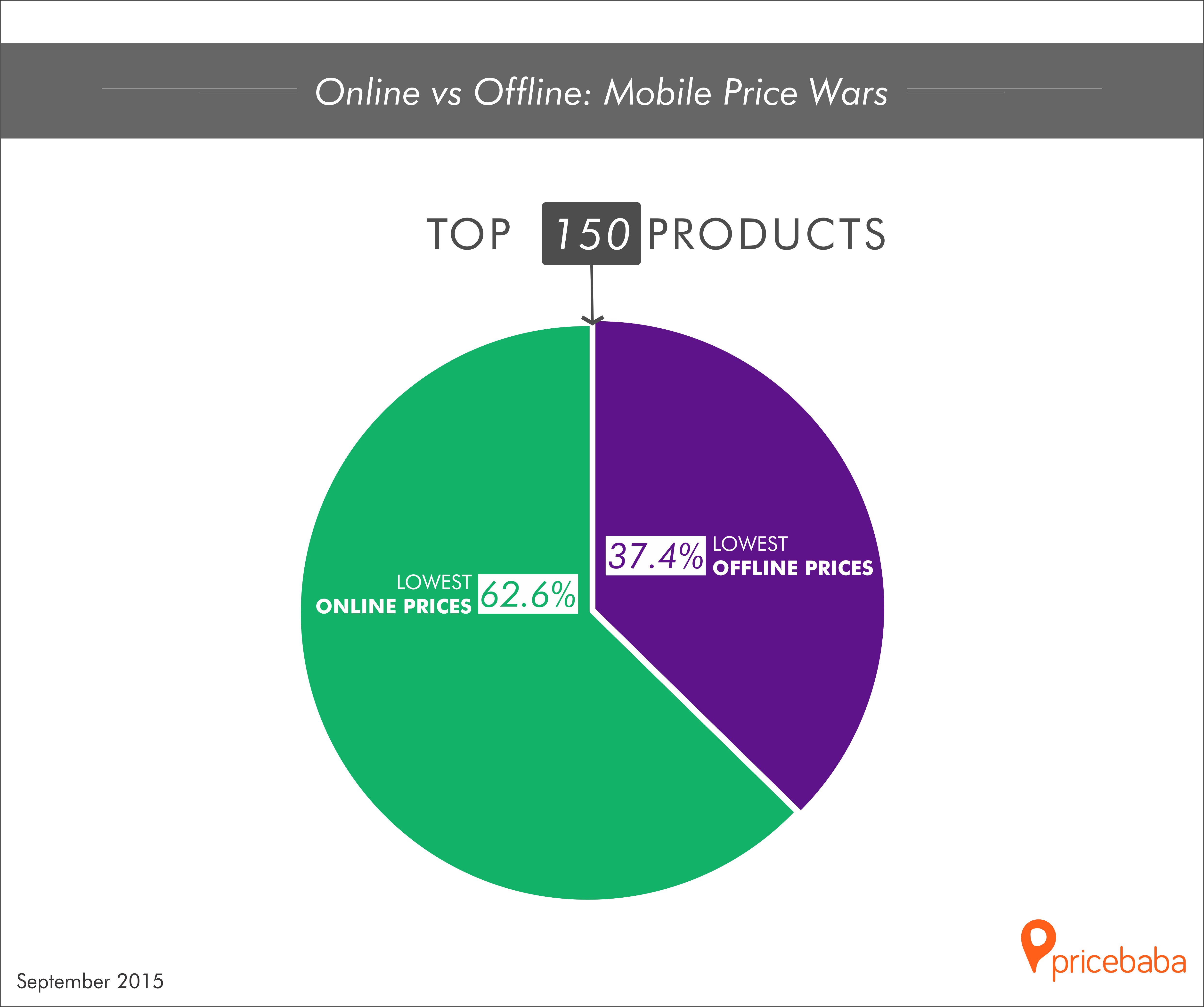
This is precisely what we wanted to answer. We looked at the online and offline prices for the top 150 phones sold on Pricebaba. The prices which were considered for online and offline platforms are the lowest offered by their respective sellers. Below are our findings:
Out of the top 150 phones as per Pricebaba, 94 products were cheaper online whereas 56 mobiles were cheaper offline:
Online Prices Breakdown:





Stay updated on the go with our mobile app.
Get latest insights with smoother, more personalized experience through TIA mobile app.








📅 Upcoming Events
22 October 2026
Payoneer x CSPN Summit 2026